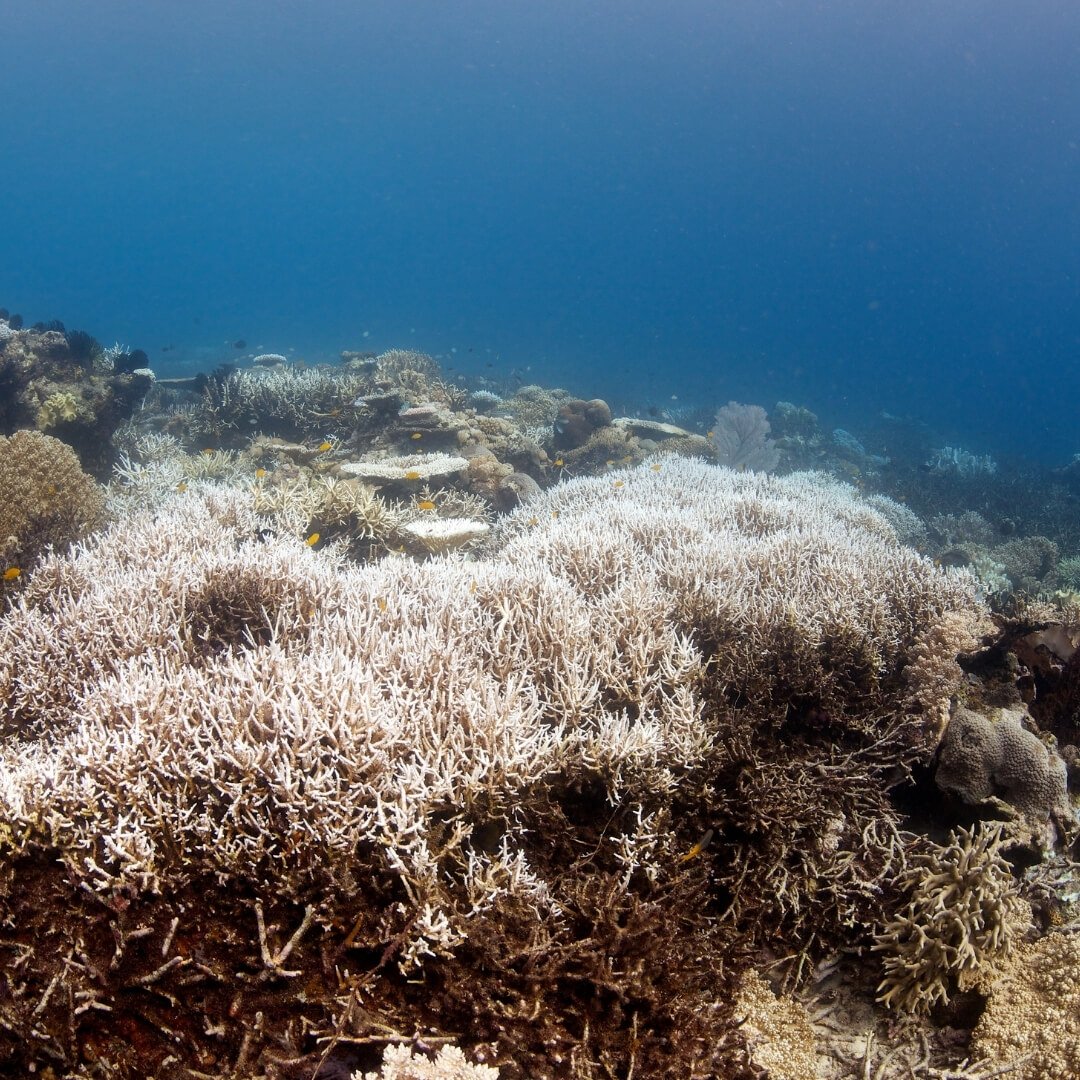
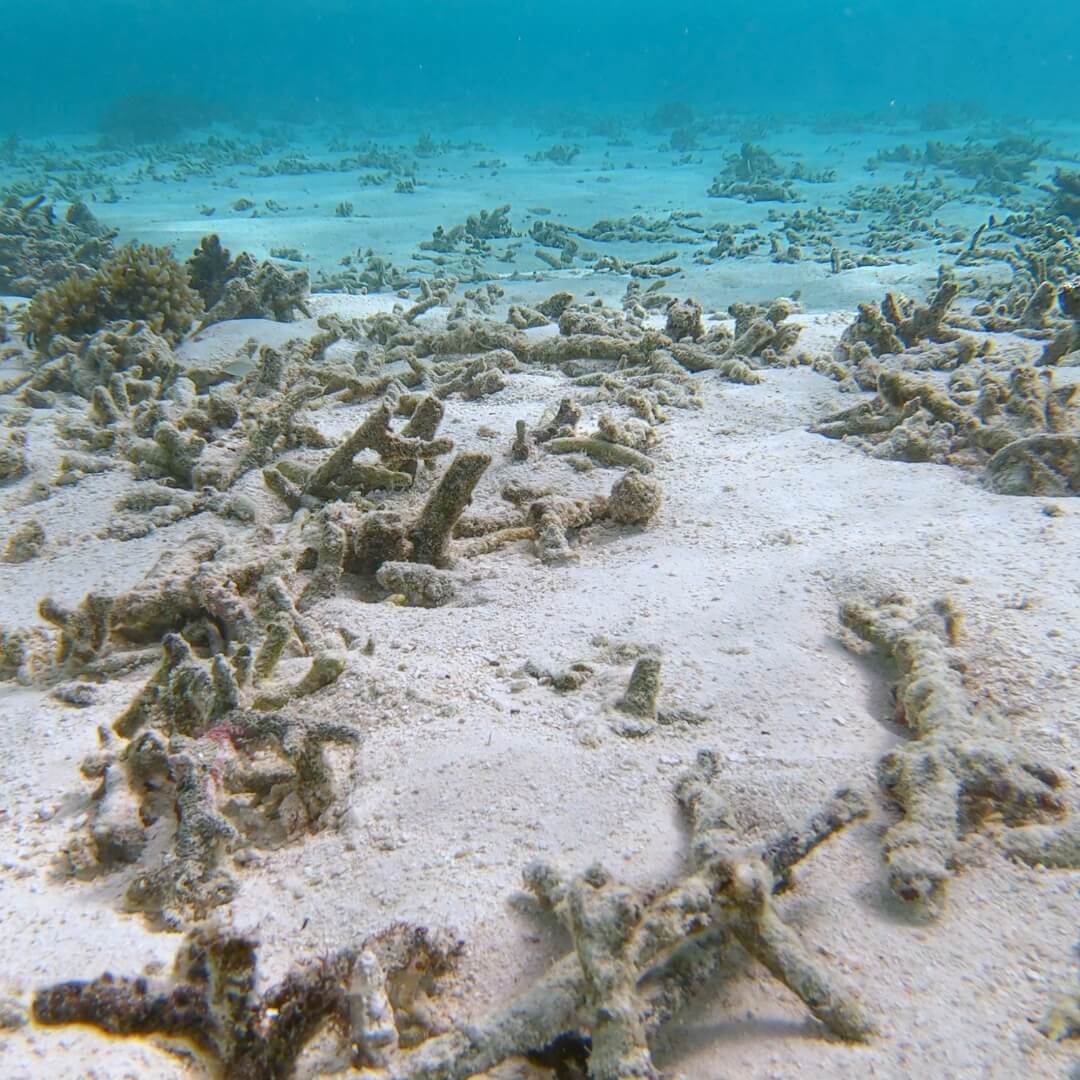
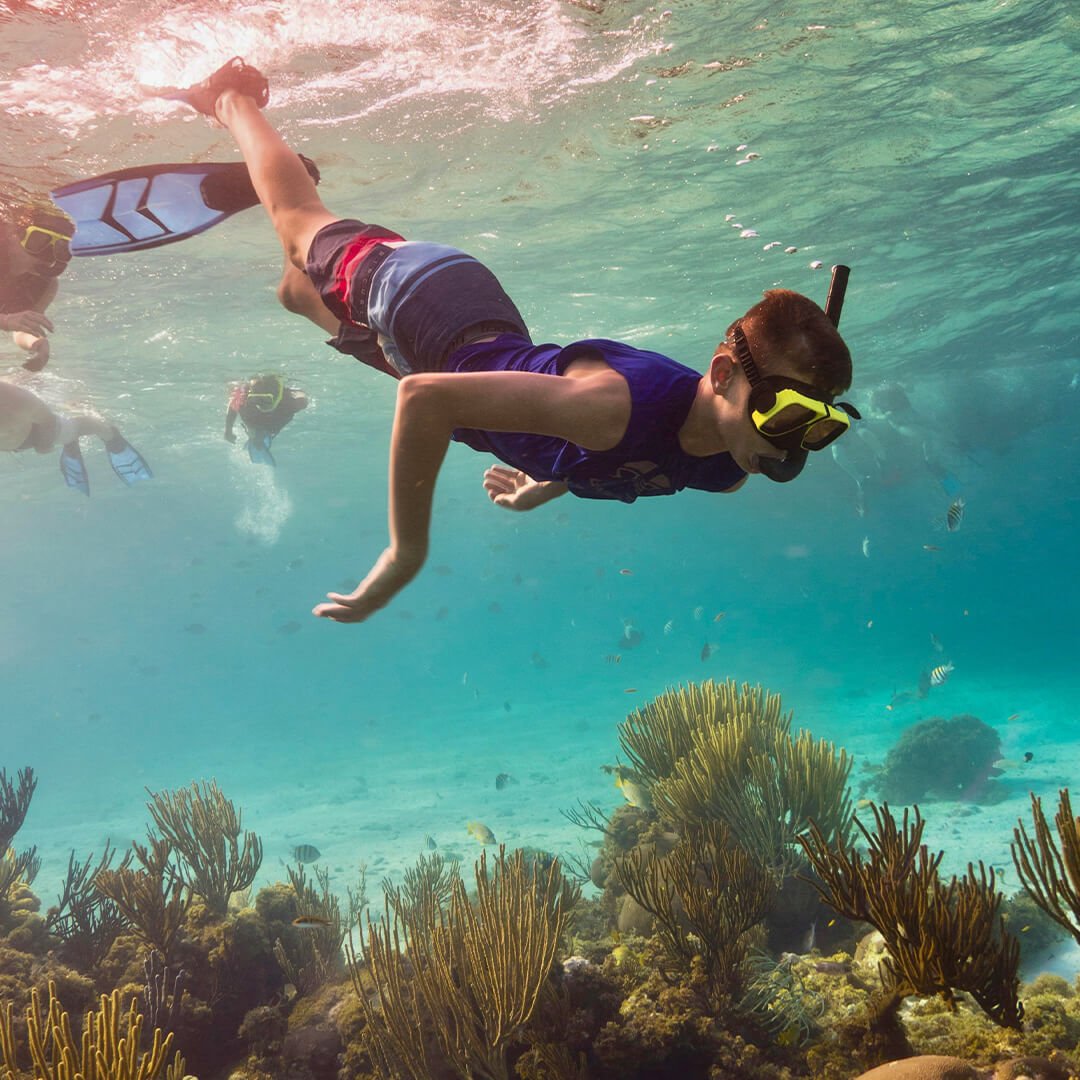
Sunscreen is an important way to protect human health from harmful sun exposure; however, common sunscreen chemicals harm reef-building corals and other marine wildlife. Even small amounts can cause bleaching, DNA damage, and death in marine organisms. Coral reefs are integral to our ocean ecosystems, and provide billions of dollars in ecosystem services each year. Our reefs are experiencing a global decline due to pollution, ocean warming, ocean acidification, and more. Switching to a more reef friendly sunscreen can benefit coral reefs by removing a known stressor, helping them be more resilient to other stressors and larger-scale threats.
Coral Bleaching 14,000 tons of sunscreen enter the ocean each year. Oxybenzone causes coral bleaching at concentrations as low as 5 parts per billion.
DNA Damage Chemical sunscreen ingredients damage coral DNA and reproductive systems, impeding coral ability to withstand and recover from other stressors.
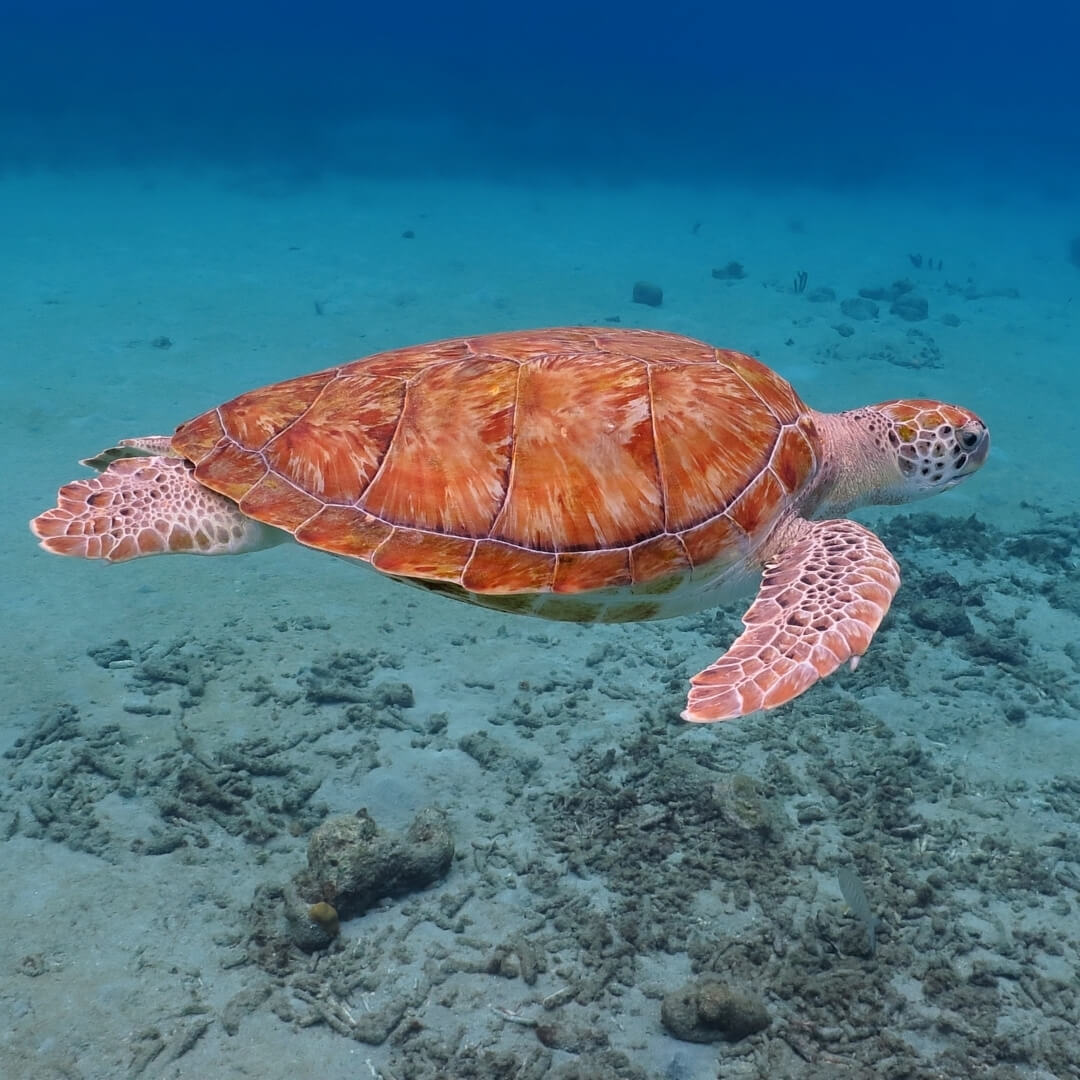
Marine Life Harm Chemical filters impair fish neurological and reproductive abilities, increase disease rates, and act as hormone disruptors that impact immune systems.
If you use chemical sunscreen, it's not just on you—it's in you. Over 90% of people tested by the CDC had oxybenzone in their urine. Sunscreen chemicals are absorbed through skin and have been found in the bloodstream for days after application.
The FDA recently proposed removing all over-the-counter chemical sunscreen ingredients from their Generally Recognized as Safe and Effective list due to insufficient safety data and potential hormone disruption.
INGREDIENTS
What to Look For
The terms 'reef safe' and 'reef friendly' aren't regulated. The only way to know for sure is to read the label.