
-Nov-25-2025-09-43-53-7462-PM.jpg)
What is your current role with the Surfrider Foundation and when did you get involved?
I’m Chair of the Kenai Peninsula Chapter and I first got involved about a decade ago when I lived in San Diego. Like many people, I started with beach cleanups and fell in love with the work and the community. My dad was an avid surfer, so Surfrider was always around when I was growing up. I can’t count how many Surfrider license plate frames I saw around Ocean Beach as a kid.
Later, I moved to Washington and found a home with the Seattle Chapter. When I eventually relocated to Alaska, I wanted to bring that experience with me and help create a chapter here.
What are some local environmental issues that you have witnessed?
Alaska is full of some of the world’s most incredible public lands, and we enjoy access that many places don’t have. Lately, though, we’ve seen more waterfront development and a loss of access to beaches and tidal areas.
These places matter to people who spend time on the water and to communities that rely on them for subsistence. As our political climate shifts, threats to public lands access feel more immediate, and they affect the Alaskan way of life in very tangible ways.
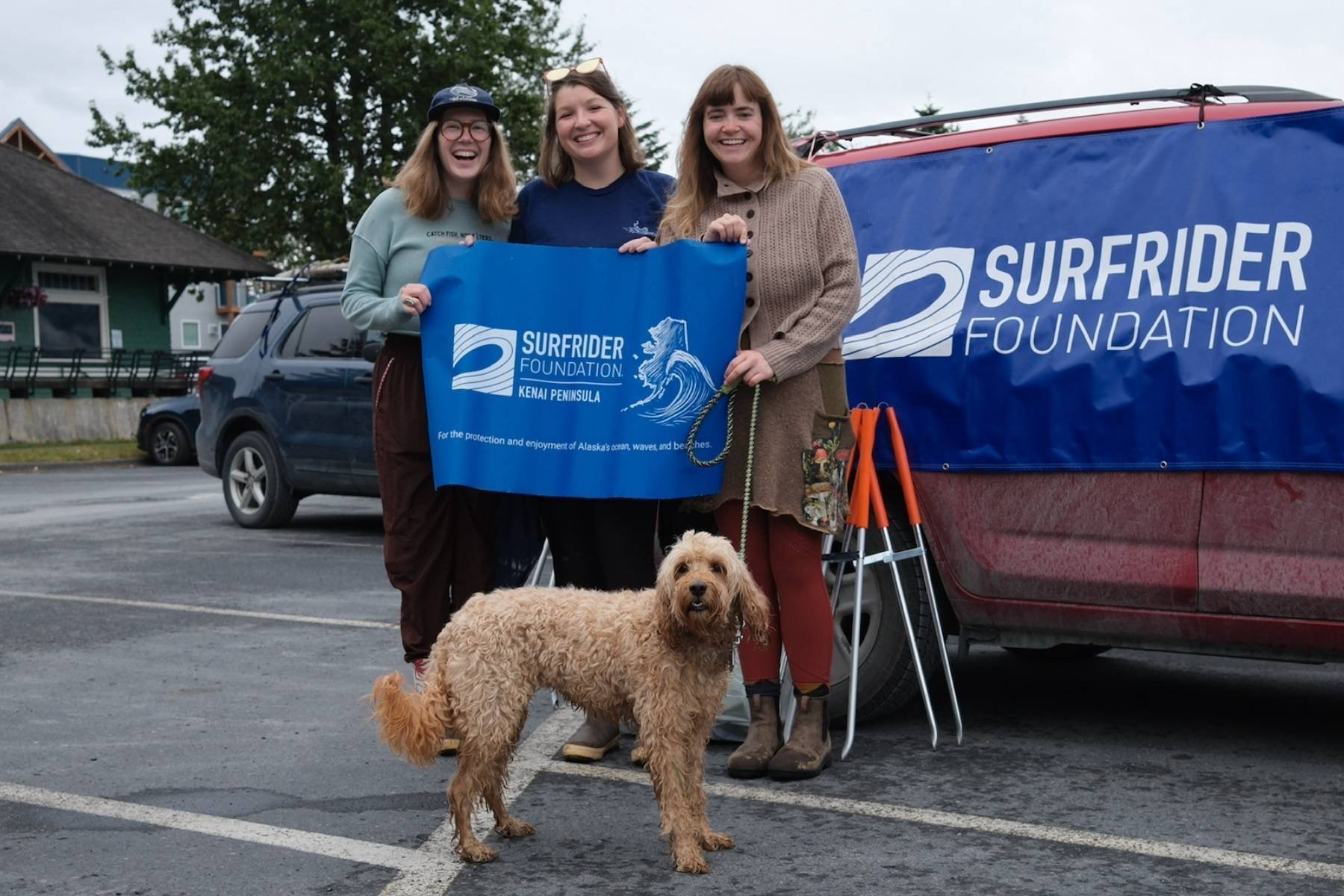 Lyndee, Marcy, Margaux, and Phoebe (front) at a beach cleanup in Seward.
What Surfrider projects have you been involved with? How have these projects impacted your community?
I’ve helped with a wide range of projects over the years, from Paddle for Clean Water in San Diego to the Surf Socials we now hold in Homer. Surfrider projects matter for the work they accomplish, but just as much for the hope they bring and the people they connect. It’s easy to feel overwhelmed by the state of the world; spending time with other surfers and advocates always cuts through that feeling.
Do you have any personal experiences or campaigns where the social justice and environmental movements have intersected?
Surfrider’s mission is to protect and enjoy the world’s ocean, waves, and beaches, for all people. On the Kenai Peninsula, we’ve partnered with Seward Pride and are working to build a connection with Homer Pride as well. It’s important to us that LGBTQ+ community members feel welcomed and included in our chapter.
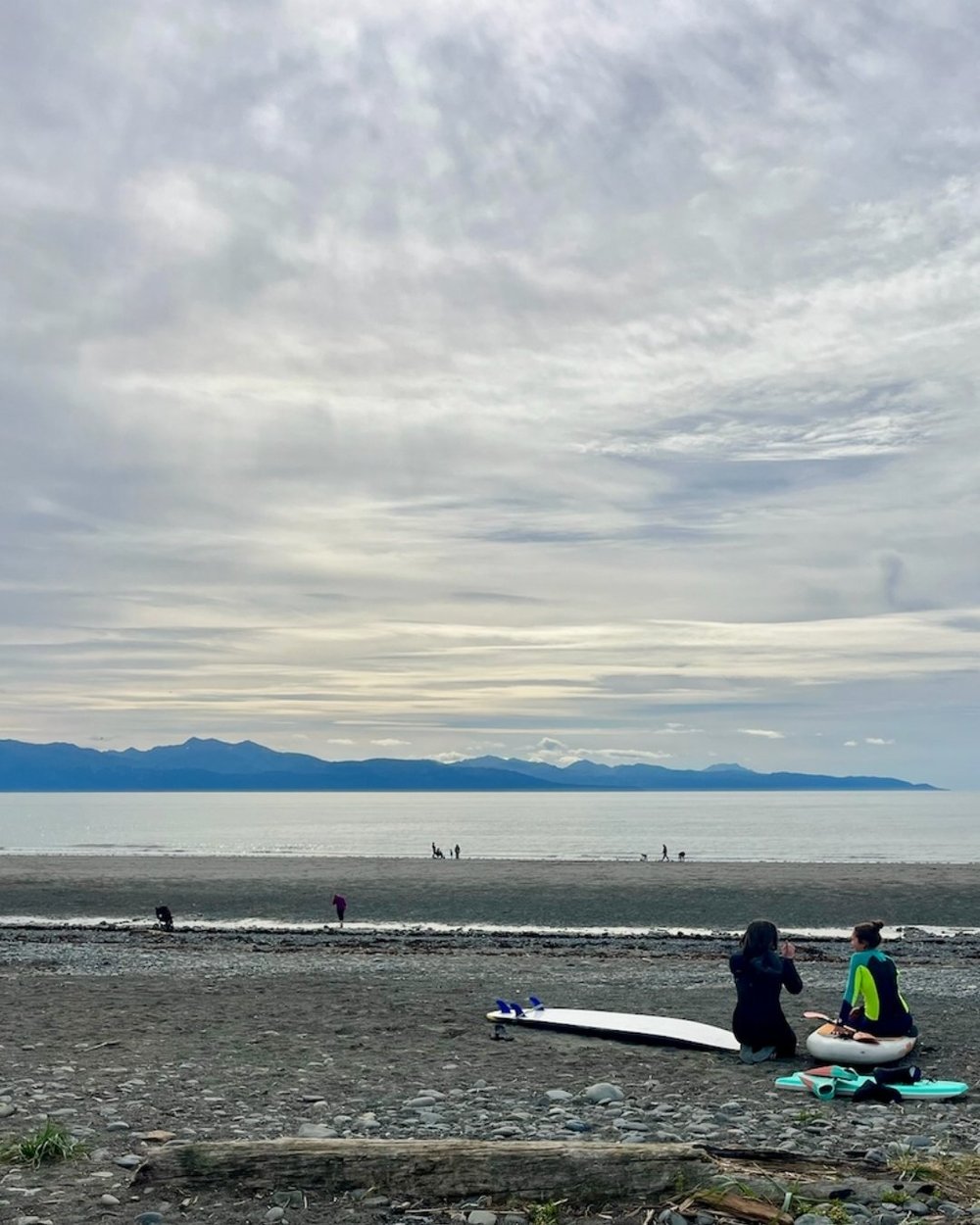 Impromptu chapter meeting on the beach with Sara
What can Surfrider do to foster an inclusive and welcoming environment?
Being friendly and open goes a long way. I also appreciate that membership can be low-cost. Up here, surfing itself comes with a pretty steep financial barrier. Few places sell gear, and with our cold water, you simply can’t go in without proper equipment. We’ve started hosting Surf Socials to help connect local surfers, and we’re exploring ways to reduce the overall cost barrier, including gear closets and gear swaps. If anyone has ideas that work in their community, we’d love to hear them!
What is the most important thing you tell others about Surfrider?
I tell people that Surfrider is genuinely fun! Many assume environmental work will be heavy or discouraging, and while it can feel that way at times, Surfrider does a great job breaking things down into manageable steps. None of us will save the ocean today or tomorrow, but when you look back, you see that steady effort adds up.
At the 40th anniversary summit in Long Beach, Dr. Ayana Elizabeth Johnson talked about the importance of having the “best party.” Big-money interests may have resources, but they don’t have our sense of joy. Fun brings people through the door. Once people feel connected, they tend to stick around and want to do more. Grassroots activism works the same way. Look at plastic bag bans: convince enough people to ditch plastic bags, and companies take notice. Once companies adapt, lawmakers have the support to act. Change builds step by step.
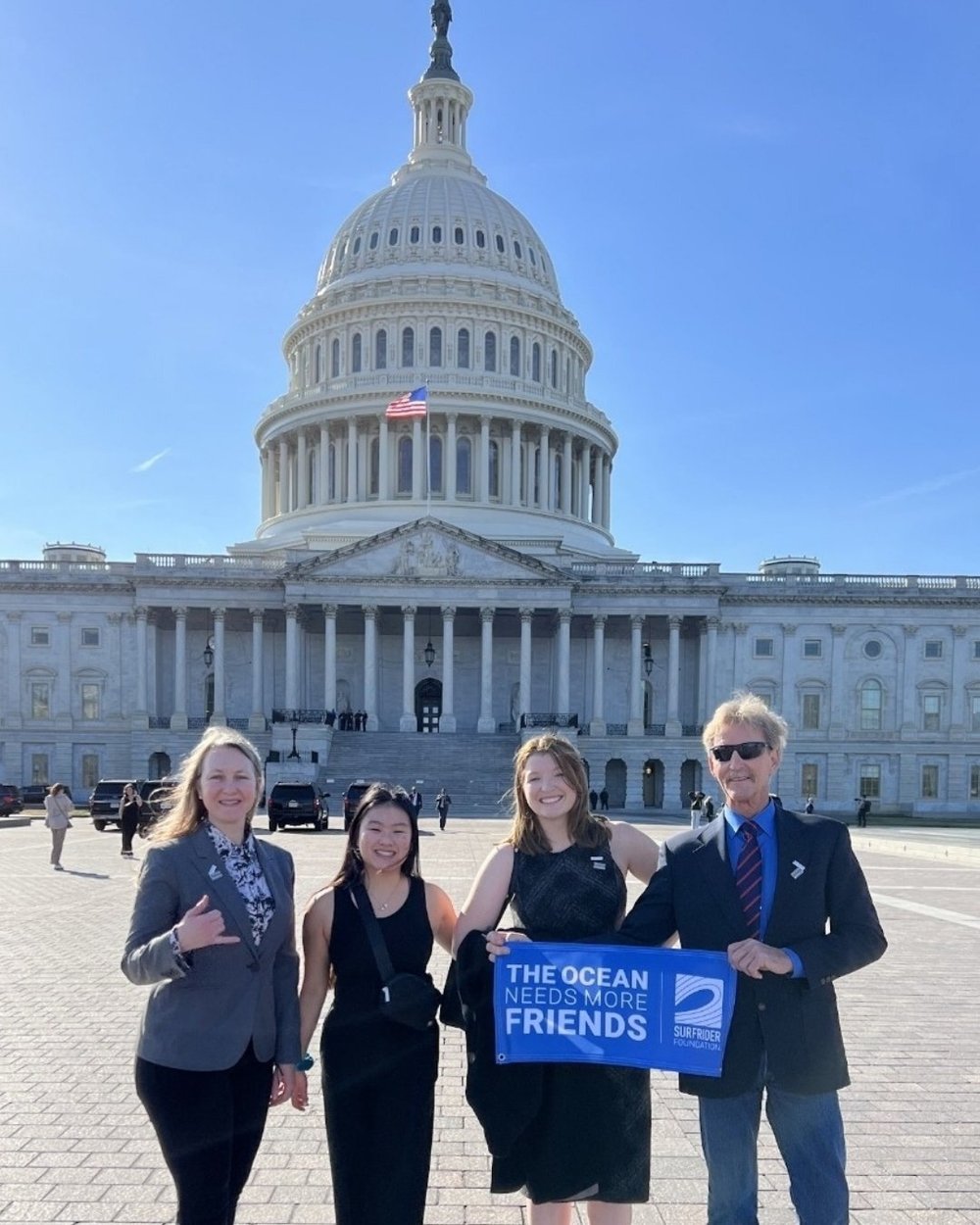 Hill Day 2021 with the Washington State Delegation
What has been the highlight of your Surfrider experience?
Hill Day in Washington, D.C. It was not only a lot of fun, but it also gave me confidence that there are people in government who care and who will listen if given the chance. That experience gave me a solid base in advocacy and a boost of courage. Today I work professionally in advocacy protecting Alaska’s National Wildlife Refuges, and Hill Day played a real role in that.
Thanks so much! Is there anything else you would like to add?
I’m honored to be highlighted in an Activist Spotlight, but I feel that honor really belongs to the entire executive committee up here.
When [Alaska Regional Manager] Liz Schotman and I first spoke about starting a chapter in Alaska, we knew that the near-total lack of knowledge about the organization in the area would mean a slow start to getting things off the ground. There were many months when our beach cleanups would just be myself and my dog, slowly making our way down the Homer Spit.
Then, I hosted a Surfrider 101 meeting, and Sara Faris and Lyndee Weaver offered to become Vice Chair and Communications Coordinator, respectively. That night was the real beginning of the Kenai Peninsula Chapter. The energy that they have brought over the past year, the passion, dedication, and follow-through, is nothing short of remarkable. Margaux Sheppard joined on as our Treasurer, and now our newest E.C. Member Martina is on the way. These women inspire me every day, and I am so grateful for everything that they do and are. The amount of change they have been able to make in such a short time is a testament to both their incredible strength of character and to the fact that no one achieves anything alone.
To the team: from your now very misty-eyed Chair and friend, thank you!