
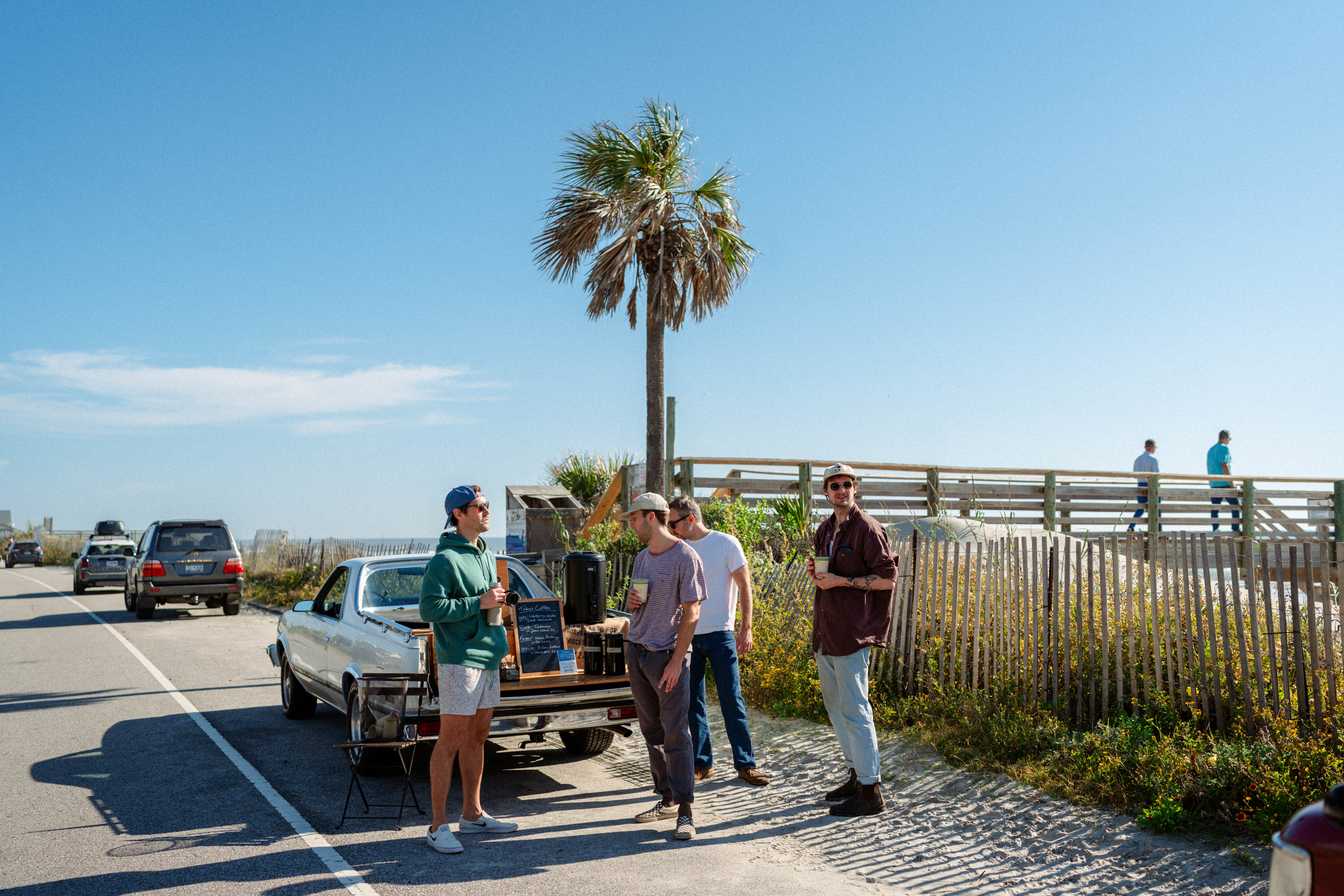
Ocean Friendly Businesses can show us how it's possible to avoid single-use plastic, even on the go. Hear from Camino Caffeino owner, Robert Huffman, about starting his sustainable mobile coffee business in Charleston, South Carolina!

Tell us the story behind Camino Caffeino!
Camino Caffeino has been a retirement dream of mine since I was a little kid. Growing up, I'd visit my grandparents' farm in Kentucky every summer and I'd see my grandfather use his El Camino to help haul and sell his tomatoes and other vegetables to friends and neighbors. My dad always joked that my grandpa sold 'em dirt cheap just to keep people coming around and keep him company. It took me years to understand, but I eventually learned how much friendship and community can mean. I always dreamed of doing something similar with an El Camino, but with my own spin: serving coffee on the coast. After surfing, I'm always craving a good cup. So even though I’m far from retirement, I decided to start early. I found an identical El Camino to my grandpa’s in Florida and drove down to snag it. Camino Caffeino has been a slow transformation from a car to a company, but I'm in no rush. The people I've met and the conversations I've had have filled me to my core, and and getting to do this has truly been a dream come true.


What inspired you to follow sustainable practices and to become an Ocean Friendly Restaurant (OFR)?
The inspiration to become an OFR started long before I ever got the El Camino. I volunteered at beach cleanups with Surfrider in Los Angeles, where we’d find all kinds of absurd trash, including things you’d never want your kids to see while building sandcastles. On top of that, the sheer amount of plastic debris was maddening. Coming home afterward and noticing how much plastic filled my own house made me realize how much we consume every day without thinking about it. Around that time, I frequented a coffee shop in LA called Bar Nine that served drinks exclusively in glassware. You could take it home and bring it back for a small discount, and that was my first real inspiration for using coffee as a way to reduce plastic consumption. When I moved to Charleston in 2020, I found a city already deeply invested in sustainability and ocean conservation. The local Surfrider chapter in Charleston became a huge source of inspiration and support as I worked toward becoming plastic-free. I owe a lot to the people and organizations who helped educate me and support Camino Caffeino in becoming a more sustainable company.

Do you find that customers are receptive to your mission and eco-friendly practices?
People are often drawn to the car because of their own El Camino memories, which naturally opens the door to conversations about why I don’t use plastic cups and why we should slow down and enjoy coffee outdoors more often. I’ve yet to meet anyone who prefers plastic over glass, and most people I meet are already trying to reduce their plastic use, which makes me feel this city has done a great job raising awareness about the local impact of plastic overuse.
Do you think that the unique nature of Camino Caffeino has made it easier to follow sustainable practices?
I don’t know if it’s made things easier, but operating on a small scale definitely helps. The biggest challenge with switching from plastic to glass is the upfront investment and the daily dishwashing, but the customer reaction is worth it all.


How did you join the Charleston chapter and how is it going?
I was looking for ways to give back to the beach and meet other like minded folks and Surfrider offered that and much more. The beach is such a special place to so many of us and unfortunately, not everyone respects it enough to keep it clean, but thankfully there's plenty of people that do. I think being a part of Surfrider has taught me so much and inspired me to give just 1% more effort than I used to so that we can keep our beaches and our ocean as clean as possible for the generations to come.

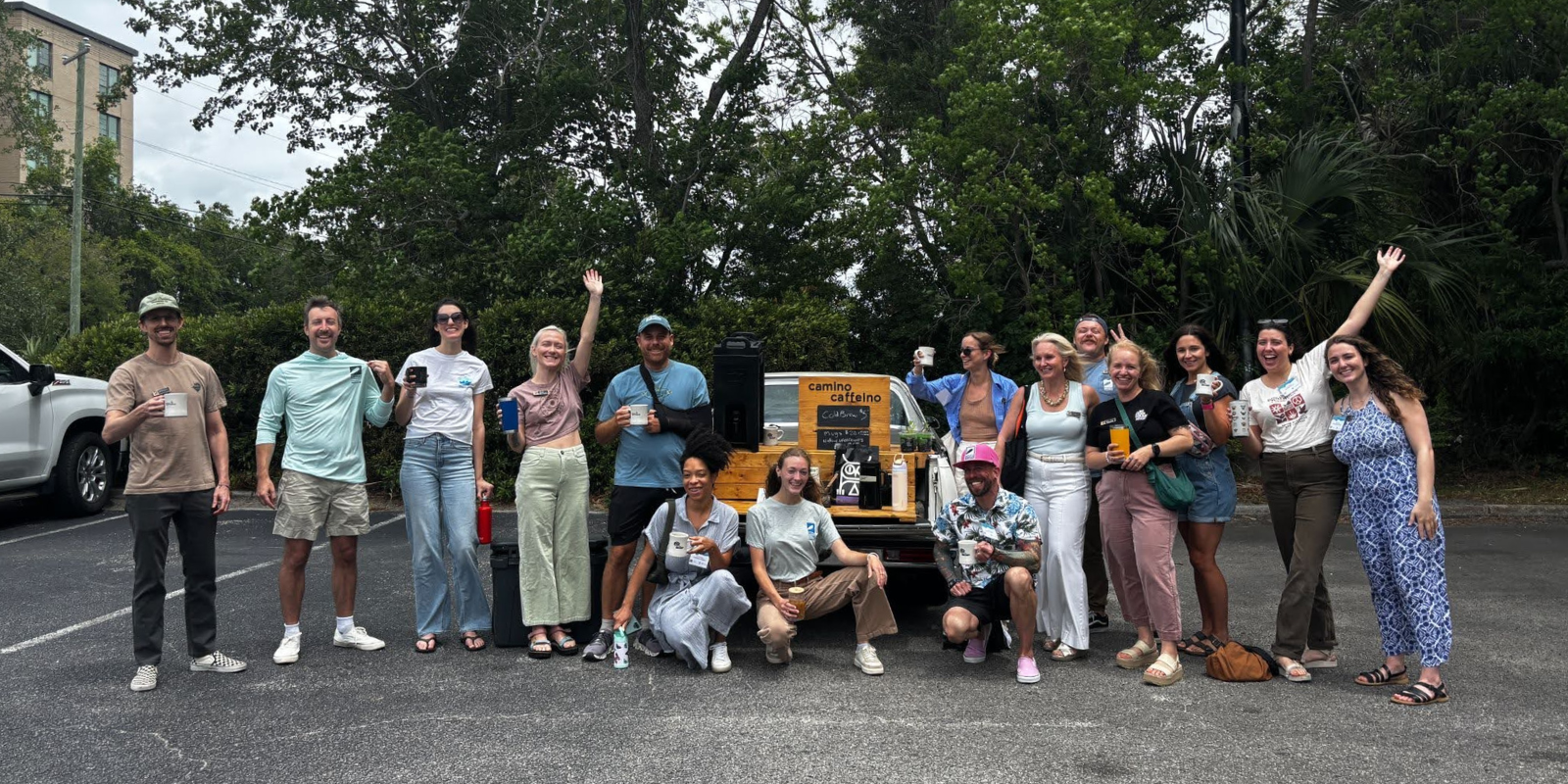 A group of enthusiastic Surfrider volunteers and staff enjoying a taste of Camino Caffeino at the Southeast Regional Chapter & Club Conference, May 2025. Camino Caffeino is available to book for private events!
Is your local restaurant Ocean Friendly? If not, encourage them to sign up and join the movement to end single-use plastics!
 As Senior Plastic Pollution Initiative Coordinator, Jenna supports the Beach Cleanup and Ocean Friendly programs. She graduated from Stony Brook University with a B.S. in Marine Vertebrate Biology and an M.A. in Marine Conservation and Policy.