
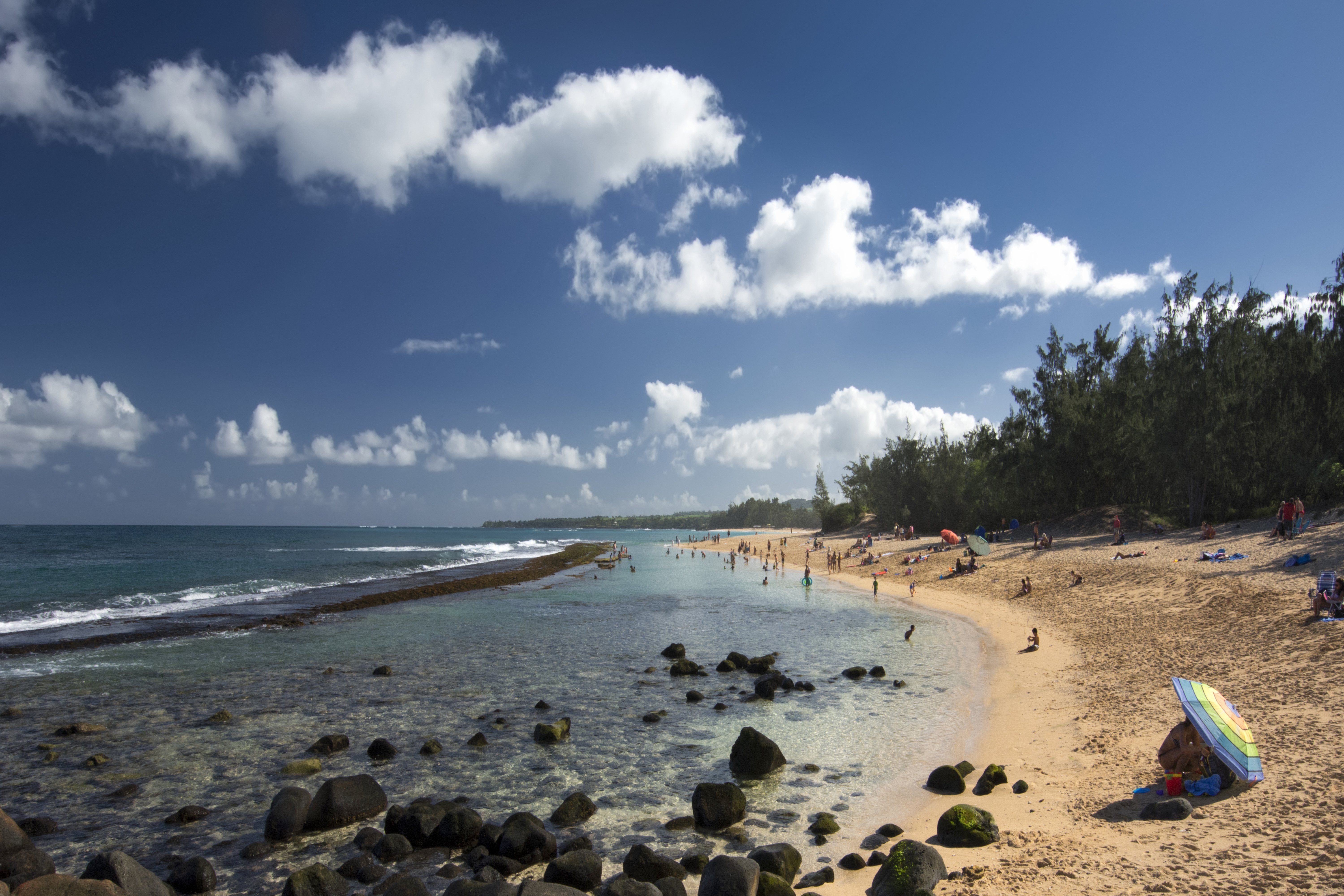
The Hawaiian Islands enjoy warm weather, an abundance of surfing and ocean recreational opportunities, and coastal waters brimming with marine life, but their remote location in the middle of the Pacific Ocean puts the entire state on the front lines of a changing climate. In recent years, the island of Maui has experienced dynamic extremes with severe storms, prolonged drought, and devastating wildfires.
Many factors contributed to the 2023 Maui wildfires. A history of land management and water diversions allowed fire-prone invasives to dominate much of the landscape, especially in West Maui. The island was also experiencing climate-change-driven drought and hurricane-force winds when the fires sparked. On the other extreme, the Hawaiian Islands experienced a 1-in-1000-year storm when back-to-back Kona storms dumped 2 trillion gallons of water on the islands during March 2026. Peak rainfall totals of up to 62 inches were recorded by the Hawaiʻi Mesonet UH weather monitoring system in some areas of Maui. The summit of Haleakalā received 33 inches of rain over just 24 hours, nearly doubling the previous 24-hour record. With this climate reality clearly in mind, the Surfrider Foundation Maui Chapter has been forming and nurturing community partnerships to not only better protect and enjoy our ocean, waves, and beaches, but also to help foster a more climate-resilient future for the island and the people who call it home.
Before the wildfires devastated Lahaina and other areas on West Maui in August 2023, the chapter was monitoring fecal bacteria levels at approximately 15 beaches on the North Shore and in South Maui with its Blue Water Task Force (BWTF) program. Chapter activists were also supporting testing at four sites in Hana performed by students at Hana High School, but had not yet tested anywhere on West Maui. In the months following the wildfires, there were many questions about the safety of coastal waters at the beach near the burn zone and along the entire west side of the island. There was some limited government and university testing of air, soil, and coastal waters, but no one was answering the question the Maui Chapter was receiving over and over again from the local community — “Is it safe to swim yet?”
To answer this question, Surfrider developed the Maui Post-Fires Coastal Water Quality Monitoring Program. During two sampling events (one in wet weather in January 2024 and another in dry weather later in June), water samples were collected from eight sites on West Maui. Samples were analyzed for not only fecal indicator bacteria, but also fire-related contaminants, including heavy metals and PAHs (Polycyclic Aromatic Hydrocarbons). Fortunately, test results did not show any evidence of lingering fire-related contamination that posed a risk to human health. The Maui Chapter was very happy to share this valuable water quality information with the local community, allowing people to safely return to the water. Since then, the chapter has continued testing the beaches on West Maui for fecal bacteria through their regular BWTF program, providing water quality data to inform safe recreation at over 30 beaches island-wide every month.
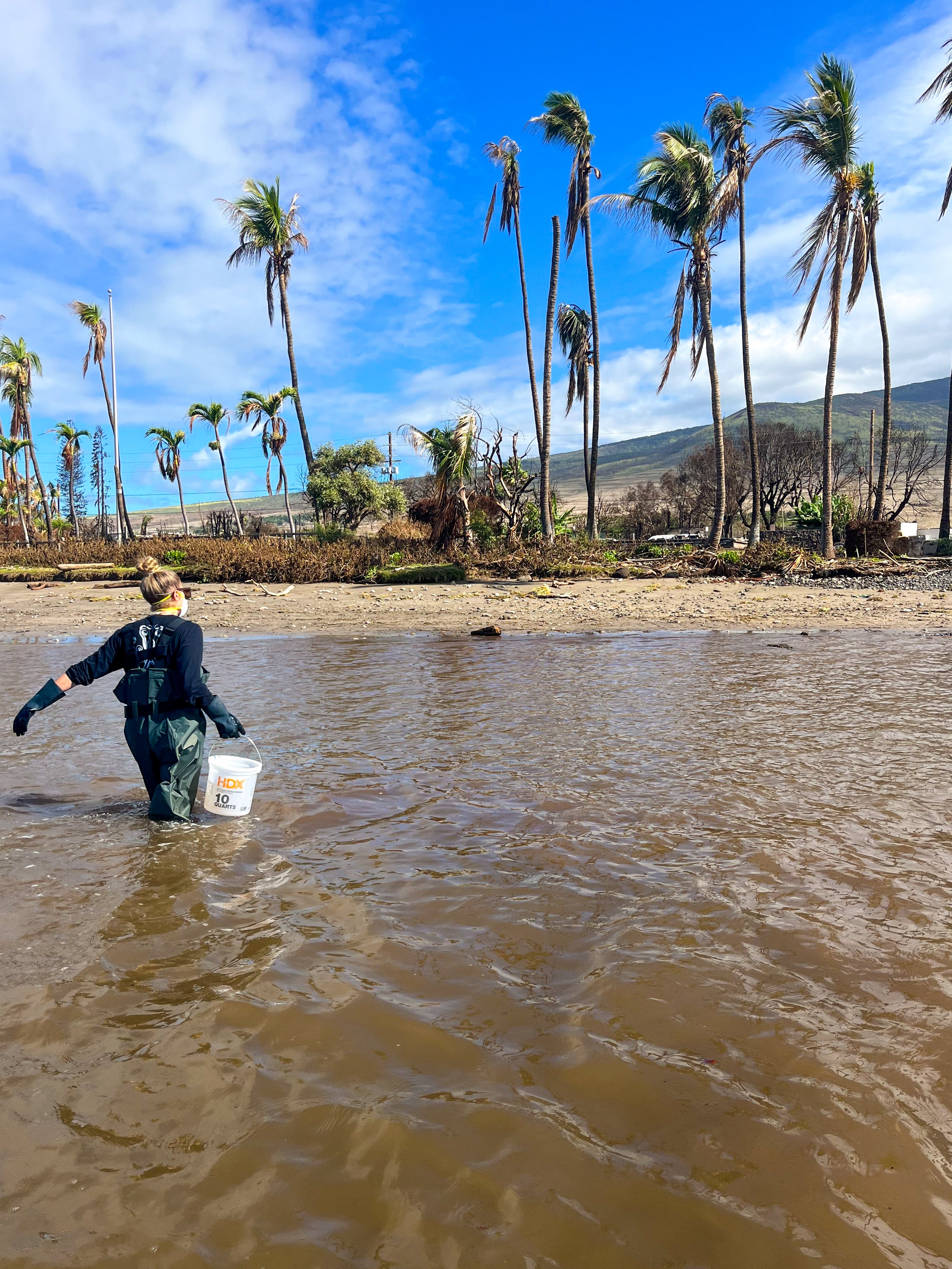
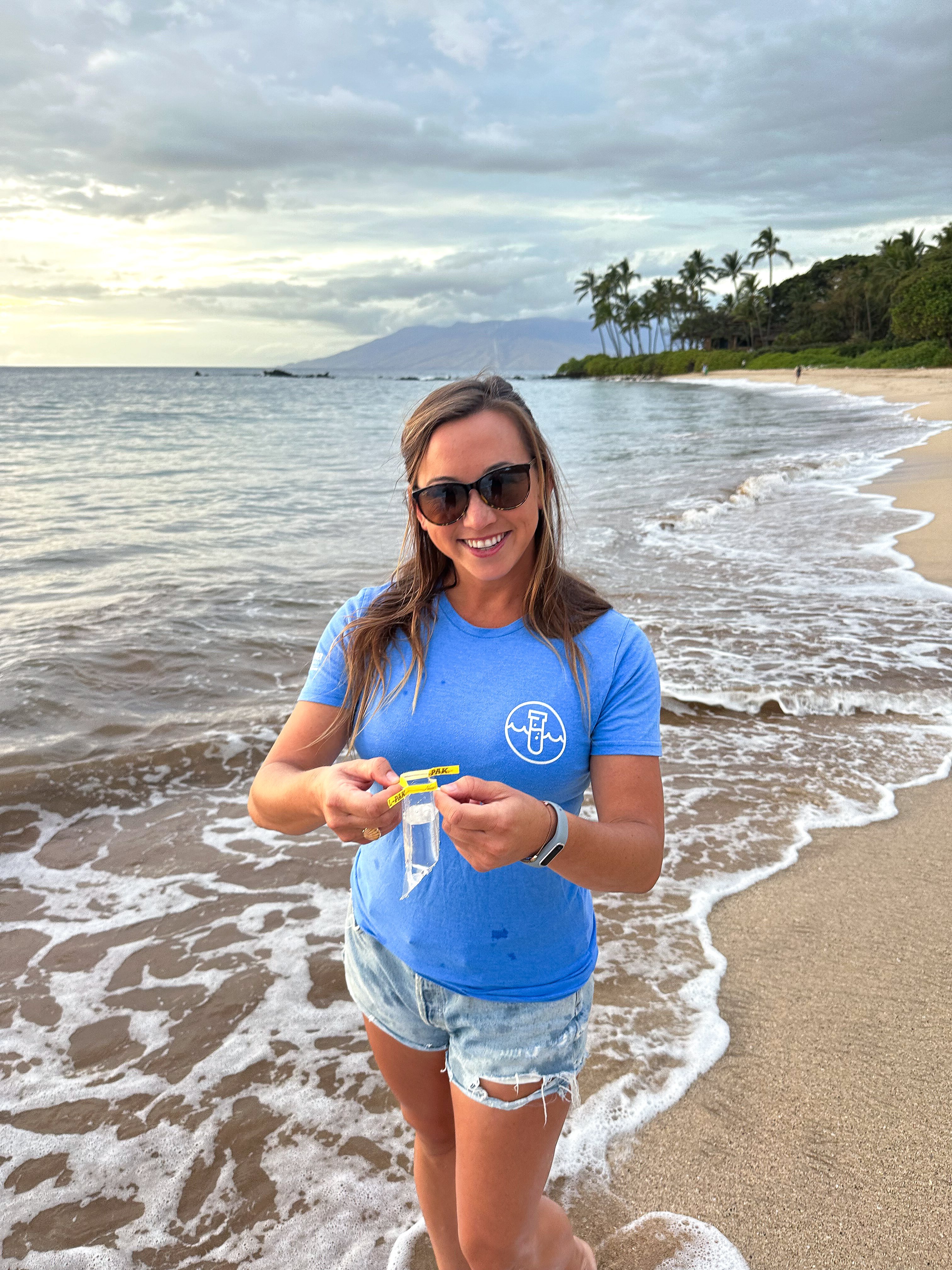
Left: Water samples are collected in front of the burn zone in Lahaina. Right: Kristina McHugh, volunteer leader of the Maui Chapter’s BWTF, collects a water sample.
To help communities on Maui move forward in the recovery process, Surfrider teamed up with Pacific Fire Exchange (PFX), the Hawaiʻi Wildfire Management Organization (HWMO), and other expert contributors to develop Replanting After Fire: A Fire-Resilient Landscape Guide for Lahaina & West Maui. This handbook provides easy-to-understand guidance for people returning to their homes after the West Maui fires and for other communities living in fire-prone areas to create and maintain landscapes that are fire-resilient, environmentally responsible, and ocean-friendly. It explains how fires spread, and introduces the concept of Home Ignition Zones. Starting with the home itself and moving out into the landscape, the guide offers practical tips for each zone and how to maintain a “Lean, Clean, & Green” landscape. The guide connects fire-resilient practices with waterwise tips to keep landscapes hydrated responsibly in dry climates, and also includes a fire-resilient plant list and example landscape layouts for inspiration. While the plant recommendations are tailored to Lahaina and West Maui, the broader concepts of fire-resilient landscaping apply to seasonally dry climates across Hawaiʻi and beyond.
To publicly launch the Fire-Resilient Landscape Guide, HWMO and Surfrider hosted an online webinar and are continuing to distribute printed copies of the guide at public events. With the right plants, smart planning, and simple maintenance, communities can work together to reduce the chance that homes and neighborhoods will burn when wildfires occur. One yard may seem small, but when neighbors work together and use fire-resilient landscaping principles, it strengthens protection for the entire community.
Fostering Community Partnerships to Grow Ocean Friendly Gardens
As recovery continues on Maui, the chapter’s Ocean Friendly Gardens (OFG) program has also scaled up through partnerships and impactful hands-on projects across the watershed. Chapter OFG coordinator, Heidi Beltz, is educating the next generation of watershed stewards in her role as a garden teacher at the Kamehameha III Elementary School in Lahaina. Heidi even successfully advocated for her HOA to stop spraying herbicides in a stormwater basin and to allow her to plant more native plants and trees.
In April 2025, the Maui Chapter hosted its very first workday with the Kahākūkahi Ocean Academy to install a new Ocean Friendly Garden. The academy is a youth engagement center that empowers keiki (children) through ocean sports, environmental stewardship, and a deep connection to the ʻāina (land) and kai (sea). The goal for the new garden is for it to serve as an outdoor classroom to teach keiki about native Hawaiian plants, their cultural and ecological significance, and their role in supporting a healthier ocean.
.jpg?width=1533&height=1526&name=maui-koa-ofg%20(1).jpg)
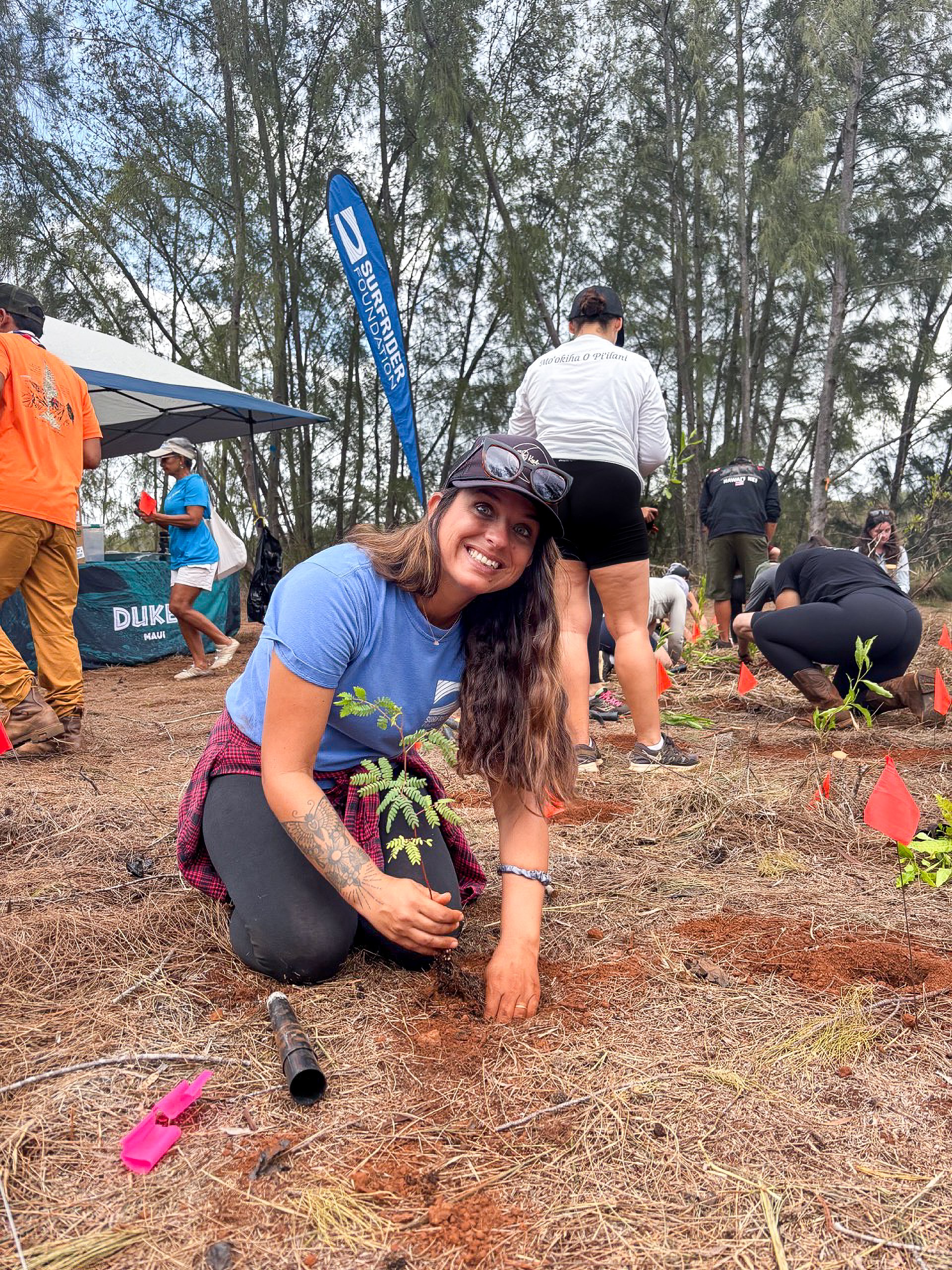
Left: The Surfrider Maui Chapter and Kahākūkahi Ocean Academy collaborate to install an Ocean Friendly Garden. Right: Maui OFG Coordinator Heidi Beltz plants a koa tree alongside more than 100 volunteers in the Puʻu Kukui watershed above Honolua Bay.
The chapter is also partnering with Grow Some Good to recruit volunteers for monthly workdays at the Nā Māla Kaiāulu community garden at the Kahului YMCA. With a mission of cultivating a healthy community through improved access to nutritious, affordable food, Grow Some Good transformed a 4-acre, fire-prone lot in urban Kahului into a thriving ecosystem filled with native plants and a tropical food forest. The Maui Chapter is stoked to help keep this community garden thriving and to engage more community volunteers in sustainable food production and gardening practices.
To help protect Honolua Bay, a famous surf spot and popular snorkeling destination where the Maui Chapter’s BWTF monitors water quality, the chapter has partnered with Aloha Puʻu Kukui to plant nearly 3000 native trees and plants in the upstream watershed. Healthy, intact native forests slow runoff, stabilize soils, and filter sediment and nutrient pollution before it reaches the ocean. When upland landscapes are degraded, those protective functions are diminished, and water quality suffers. Watershed restoration is essential to supporting clean water and ecosystem resilience in Honolua Bay.
These collaborative OFG projects not only reduce stormwater runoff locally, but they also support the long-term resiliency of Maui as it faces a dynamic and changing climate. There is still much work to be done as communities across Maui work to recover from wildfires and Kona low flooding, but the Maui Chapter and its local partners are energized to be united in purpose to inform and collaborate on a sustainable path forward to protect safe communities, healthy watersheds, and a clean ocean for all to enjoy.
ʻAʻohe hana nui ke alu ʻia. No task is too big when done together by all. (Pukui 142)
 As Ocean Friendly Gardens Manager, Kathryn is passionate about advocating for watershed protection through gardens and landscapes. She graduated from UC Santa Cruz with a B.S. in Marine Biology, and developed a love for California native plants and restoration work during her time at the Los Cerritos Wetlands in Long Beach.
 With a background in Marine Biology and a Masters in Environmental Policy, Mara is the leading lady in water quality. As the Clean Water Initiative Associate Director, she oversees the Blue Water Task Force and runs federal-level campaigns to promote clean water for all Americans.