
Leveraging Community Power to Investigate Pollution and Inform Solutions at Linda Mar Beach
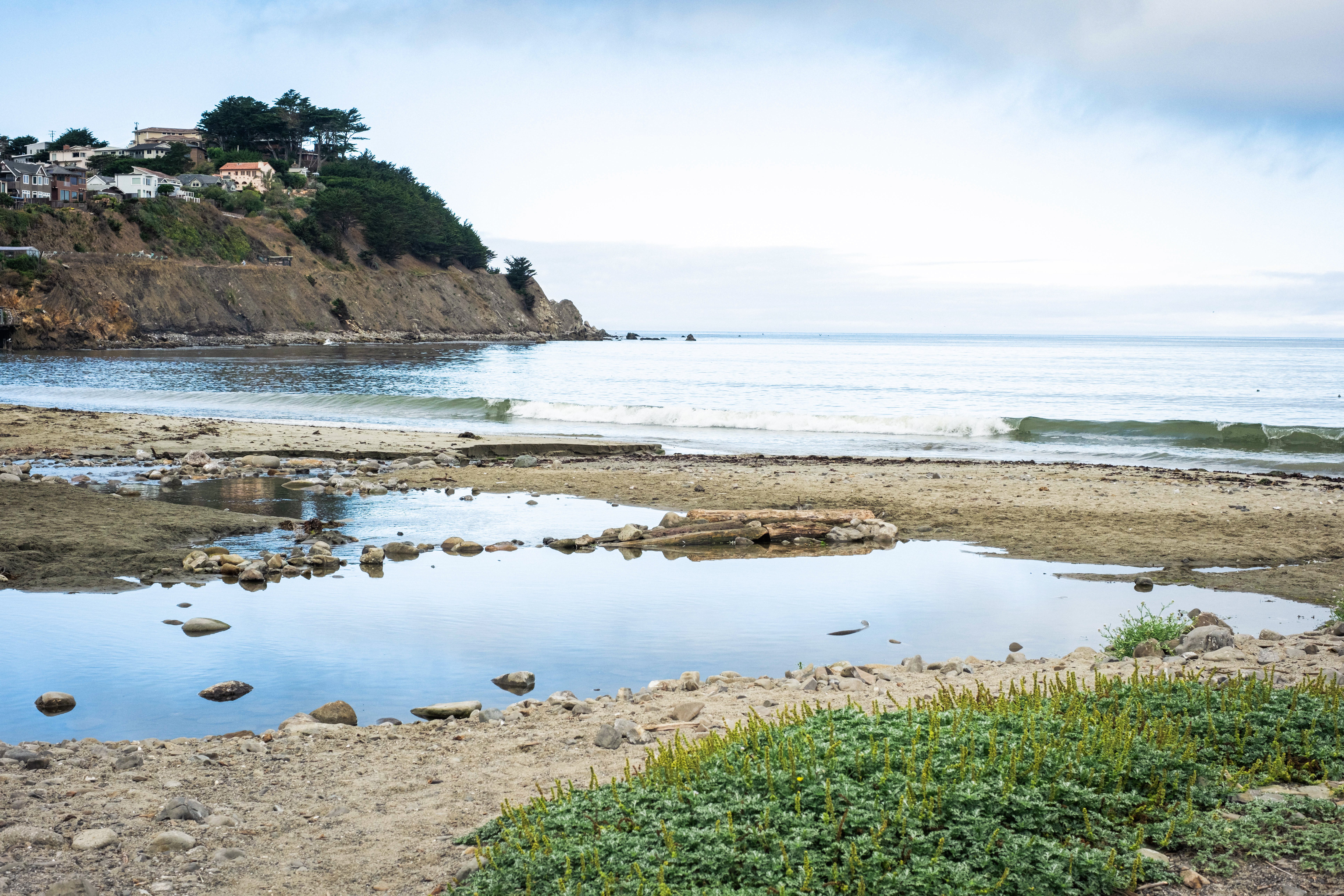
Located less than twelve miles south of San Francisco, surfers of all abilities and ages flock to Pacifica State Beach, or Linda Mar as it’s referred to locally, to enjoy consistent swells and gentle rolling waves. The crescentshaped shoreline of Linda Mar Beach extends for nearly a mile, with room for newcomers and seasoned surfers alike. Linda Mar’s mellow waves and gradual sloping shoreline has earned it a reputation as a hub for surf schools and youth contests. You can often find children playing in the surf or in San Pedro Creek, which flows across the sand and empties into the ocean here.
Unfortunately, the creek often carries polluted runoff from the urban watershed of Pedro Valley down to the beach at Linda Mar. The San Mateo County Surfrider Chapter has been collecting samples at the mouth of San Pedro Creek through its Blue Water Task Force (BWTF) program for over 12 years, and test results frequently yield high bacteria levels that pose a human health risk. In fact, water collected at Linda Mar Beach, where the San Pedro Creek meets the Pacific Ocean, failed to meet health criteria for fecal indicator bacteria 72% of the time it was tested in 2025. This means that nearly three out of four water samples collected had a higher bacteria concentration than is deemed safe for swimming and surfing by state and federal health agencies.
The San Mateo County Chapter posts its test results from Linda Mar and five other creeks and beaches they test every week at bwtf.surfrider.org. The chapter shares this data through social media for broad community distribution, and present data trends from all of their sampling sites in an annual water quality report to further build public awareness of local water quality conditions.
The San Mateo County Health Department also monitors water quality in the surf and at the creek mouth at Linda Mar Beach, and will post swim advisories when its test results exceed health standards. Years of consistently high bacteria levels have landed Linda Mar Beach on Surfrider’s Beach Bacteria Hot Spots list for many years running. San Pedro Creek and Linda Mar/Pacifica State Beach have also been placed on the impaired water bodies list under the Clean Water Act for consistently documented bacterial contamination.
Despite the well-documented water quality problems, there has been little political momentum for pinpointing and fixing the sources of pollution. Past studies in the San Pedro Creek watershed have identified a number of potential sources of pollution, including old sewer laterals that leak sewage into the creek, stormwater and dry weather runoff, and animal waste from dogs, horses, birds, and other wildlife. Surfers and beachgoers also complain of a sewage smell coming from a nearby pumping station that frequently fails during wet weather, but addressing these infrastructure problems costs money, and other than a small grant to assist homeowners with sewage lateral inspections and repairs, the City and County have come up short.
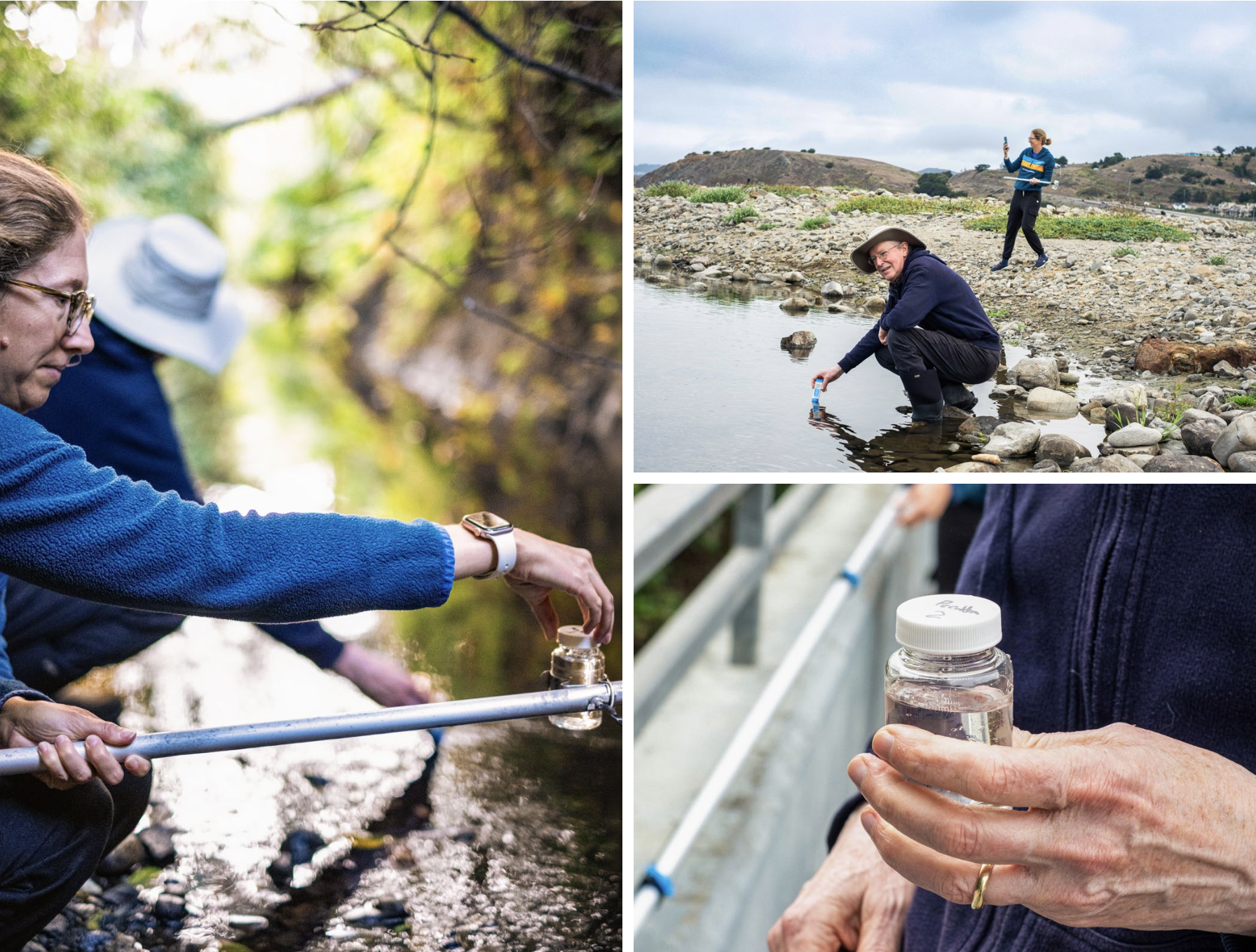 Volunteers collect water samples from San Pedro Creek and Linda Mar/Pacifica State Beach. Photo credit: Kathryn Wheeler
Seeking to bring about real change, Surfrider volunteers joined forces with a diverse coalition of environmental and surfing organizations to address the ongoing pollution problems at San Pedro Creek and Linda Mar Beach. The Linda Mar Water Quality Coalition is a grassroots alliance consisting of the Surfrider San Mateo County Chapter, Salted Roots, the San Pedro Creek Watershed Coalition, Cultivar Foundation, and the Pedro Point Surf Club. Volunteers from these organizations are working together to raise awareness and generate water quality data that will inform and hopefully motivate solutions.
Weekly enterococcus and E.coli testing is being performed at four sites along San Pedro Creek to identify bacteria hot spots and hone in on where pollution is entering the creek. In July 2025, they also launched DNA-based testing to pinpoint specific sources of pollution in the watershed. This cutting-edge approach allows them to distinguish between human and specific species of animals that are contributing to the fecal bacteria load, and provides data that could guide targeted solutions in the watershed. The results so far indicate a high level of human fecal contamination during and after rainstorms. You can learn more about the coalition’s work in this great article from Coastside News.
While the results of the pollution point source study are pending, the Linda Mar Water Quality Coalition is continuing to raise awareness and educate the public about the pollution challenges at community events, including the Earth Day Ecofest, the San Pedro Surf Club’s Big Chill OutGrom Fest, and monthly San Pedro Creek Cleanups with the Pacific Beach Coalition. At these events, coalition members are speaking directly to the public about the need for local pollution solutions and how beachgoers can take steps to protect their families’ health, such as:
-
Surfing and swimming away from the mouth of the creek. Water quality conditions are usually safe north of the Taco Bell, except after storms.
-
Follow rain advisories and stay out of the water for 72 hours after it rains, and
-
Don’t let your kids play in the creek!
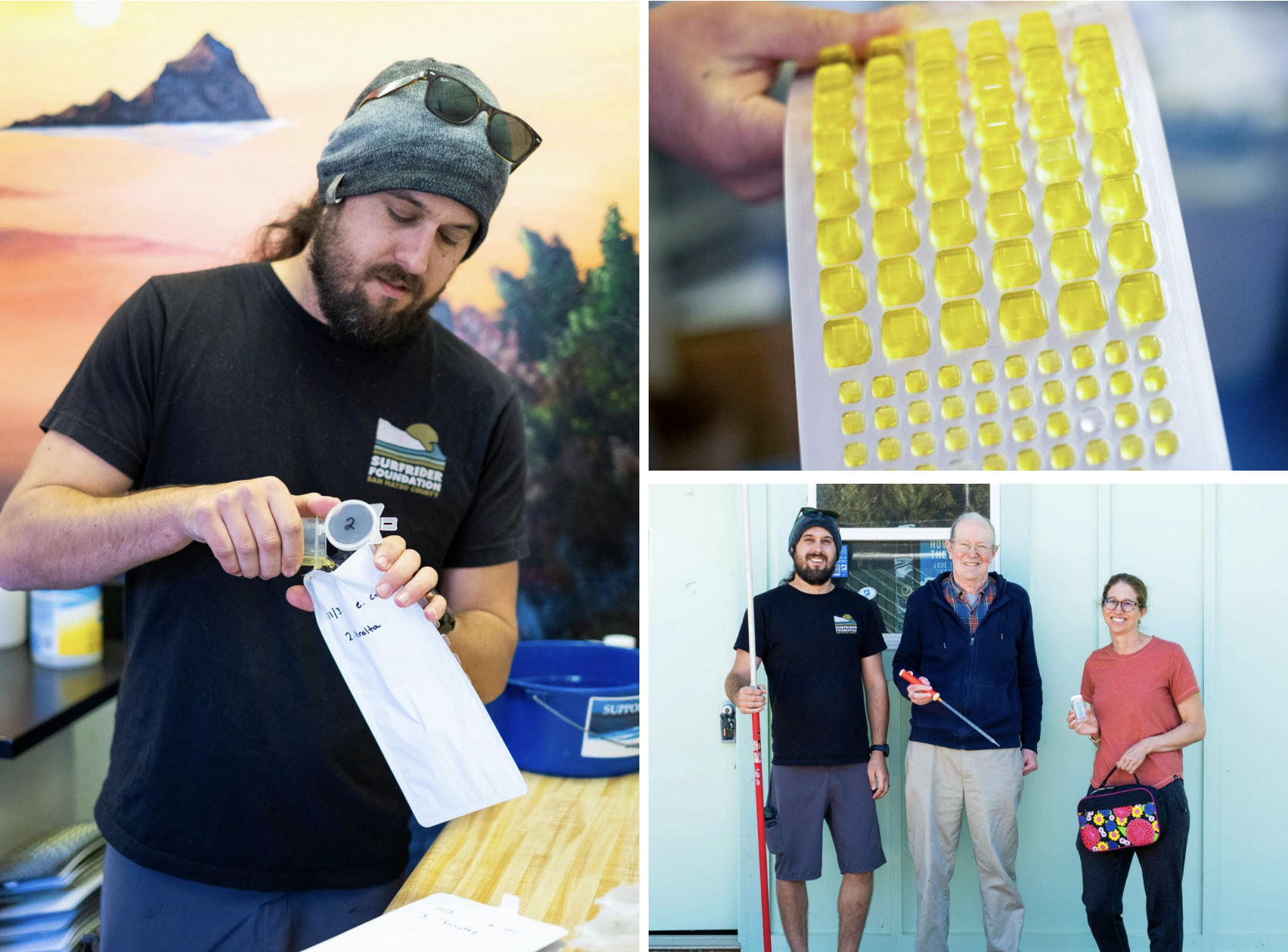 Left: Mitch Milligan, volunteer leader of the San Mateo County Chapter’s BWTF, processes a sample in the lab. Right: A water sample (top) and coalition partners (bottom) at the BWTF lab in Pillar Point Harbor, California. Photo credit: Kathryn Wheeler
The Surfrider Foundation San Mateo County Chapter and the Linda Mar Water Quality Coalition would like to thank the Rose Foundation, the Stone Family Foundation, and the Resources Legacy Fund for supporting our work at Linda Mar Beach and in the San Pedro Creek.
 With a background in Marine Biology and a Masters in Environmental Policy, Mara is the leading lady in water quality. As the Clean Water Initiative Associate Director, she oversees the Blue Water Task Force and runs federal-level campaigns to promote clean water for all Americans.