

A Flood of Takeout Plastic Trash
Most of us have experienced this: you open a takeout bag you brought home and find plastic utensils, napkins, and condiment cups, or packets you didn’t ask for or need.
These single-use items may seem insignificant, but disposable accessory items from takeout meals are a common source of plastic pollution. Anyone who has participated in a beach cleanup has seen the impact of single-use plastics firsthand. Plastic accessories from takeout meals are regularly found along our coastline.
Because these items are lightweight, they are easily carried by wind and rain into storm drains, creeks, and other waterways. From there, they travel through the watershed and out to the ocean, where they may break up into microplastics.
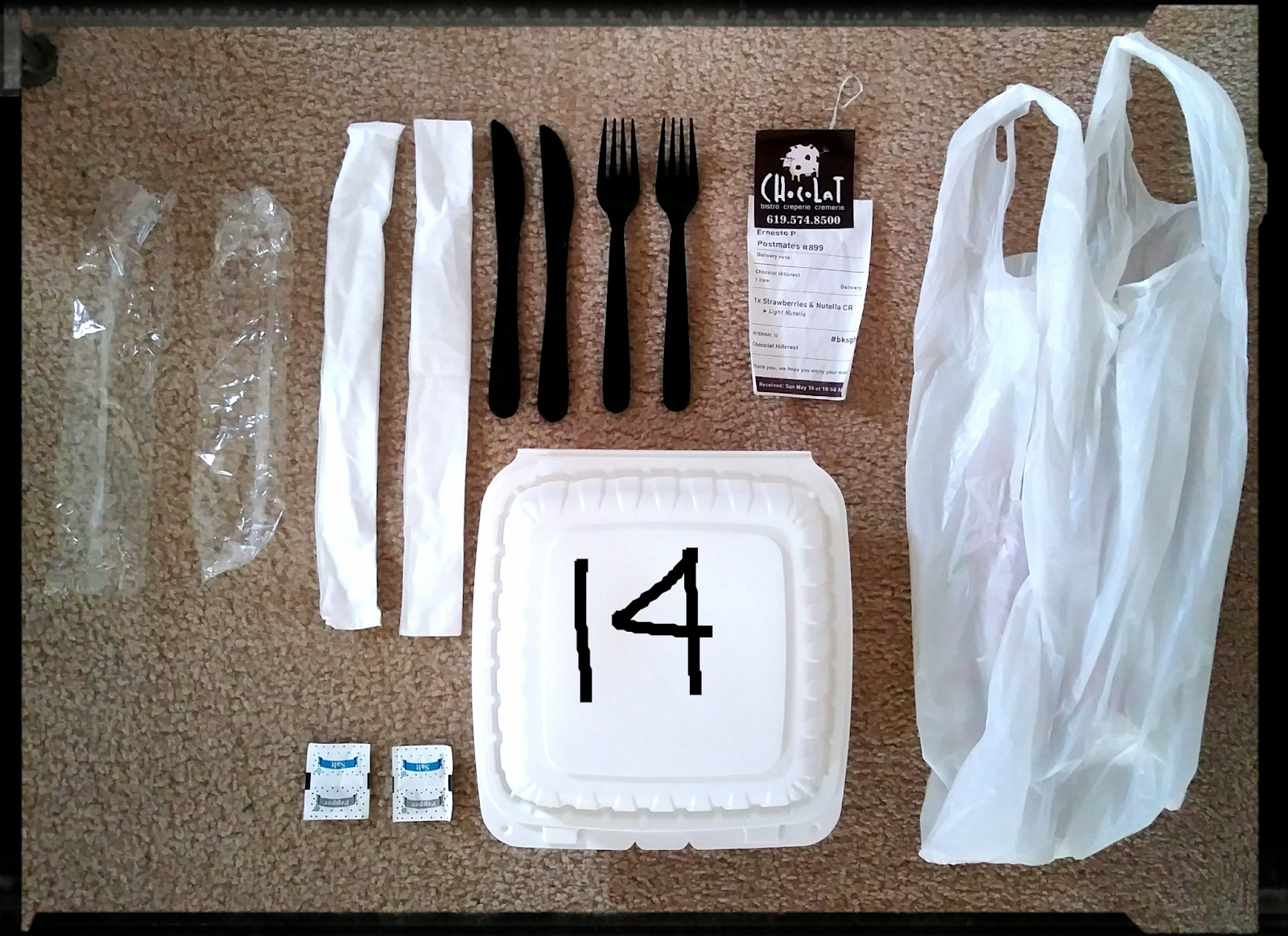
A common example of the many single-use items included with one takeout order (14 total!) Image: Vicki Conlon
Skip the Stuff: Reducing Plastic and Shifting Customer Mindsets
Across the country, “Skip the Stuff” policies are being adopted to reduce unnecessary plastic waste. These laws are straightforward: restaurants and food delivery services provide disposable accessories—such as utensils and condiment packets—only when customers request them.
By shifting to a “by request” model, businesses can lower supply costs and reduce waste disposal expenses, while demonstrating their commitment to sustainability. This approach also aligns with growing consumer expectations, with most who want to see a broad reduction in single-use plastics. In fact, according to a survey conducted by Data for Progress, the majority of voters are concerned about plastic pollution and support mitigation measures, including bans on single-use plastics in their communities
Many restaurants increase their operating costs by automatically including disposable accessories with every takeout order. Yet when customers are eating at home, they often already have utensils, napkins, and condiments readily available. As a result, many disposable foodware accessories go straight from the takeout bag to the trash bin or pile up unused in kitchen drawers. Nationally, restaurants spend about $20 billion per year on such items, making even modest reductions a significant opportunity for cost savings.
One part of the law that is often overlooked by dine-in restaurants is the practice of placing straws directly into drinks before they are served. Automatically adding a straw to every iced tea, soft drink, and cocktail may seem convenient, but it creates unnecessary waste and adds to purchasing costs.
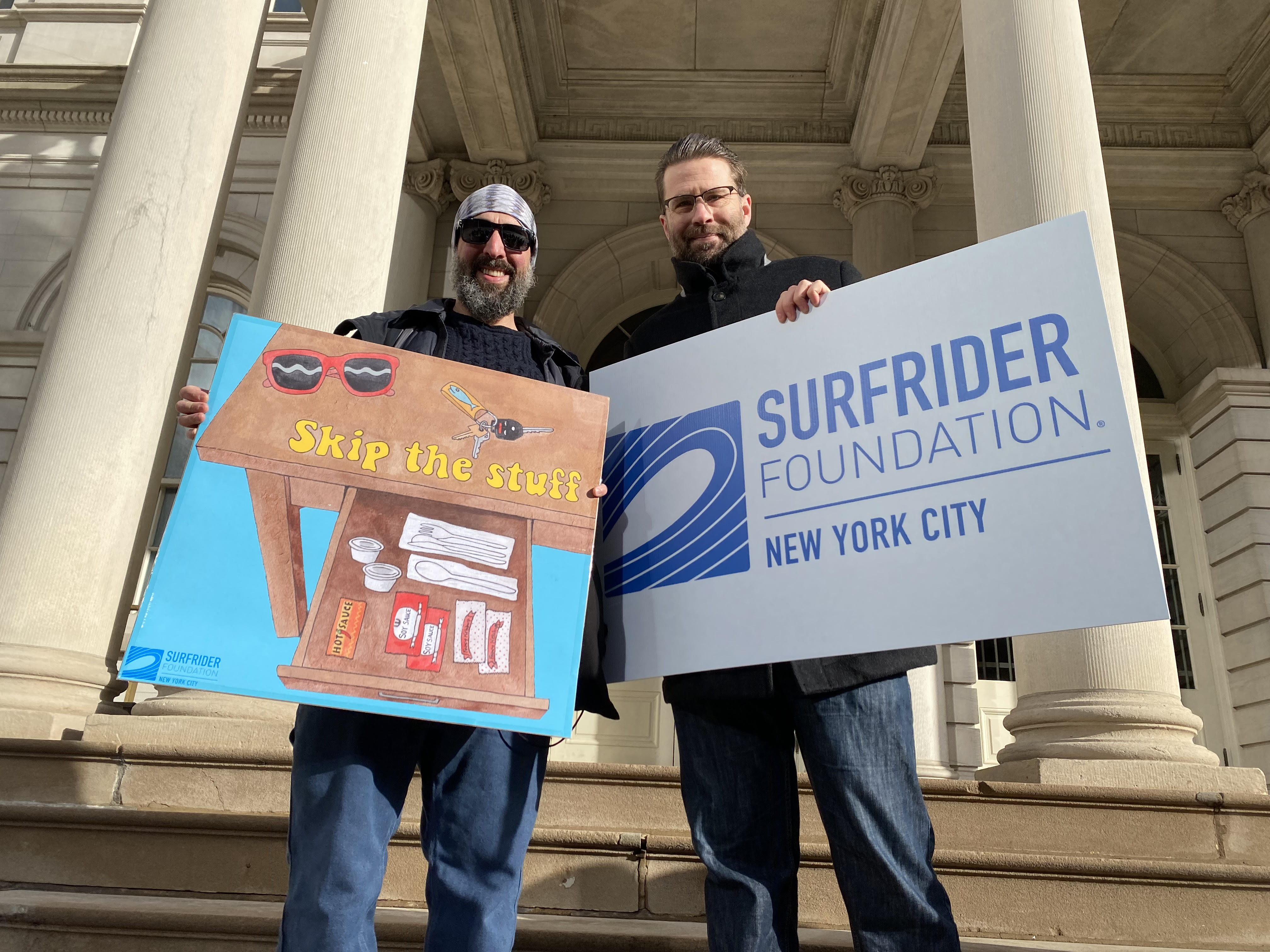
Have a Skip the Stuff Law Where You Live?
With over 70 Skip the Stuff policies across local, county, and state levels in the U.S, Surfrider is advocating for more of these policies and supporting effective implementation. If you are curious whether there is a Skip the Stuff policy in your area, take a look at Upstream’s Policy Tracker.
Here’s how you can help ensure that a Skip the Stuff law is working to reduce plastic pollution:
Customers also play an important role in making the Skip the Stuff laws successful. A few simple actions can help reinforce the shift away from unnecessary single-use plastics:
- Politely decline utensils, straws, or condiment packets you don’t need.
- Saying “no straw, please” when ordering helps shift expectations.
- If a straw is automatically placed in your drink, consider mentioning the Skip the Stuff law and asking that straws be provided only upon request in the future.
- Uncheck accessory boxes when ordering online unless you truly need them.
- Carry reusable utensils with you to avoid needing single-use plastic forks, knives, and spoons.
- Report when necessary and an option is available.
- Become a Surfrider Ocean Friendly Restaurants program volunteer
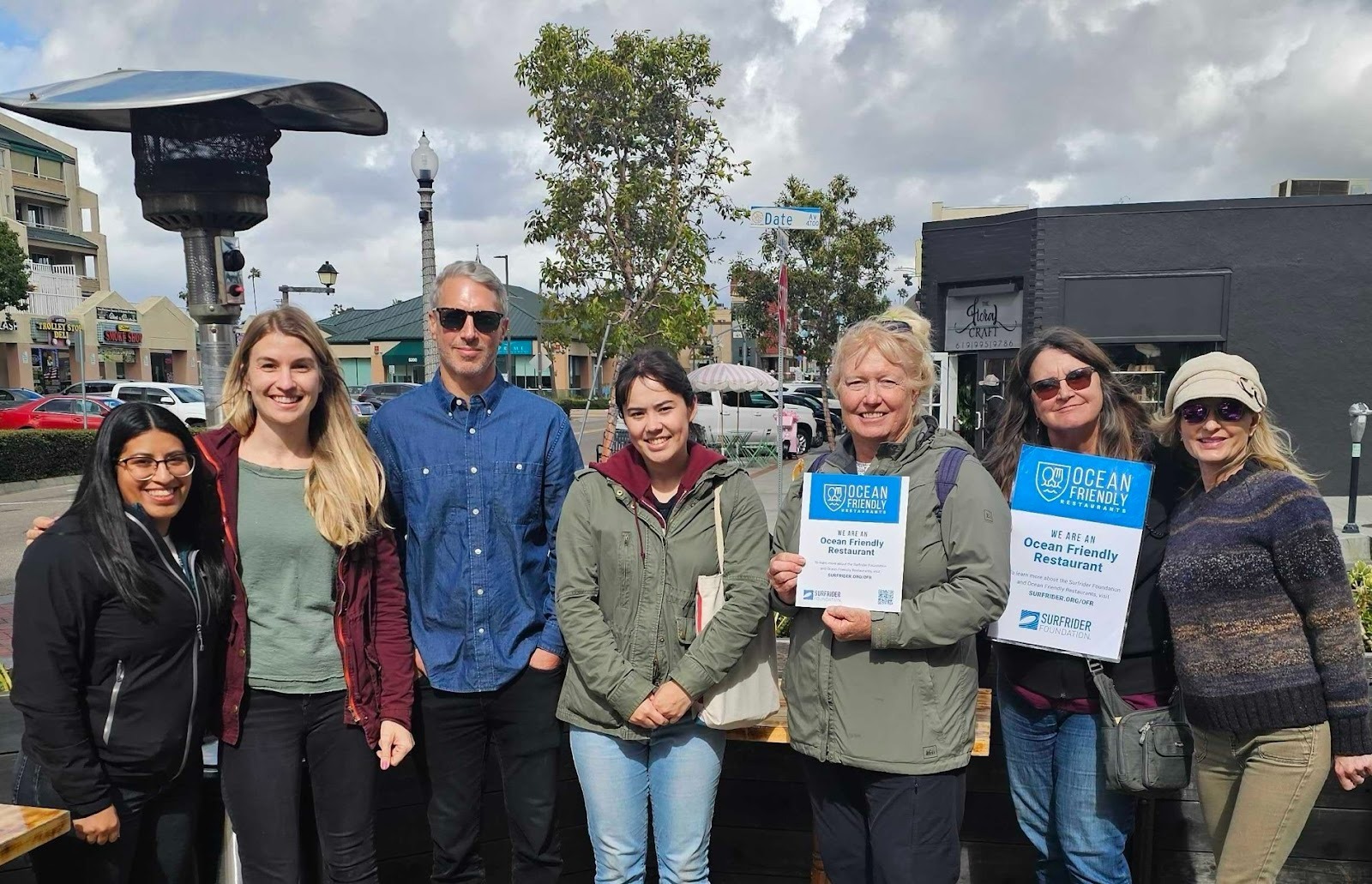
Volunteers canvas businesses regarding the Ocean Friendly Restaurants program.
In general, businesses can take several simple steps to comply with a law, reduce waste, and save money:
- Educate yourself and your staff to understand and follow the law. Many state agencies and local municipalities have websites to help.
- Download a staff resource 1-pager on how to reduce single-use plastics!
- If you live in CA, read more about the Statewide Skip the Stuff Law
- If you live in New Jersey, read more about the new Statewide Skip the Stuff law.
- Here are common elements that are included in a Skip the Stuff policy:
- Do not offer bundled single-use items.
- Update online ordering systems so customers can request only the accessories they need.
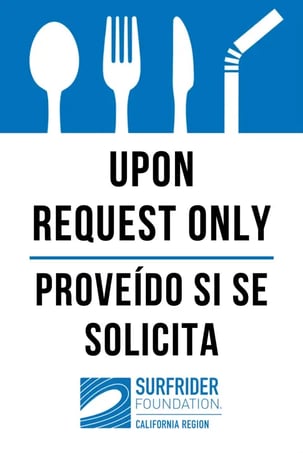
- Post signage letting customers know accessories are available upon request.
- Join Surfrider’s Ocean Friendly Restaurants program.
- Review the Quick Guide.
Want to Help Pass A Skip the Stuff Policy in Your Community? Take Action Now!
If you live in one of these regions, please consider adding your voice to support skipping the stuff!
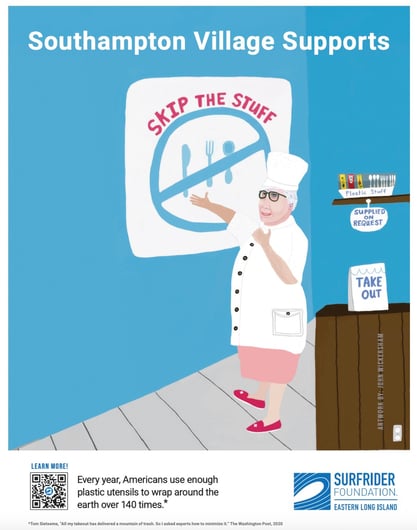
Artwork by John Wickersham, Designed by Christine Capelli
One meal at a time, by shifting from “include everything” to “only when requested” mindsets, we can reduce unnecessary plastic waste and help protect our ocean, waves, and beaches from plastic pollution and together, create a future free from single-use plastic.
*This blog was adapted from a San Diego Surfrider Chapter blog post by Janis Selby Jones.
Header image: Over 30 pieces of cutlery were picked up off the beach in Carlsbad, CA on November 5, 2025. They were different brands, and many of them, like the fork on the right, had baby gooseneck barnacles growing on them. Image: Janis Selby Jones
 Miho is the Plastic Pollution Initiative Senior Manager. She has a Masters in Environmental Science and Management from the University of California, Santa Barbara, and served as a California Sea Grant State Fellow for the California Natural Resources Agency.