
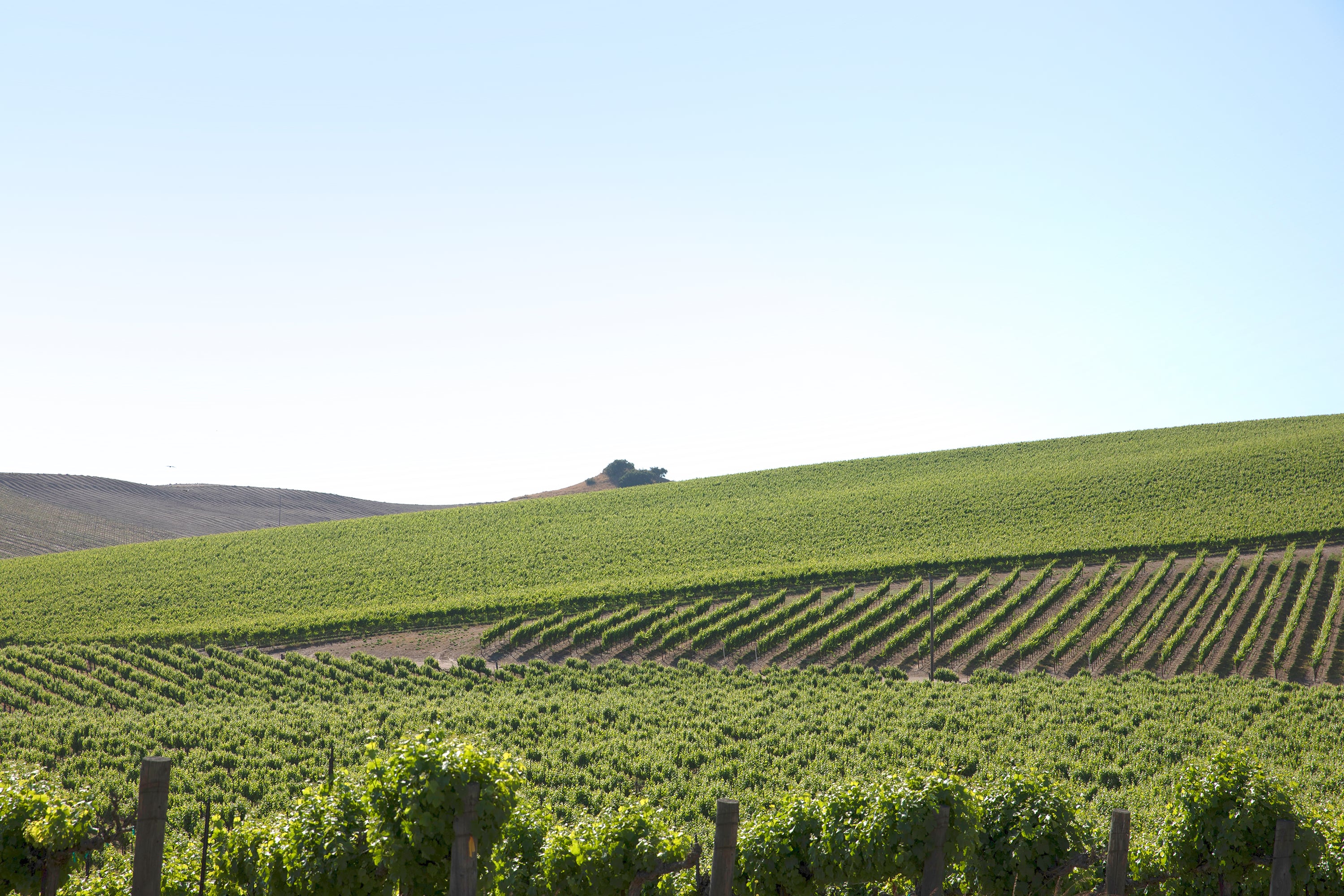
 For our latest installment in our Surfrider Partnerships interview series, we sat down with Christine Morrison, the Director of Winemaking for SEAGLASS. Now midway through our fourth year of partnership, our conversation highlighted the shared values that continue to make this collaboration so meaningful. Christine offered an honest and truly transparent look at the work that SEAGLASS does to craft a high-quality product while remaining incredibly mindful of their relationship and impact on the natural environment in which they operate. As a coastal wine company, SEAGLASS understands that it all goes back to the ocean - and to celebrate the ocean, we must also protect it.
Read on for more from our conversation with Christine.
Janie: Tell us about your background and role at SEAGLASS Wines? What does a typical day as a winemaker look like?
Christine: I'm Christine Morrison. I'm the Director of Winemaking for SEAGLASS. I've been working on the brand for well over 10 years now, and have had the honor of helping to shape SEAGLASS' growth and evolution.
Harvest is the biggest season where we can make the most impact and where we can really influence and maintain the wine’s style. That's where a lot of the work is done, such as calling the picks when we feel like the ripeness and the flavors are ready. Once the grapes get to the winery, we manage the fermentations and make sure everything is healthy.
We do a lot of small batch fermentations to control the quality. The harvest season starts here in August and goes through the end of October for all of our wines. At the beginning of the following year, I will start to do blending and make the final blends. Those are all stylistic choices that help maintain the quality and the flavors that I feel the consumer is recognizing, enjoying, and resonating with them. Those are the most impactful months, but there's work to be done throughout the year. [For example], our reds are aged longer, so maintaining the oak profiles there is important. They're going to be in the cellar longer than the whites. That's the great thing about our white wines –they go from fermentation to bottle fairly quickly. That process really allows us to capture the freshness and the vibrant flavors, which SEAGLASS is known for.
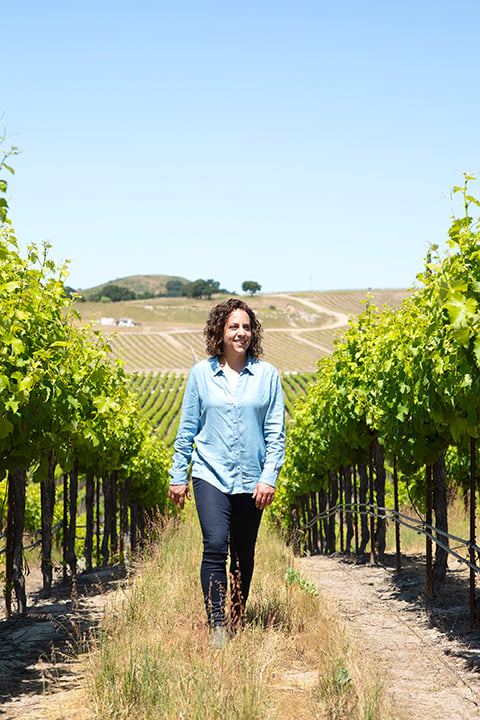 Christine Morrison, Director of Winemaking at SEAGLASS Wines
Janie: What drew you to winemaking, and what ultimately led you to join the team at SEAGLASS Wines?
Christine: I have a background in science. I earned a degree in biochemistry at UC Davis, but realized it wasn’t the right fit for me. While I was at Davis, I started to cross over into agriculture classes, specifically in winemaking, and really realized I can connect the art and science pieces. People say it, and it's a bit cliché now, but it really is the intersection of art and science. I fell in love with the idea of it.
Once I actually joined the industry, I gained exposure and saw what a career could look like. It's very dynamic, every year is so different because of the weather. I also took the opportunity to travel abroad and get to know other regions of the world and their winemaking styles and techniques. I feel like that's what brought me back to California, and specifically to SEAGLASS. It's so pure to what winemaking is: capturing an area and its essence. I feel like there's a transparency to our wines. They're very straightforward, they're fresh, they're vibrant, which is what the coast gives. That's where it all came together for me, capturing that sense of place in the bottle.
Janie: SEAGLASS and Surfrider both celebrate a connection to the coast and the outdoors. How does California's coastal environment influence the character of SEAGLASS wines and the culture behind the brand?
Christine: You can’t describe SEAGLASS without talking about the ocean and the coastal influence. It really started with our Los Alamos vineyard which we own in Santa Barbara County, and it's about 20 miles, as the crow flies, from the ocean. The morning fog and cool ocean breezes help moderate temperatures and extend the growing season, which is how we're able to get to the perfect ripeness because things don't just run away on us. The temperature is moderate, even down to the soil. The remarkably sandy, well-draining soils warm quickly and contribute to concentrated fruit character. We feel like we have the advantage of the soil and our proximity to the ocean. They go hand in hand.
The wines themselves are very approachable. They're refreshing, they're light, they're bright. Even our reds aren’t incredibly heavy, so you can enjoy them really all year round. Our wines make you feel like you're at the beach, to be honest –sitting out, watching the ocean waves or listening to them. There's just something about the brand, the labeling, and the product itself that embodies the vibrancy and refreshing quality you get from being by the ocean.
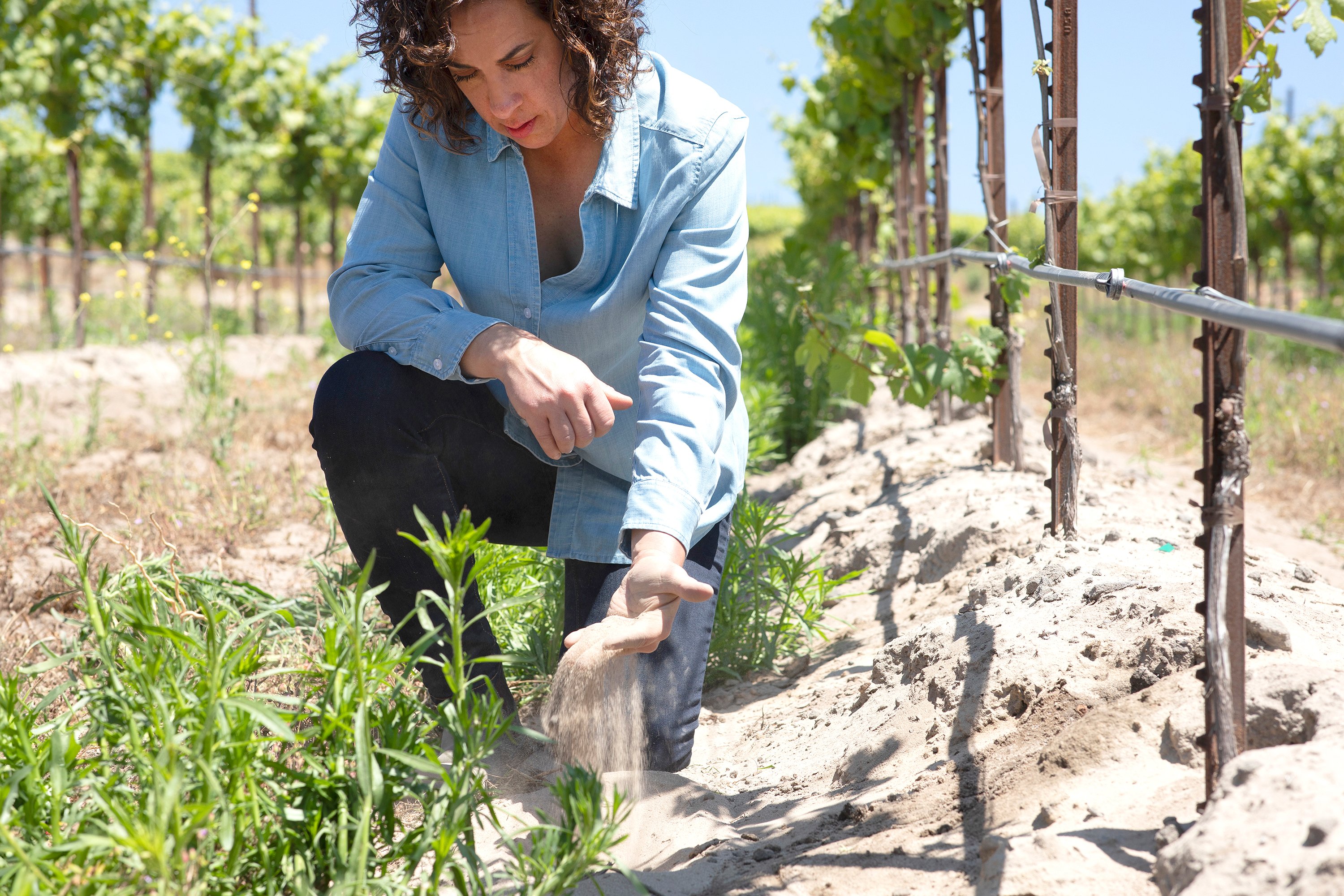 Christine feeling the thin, sandy soil which helps the vine roots stay warm and maintain ripeness.
Janie: At the Surfrider Foundation, protecting the places we love is at the heart of our mission. Sustainability is also a key part of the SEAGLASS story. SEAGLASS Wines is 100% Certified Sustainable and carries both SIP Certified and CSWA Certified seals. What do these certifications represent, and why are they important to you and the brand?
Christine: SIP Certified and Certified California Sustainable Winegrowing (CSWA) are rigorous, third-party verified sustainability programs with distinct standards and certification frameworks, and they may have different nuances depending on the region. SIP is very common on the Central Coast, while CSWA is more common throughout the rest of California, but they're accomplishing the same thing, which to us is really about being efficient with our resources.
That starts out in the vineyard. All of our vineyards are sustainable, and every SEAGLASS wine is 100% Certified Sustainable. That means not using too much water and not using too much nutrients. We’re even trying to minimize tractor work when it makes sense to do so. That commitment extends into the winery. Our winery locations are sustainable as well. Water usage is incredibly important to us, as is eliminating unnecessary processes. There are a couple of things we do in winemaking to be more efficient. We could add extra steps, which would require extra chemicals and extra water, but we exclude these and are able to produce the same quality of wine.
Janie: Sustainability can mean different things to different people. What are some of the practices happening in the vineyard and winery that consumers may not realize have a meaningful environmental impact?
Christine: This is not the glamorous answer, but we reduce cleaning chemical usage, again without compromising quality. We just don't want to put more out into the environment than we need to. That's something we've been focusing on over the last couple of years, especially at the winery –really reducing our usage while still maintaining the same sanitation standards we’ve always had.
The same goes for the vineyards. I think the assumption is that more is better, but we've actually taken the opposite approach at both the winery and the cellar. Less processing, less tractor work. We consider how we can accomplish the same or better results while doing less, especially when we talk about our carbon footprint. We have introduced electric tractors to our vineyards and continue to be mindful at every step of how we can be a more responsible producer.
Janie: Water is one of our most precious natural resources, particularly in California. How does SEAGLASS approach water stewardship, and what innovations are helping reduce impacts on the environment across your operations?
Christine: In the vineyard, we are looking at different nutrient applications that might actually have a secondary benefit of reducing water usage or reducing water needs, and they're in the experimental phase right now. Water reduction is really the goal.
At the winery, if we're moving and processing fewer wines, we're using a lot less water. Every time you move wine, you have to clean the tank, and that's going to use hundreds of gallons of water. And if you're doing extra filtrations, that can add up to thousands of gallons of water. We've eliminated a lot of excessive steps that don't actually benefit the wines.
Janie: Looking ahead, what sustainability initiatives or innovations in winemaking are you most excited about?
Christine: From a winemaker's perspective, all of it matters. It all goes back to the final product. When you talk about sustainability as a business we aim to be as responsible as we possibly can be. When you put all the pieces that we’re building together, we’re really positioning ourselves to be a brand and a company that stands the test of time because we are doing the work before we’re being told to do the work. We are willing to invest, and that makes it a lot easier to implement these practices.
That's really the Certified Sustainable continuous mindset: continuous improvement and considering how we can take this further. Once we reach a certain level, we ask ourselves, what's next?
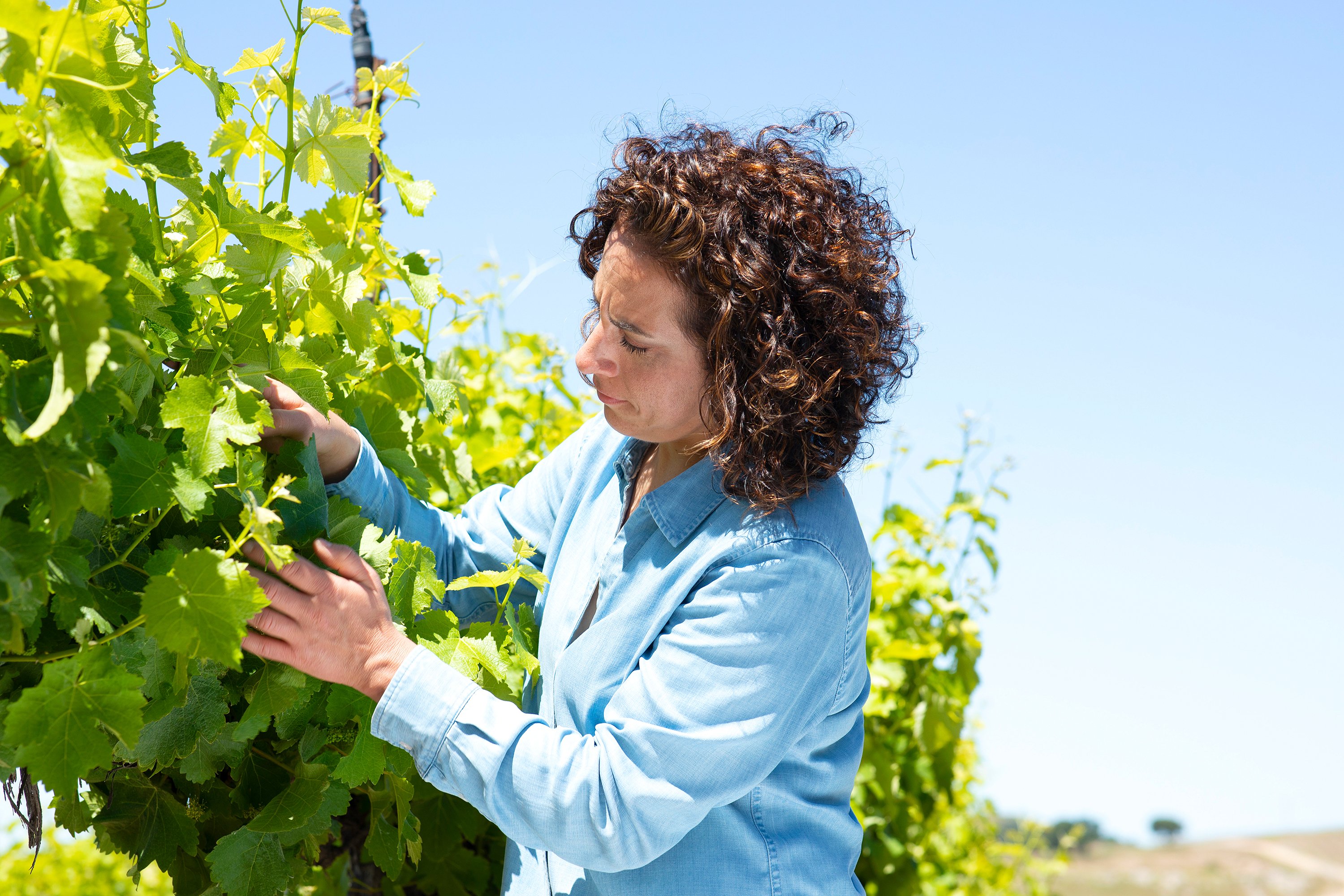 Christine inspecting the grapes before harvest.
Janie: Summer is all about outdoor gatherings with friends and family. Which SEAGLASS wine are you reaching for most often this season, and what makes it a great summer choice?
Christine: That's like picking a favorite child –you're not supposed to do that! More recently, because it's a new wine of ours, I love the Albariño. It just so perfectly fits our style of bright, fresh, crisp wines. It’s perfect if it's chilled and enjoyed on a hot afternoon or evening.
I could also get into our non-alcoholic wines as well, just because they're a good everyday beverage to enjoy. We have a new wine in that line as well: the SEAGLASS Alcohol-Removed Sparkling Brut. I may be biased, but it’s absolutely delicious.
Janie: If you were planning the perfect summer meal around this wine, what would be on the menu?
Christine: For me, my husband loves to ocean fish, so it's pretty easy to pair our wines with any type of fresh fish or crab. It's not really crab season, but I'm willing to eat crab all year round. It follows that light, bright style and to me, our wines pair just so perfectly, especially with ocean fish. It just puts the whole story together.
Janie: What experience would you hope someone discovering SEAGLASS for the first time would have when they open a bottle?
Christine: I hope that they can appreciate the clarity of fruit in our wines. Our Sauvignon Blanc is such a beautiful expression of that varietal. I could say the same for the Pinot Grigio and the Cabernet. It captures not only the varietal, but the character of the area as well and what the ocean influence is able to give us. I hope that when people discover SEAGLASS they understand the sense of place that we've captured in the bottle, and I hope that encourages them to try more of our wines. People know the Pinot Grigio and the Sauvignon Blanc so well, but there are plenty of other offerings that have a similar style. Our wines remind people that the coast is more than a destination. It is a feeling of refreshment, relaxation, and escape that SEAGLASS can bring within reach wherever someone may be.
Janie: Do you have a favorite place, occasion, or tradition for enjoying wine during the summer months?
Christine: It's actually really nice to go camping by the ocean. I consider myself pretty low key. I'm not too fancy. To me being at the ocean, camping and, in the evening, after you've had a long day, coming back to the campsite and having a glass of SEAGLASS is rewarding and closes out the whole experience.
Janie: Do you have a favorite place, occasion, or tradition for enjoying wine during the summer months?
Christine: It's actually really nice to go camping on the ocean and I'm low key. I'm not too fancy. So to me being at the ocean, camping and, in the evening after you've had a long day, maybe out on the beach or fishing or something like that, to come back to the campsite and have a glass of SEAGLASS is rewarding to me and closes out the whole experience.
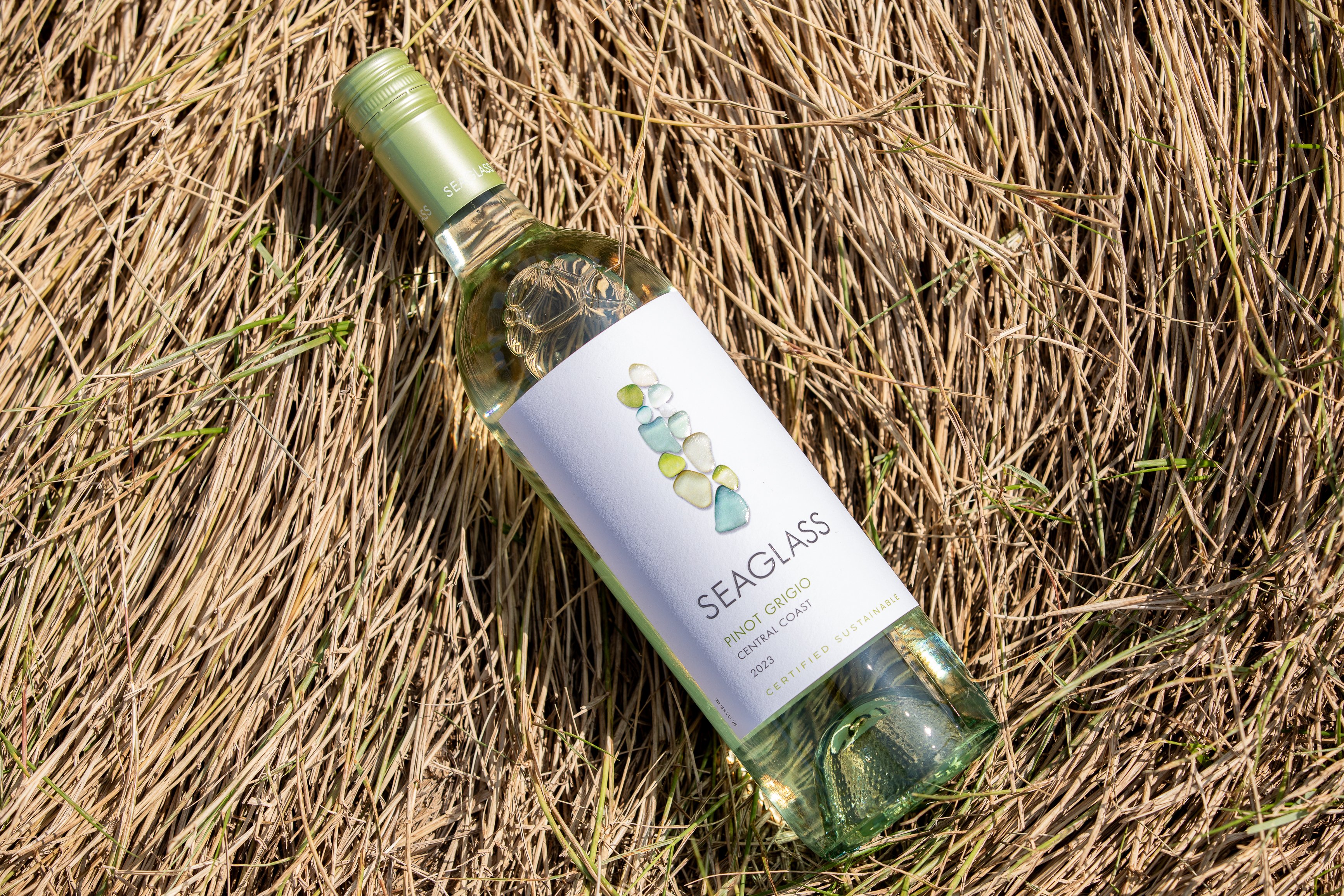 A bottle of the fan favorite, SEAGLASS Pinot Grigio. Photo Credit: Paul Brooke Jr
Janie: We’re seeing consumer preferences evolve, including a growing interest in alcohol-removed wines. How are you seeing this trend influence the wine industry, and what opportunities does it create for brands like SEAGLASS?
Christine: I think that's a huge opportunity for us in this space. It’s amazing that we now have something in our SEAGLASS portfolio for those consumers as well. It's great that we can continue to be there for our consumers across so many different occasions and moments.
Janie: Is there anything on the horizon for SEAGLASS Wines that you’re particularly excited to share with consumers?
Christine: The innovation mindset that we adopted over the last two years isn't going anywhere. We have a couple of new projects on the horizon that I’m excited about –something for people to look forward to that will also stay true to our style, our roots, and our sense of place. We will continue to expand the many different ways that consumers can experience our wines.
Thank you, SEAGLASS, for your enduring partnership with Surfrider, and thank you, Christine, for taking the time to share your story with our community. We are genuinely excited to see what comes next!
You can learn more about SEAGLASS Wines on their website, here (must be 21+ to enter) or follow them on Instagram, here.
 In her role as Partnerships Activation Coordinator, Janie supports the national corporate partnerships team through administrative and operational responsibilities. She spent her college years in Portland, Oregon, at Lewis & Clark College where she graduated with a degree in Environmental Studies and a minor in Political Science.