
-Jul-22-2026-01-25-08-1648-PM.jpg)
All photos by Guru Khalsa @gurufoto
Amanda Ejups and Kyle Leftridge are the co-leads of the San Francisco Chapter's Blue Water Task Force, Surfrider's volunteer-run water quality testing program.
What is your current role with the Surfrider Foundation?
Amanda: I'm the co-lead of the San Francisco Blue Water Task Force as well as a member of the SF chapter.
Kyle: I co-lead the San Francisco Chapter's Blue Water Task Force, Surfrider's volunteer-run water quality testing program.
When and why did you get involved?
Amanda: I first got involved with Surfrider a few years ago after moving to San Francisco, starting out by volunteering at a beach cleanup or two. Then, in October 2025, my partner attended his first chapter meeting and came home with an unexpected question. He had learned about the Blue Water Task Force and was excited by its mission, but the team was struggling because they didn't have a permanent space for the lab. Since our garage was sitting empty, he asked if I'd be open to offering it as the new home for the lab.
It didn't take us long to say yes. It felt like a meaningful way to support Surfrider and help the program continue its important work. Over the following months, we transformed our garage into the San Francisco Blue Water Task Force (BWTF) lab. Being so closely connected to the project, I naturally became more involved with the program, and before long, I was offered the opportunity to serve as co-lead.
Kyle: I initially began volunteering with Surfrider in the early 2010’s, but (unfortunately) moved away from the ocean for some time before returning to volunteering in late 2024. I grew up in the Outer Sunset across the street from Ocean Beach and spent a lot of my time in the water surfing and exploring the Northern California coast. This led to the ocean becoming pretty central in my self-identity and a big part of why San Francisco feels like home. Getting back involved with Surfrider and working to protect future generations’ access to that same experience felt like an obvious decision, with the added bonus of getting to know a bunch of cool San Franciscans that share that ocean love and an interest in doing the same!
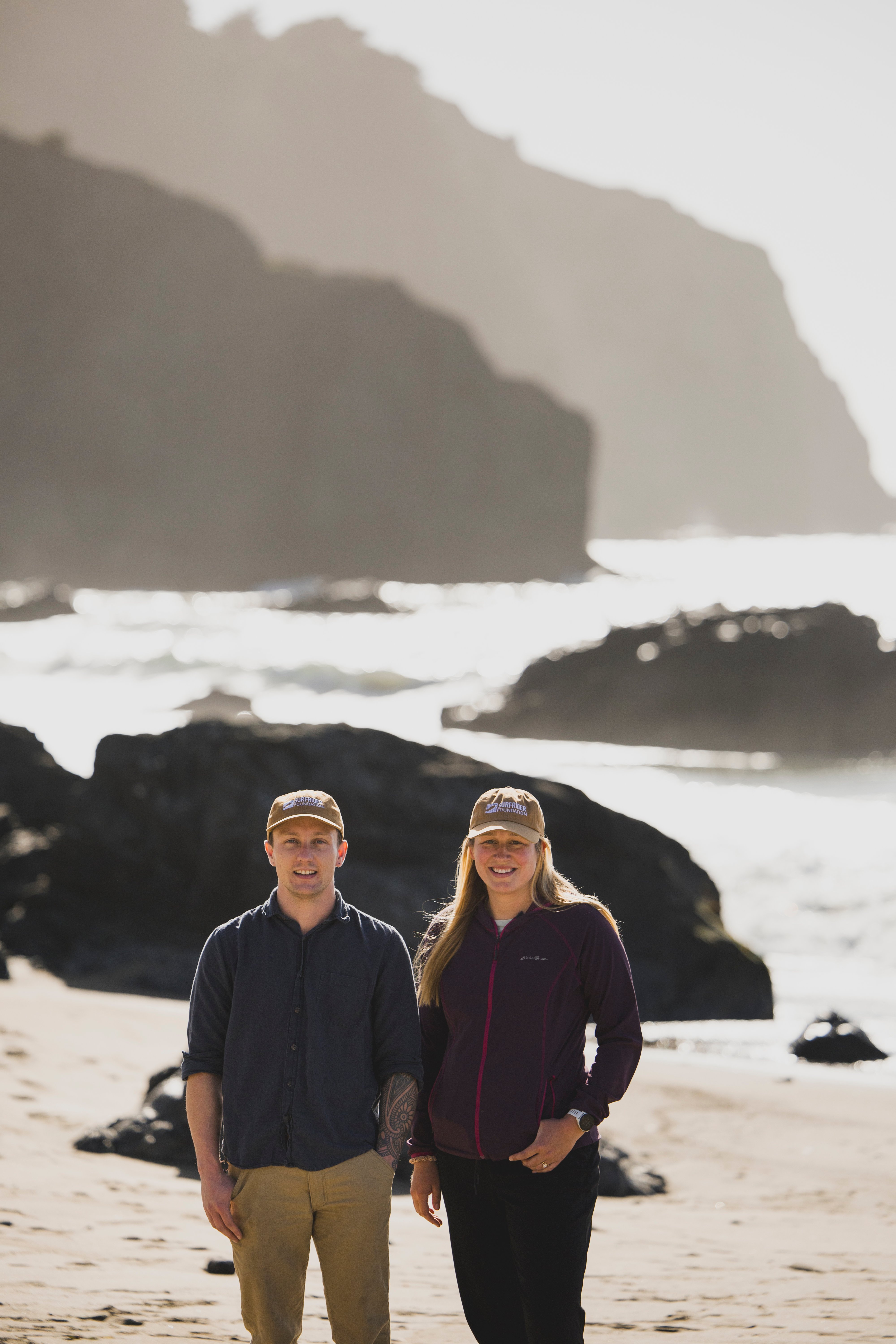 BWTF Co-Leads, Kyle Leftridge and Amanda Ejups. Baker Beach. Photo: Guru Khalsa
What are some local issues affecting your ocean, waves, and beaches?
Amanda: There are many issues facing our oceans, waves, and beaches in the Bay Area — from water quality and beach erosion to pollution. Through the Blue Water Task Force, I've learned so much more about the challenges surrounding clean water.
In San Francisco, we have an aging combined sewer system that can overflow during heavy rain events. When the system reaches capacity, a mix of stormwater runoff and sewage is discharged into the Bay and the ocean. This can cause elevated levels of Enterococcus faecalis bacteria, an indicator of fecal contamination, making the water unsafe for people swimming, surfing, and enjoying other recreational water activities.
What surprised me most is that many people have no idea this is happening, and updating the city's aging infrastructure has yet to become a priority. As severe storms become more frequent, sea levels rise, and our climate continues to change, these water quality issues are likely to become even more common. That's why it's so important to monitor water quality, share the data with our community, and advocate for long-term solutions.
Kyle: One of our primary focuses in the San Francisco chapter’s Blue Water Task Force initiative relates to the bacterial water quality issues we experience following rainfall. In San Francisco we face an issue unique among coastal cities in California as a result of our city’s combined sewer system — a problem many San Franciscans are unaware of. San Francisco’s sewer system combines the rainfall runoff with our sewage, sharing the same pipes and tanks to transport untreated water to our wastewater treatment facilities. This system has a limited capacity, which when reached during significant precipitation events, causes a combined discharge of rainwater and untreated sewage into the bay and ocean, causing hazardous levels of fecal bacteria to be present in our recreated waters.
These hazardous levels can cause a variety of bacterial infection related illnesses, and often affects ocean goers who are completely unaware that the water that often is pretty clean exceeds the safe limits of bacteria determined by the EPA in the Clean Waters Act. We test six local sites of frequent recreational use to help monitor the bacterial levels, and create tools and resources to help make the issue and level of risk more accessible and understood for those entering the Pacific waters around San Francisco.
What has been the highlight of your Surfrider experience?
Amanda: It has been incredibly rewarding to watch our Blue Water Task Force volunteers become deeply engaged in every aspect of the program — from water quality testing and data analysis to community outreach and building meaningful connections with one another. We've welcomed local high school students, families, and so many others who share a love for the ocean and a passion for protecting it. As we're just getting the San Francisco lab up and running, I'm excited to see the program continue to grow and to bring many of the volunteers' creative ideas to life.
Kyle: I am really proud of the ways we have been working to build and grow our Blue Water Task Force program here in San Francisco. We’ve grown such an engaged and excited group of volunteers who are all contributing to the various different BWTF projects we are working on - it’s been so rewarding and fun getting to connect with people who are also interested in how we can use science to help our community more safely enjoy the ocean!
.jpg?width=6000&height=4000&name=_U_21014%20(1).jpg) Ejups at the SF Blue Water Task Force Lab (also her garage). Photo: Guru Khalsa
Ejups at the SF Blue Water Task Force Lab (also her garage). Photo: Guru Khalsa
What can Surfrider do to foster a more inclusive and welcoming environment?
Amanda: One of the things I've enjoyed most about Surfrider San Francisco is seeing the chapter partner with incredible organizations like Queer Surf and the International Ocean Film Festival. These collaborations are a powerful way to strengthen our community, welcome people from diverse backgrounds, and amplify our collective impact. I hope Surfrider continues to build relationships not only with ocean-focused organizations, but also with local schools and other community groups. By showing up in support of their missions as well as our own, we can foster a more welcoming, inclusive community and inspire more people to get involved in protecting our coasts.
Kyle: I think any opportunity to collaborate with other local groups helps people that might be unfamiliar with Surfrider become more aware of what type of community is available to them by participating in Surfrider’s projects. I would especially love to see more opportunities for local students to get involved — I first volunteered with Surfrider in high school, and I think if more of the future generations’ perspectives were represented in Surfrider’s direction, their generation’s generally more forward thinking perspectives on inclusivity would be invaluable.
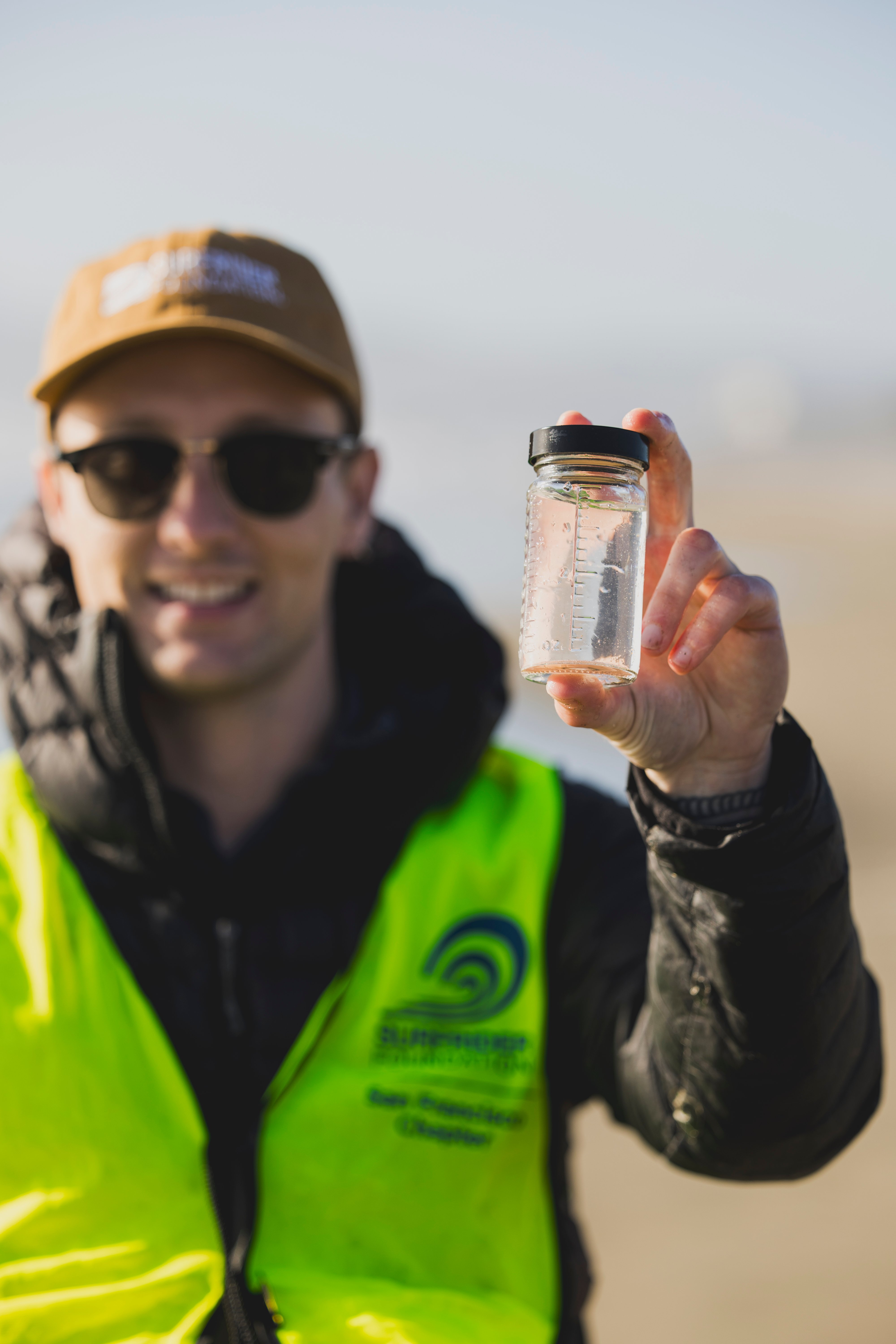
.jpg?width=4000&height=6000&name=_U_20870%20(1).jpg) Leftridge sampling the water at Ocean Beach, San Francisco. Photo: Guru Khalsa
Leftridge sampling the water at Ocean Beach, San Francisco. Photo: Guru Khalsa
What inspires you to be active in ocean conservation?
Amanda: I grew up in Michigan, where I spent a lot of time on the lakes: swimming, sailing, and spending time with friends. Until my twenties, the ocean was a relatively unfamiliar place. But after spending extended time in Hawaii, and later living near Ocean Beach in San Francisco, I developed a deep appreciation for the ocean and the communities built around it.
These days you can find me out in the water as an aspiring surfer, taking long walks on the beach, or exploring tide pools along the coast. As I learned more about the environmental challenges facing our oceans and coastlines in Hawaii and California, I realized I wanted to dedicate my time and energy to helping protect these places for future generations.
Kyle: I have been lucky enough to have spent much of my free time in the ocean in and around San Francisco since I was a kid. I’ve had so many formative and awe inspiring experiences through exploring and playing in places that were clean, accessible, and still full of wildlife and undeveloped/impacted coastline throughout Northern California.
Then, when traveling to other parts of the country where the coastline hadn’t been protected I didn’t understand why the water was so polluted or why there were private buildings blocking access and cars driving on the beach. After learning more about the efforts that had been made to help protect many of the places I’d grown up enjoying, the inspiration to help maintain and expand that type of protection came pretty easily.
What is the most important thing you tell others about Surfrider?
Amanda: One of the most inspiring things about Surfrider is seeing how they take on the many challenges facing our oceans, beaches, and waves. You don't have to be a surfer to care about these issues – they impact everyone! Whether you're looking to make a difference in your local community or advocate for change at the state or national level, Surfrider provides countless ways to get involved and make a meaningful impact.
Kyle: My experience with Surfrider has been defined by seeing the way that communal volunteer effort creates meaningful conservational impact, and what impact that then can have on the people making that effort. I think the combination of working towards environmental conservation goals and doing so with likeminded people has resulted in meaningful relationships and a sense of community that is something many people I know are seeking. Love of the ocean and the resulting desire to help protect it often seems to make for pretty easy grounds in growing meaningful friendships. That in turn helps really maintain people’s interest in continuing to give their free time as a volunteer to work hard on making an impact, given how many other ways one could spend their free time.
Anything else you'd like to add?
Amanda: Surfrider has been an incredible way to connect with the San Francisco community and meet people who share a passion for protecting our coastlines. I continue to be inspired by the organization's impact and the dedication of the volunteers who make its work possible. I'm grateful to play a small role in that mission and excited to see how the San Francisco Blue Water Task Force continues to grow and make a lasting impact on our community.
Kyle: If anyone is interested in what the Blue Water Task Force is up to here in San Francisco, check out our website to learn more, or reach out to us at bwtf@sf.surfrider.org!
.jpg?width=4000&height=6000&name=_U_16008%20(1).jpg) Ejups and Leftridge at Ocean Beach, San Francisco. Photo: Guru Khalsa
Ejups and Leftridge at Ocean Beach, San Francisco. Photo: Guru Khalsa