
-1.jpg)
Mike Zatzke (left) and Tico Andrea (right) are both on the Executive Committee of Surfrider Santa Cruz. Mike fills the role of co-chair while Tico oversees the Blue Water Task Force program. This exclusive dual-spotlight highlights the crucial water quality work the pair are doing to keep residents and visitors of Santa Cruz safe as they enter the ocean at one surfing's finest destinations worldwide.
Why and when did you get involved with the Surfrider Foundation?
Mike: I first learned about Surfrider many, many years ago when I was going to the University of California, Santa Cruz. At the time I was taking Environmental Science classes and learning to surf, and this is when I heard about an organization that was dedicated to preserving the world’s oceans, waves, and beaches. I was working, going to school, and raising two young boys, so my interaction with the foundation was limited to donating money.
Fast forward to 2025: I needed something to help make my small part of the world a bit better. I started researching volunteer opportunities and I found a public invitation to the Santa Cruz Chapter. I hadn’t been involved with Surfrider for years at that point. But I had started surfing again during the pandemic and I thought that maybe I could help in some way to give back to the ocean which had given me so much joy.
I brought my daughter, Cailyn, to the meeting and we felt an instant connection to the people running the chapter. We signed up for a couple of volunteer opportunities and we received an email the next day inviting us to discuss those opportunities. One of those opportunities was the chapter's Blue Water Task Force. After talking with the Chapter Chair, and then meeting Tico, we knew that we had found the group that we could work with to help make a difference. Almost a year later, we are loving each and every interaction with this group and the community that we help make better.
Tico: I joined in February 2025. Working in tech in Silicon Valley, having moved from the Netherlands to Santa Cruz (for love), I had been thinking about wanting to have a closer connection with the local community and the beautiful environment and nature around me. My thinking was: volunteering for a cause to benefit the local community and natural environment would be a great starting point.
A teammate at my then-current job had joined the San Francisco Chapter a year before and I got interested when we were chatting about it and learning what Surfrider does. On top of that I was doing ocean swimming regularly at Seabright Beach and I had a background in Biology (Msc in Cellular Immunology) but went in a different direction after my studies (translator for the Dutch language).
When I joined, the Santa Cruz BWTF was not active and hadn’t been for more than a year. I had to restart and learn everything about the program. Having organizational and team management experience, I soon realized that I needed help. Luckily soon after I had a father/daughter supercombo (Mike and Cailyn) join me on the coordination team.
We started our first sampling in July and built out our coverage quickly, having many people interested in joining the BWTF. Currently we are running bi-weekly water quality sampling and testing for 20+ beaches and reporting it on the website and social media. We have an amazing, dedicated team with sample processing specialists, sterilization specialists, and results read-out and reporting specialists.
What are some issues that affect water quality in Santa Cruz?
Mike: Water quality in the Santa Cruz area is affected by stormwater runoff, sewage spills, and aging infrastructure, such as the Santa Cruz Wharf.
Tico: As a national tourist destination of international fame, Santa Cruz always has had a big challenge making our beaches and oceans available for people to enjoy while keeping the water quality healthy.
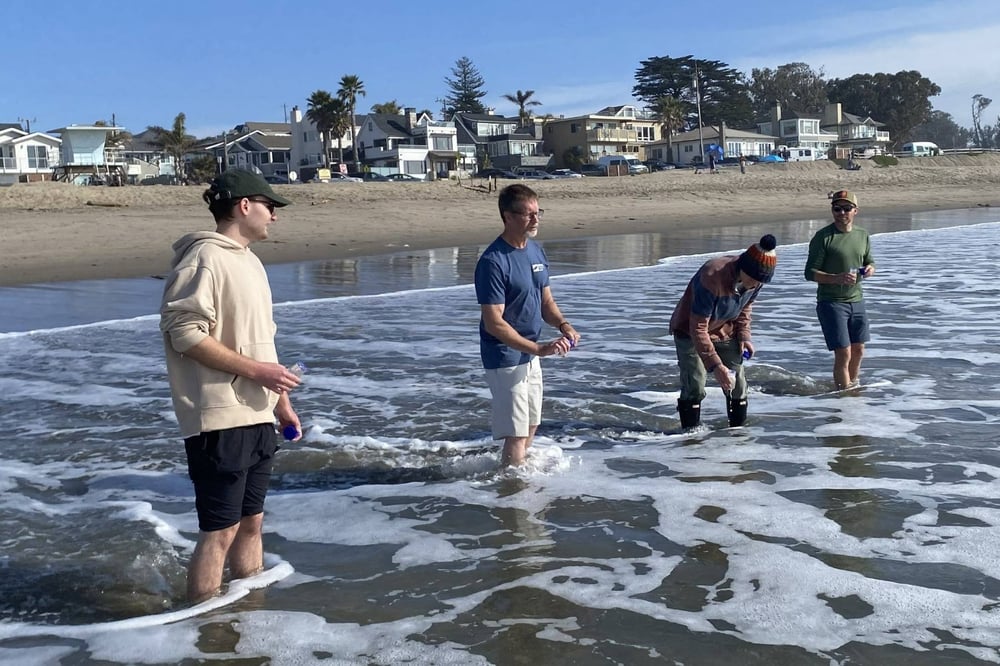 Mike collecting samples out in the field with fellow BWTF volunteers.
How is the Santa Cruz Chapter responding to those issues?
Mike: Our chapter has recently been rebooted and has built a strong Policy Committee, which is run by an amazing, strong, and dedicated coordinator. The Policy Committee has recently helped push through the “Ban the Butt” legislation, which will help reduce the number of cigarette filters that are found on beaches.
The chapter’s BWTF program works with the Policy Committee to help address and raise awareness of local pollution problems and bring together communities to implement solutions.
Tico: Our BWTF is now back in action to inform the public (surfers, beach-goers, swimmers, sailors and other water enthusiasts) about the water quality and give people the opportunity to look at the amount of bacteria in the ocean water at the beach or surf spot they are planning to visit. Besides that, we are planning to start doing analysis of the data we gather and work together with local authorities and other like-minded organizations to see how we can make the biggest impact on conserving our habitat.
Do you have any personal experiences or campaigns that you're passionate about where the social justice and environmental movements have intersected?
Mike: The recent Drilling is Killing campaign has been my first real experience where a real intersection of social justice and environmental impacts are seen. Offshore drilling will not only impact the ocean and the sea life that inhabit it but it will also directly impact the poor and disenfranchised on shore.
If offshore drilling begins, the tourist industry would be affected, impacting the many people who work in that industry, who cannot go without paychecks. Marginalized communities also are the most impacted, as any pipelines, storage, or refineries will be built in those areas.
Tico: Our chapter, also very active in working on policy changes to make our oceans a better place, joined a canvassing event at a popular surf spot. Organized by the policy team, we asked surfers and passerbys to sign postcards to send to our elected representatives to oppose offshore oil drilling.
It was so rewarding to see the willingness of so many people to sign these cards. I realized that the willingness of people is there, we just have to find ways to reach them and make it easy for them to participate and make their voices heard.
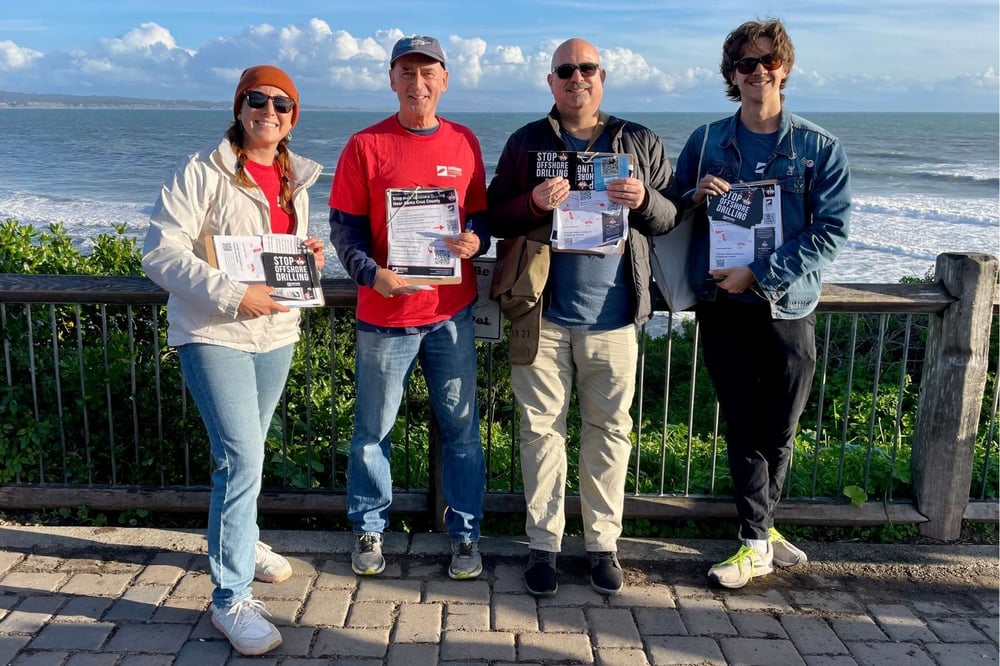 Tico (third from left) and volunteers display their Drilling is Killing postcard collection near Pleasure Point, Santa Cruz.
Why is being a part of Surfrider important to you?
Mike: Environmental protection and activism has to start with a small group of passionate people. I see reports about the abuse of the ocean and while I can’t stop everything that is happening, being part of Surfrider gives me hope that I can at least make my part of the ocean and coast a bit better, and safer. Knowing that we are not the only chapter — and that there are many more with so many dedicated volunteers — that gives me hope. Hope is important.
Tico: Referring to my Surfrider “origin story,” I think creating places to make it low-entry for people to participate is essential. Creating equal opportunities for everyone to thrive in our community is going to make the world a better place.
What has been the highlight of your Surfrider experience?
Mike: The people and the friends I’ve made during this experience. When Cailyn and I first joined we got such a great vibe from the leadership team, and every time we attended a meeting or event we came away with such a wonderful feeling of community.
From a technical standpoint, my biggest highlight is being part of the team that has brought the Santa Cruz BWTF program back up and running. Working with Tico and Cailyn to bring this program back up has provided me with a pure sense of joy and accomplishment. With Tico’s leadership, we have done this while using the least amount of single-use plastics possible for sampling and processing 20 sites, every other week.
Tico: The biggest highlight has been getting this sunken boat that was the Santa Cruz BWTF afloat when I joined. It’s become a mighty vessel, expanding month-over-month from about 5 people to the 30+ volunteers we have currently.
We are using glass (bottles, glass pipettes, beakers, and cylinders for incubation) as opposed to the plastic versions the program used previously. We are even using glass spray bottles for hand sanitization during sample taking versus single-wrapped sanitizing wipes.
The only disposables remaining are the testing trays and the packs that contain the testing reagent for which there is no alternative. By using a standard industry methodology, this allows us to compare with government and other organization’s data one-to-one.
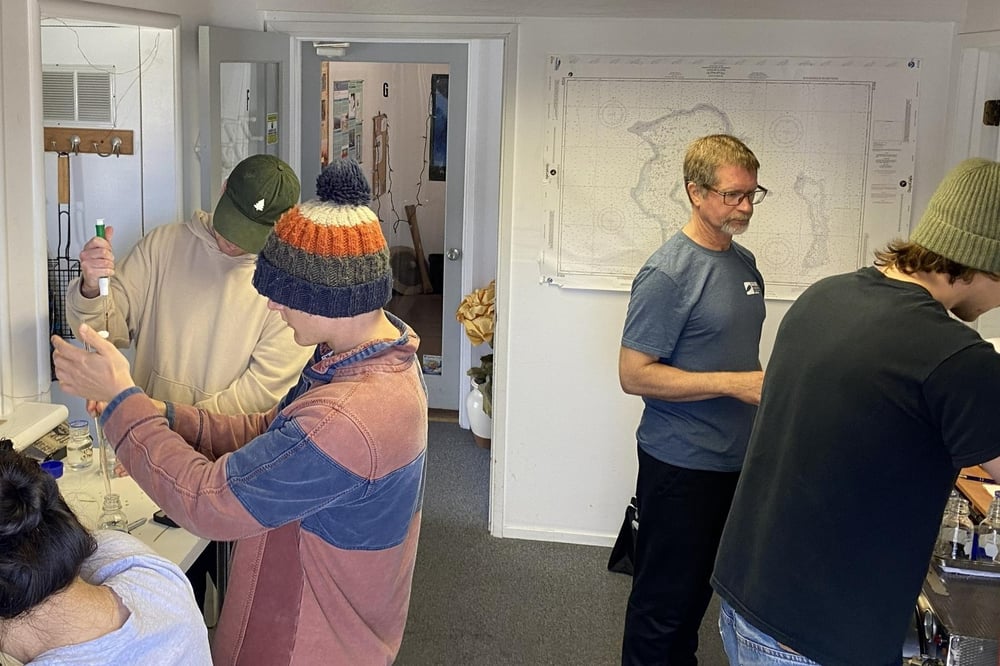 Mike and BWTF volunteers using all-new glassware while processing water samples in the lab.
What is the most important thing you tell others about Surfrider?
Mike: This is an organization that is looking out for everyone, for the protection of the oceans and its creatures that call it home. If you are looking for a way to give back to anything, this is a foundation that has some of the best people volunteering. You’ll not only help the environment, you will also gain a community and new friends.
Tico: Surfrider is a rewarding organization to be a part of. Spending your time working together to make our local community a better place is the most rewarding thing you can spend your time on. The energy, laughs, and connections we make every other Saturday when we test water quality is very rewarding and fantastic!
Thanks so much for your time, Mike and Tico! Anything else you’d like to add?
Mike: I want to take a moment and thank Surfrider and the Santa Cruz Chapter specifically for introducing me to a cause that makes me feel good, and for the friendships that it has given me. After each meeting, gathering, and interaction, I leave with a feeling that I have truly found my people.
Tico: Enjoy our ocean and beaches, leave them cleaner than you found them, and look for opportunities to contribute to making your local community a better place.
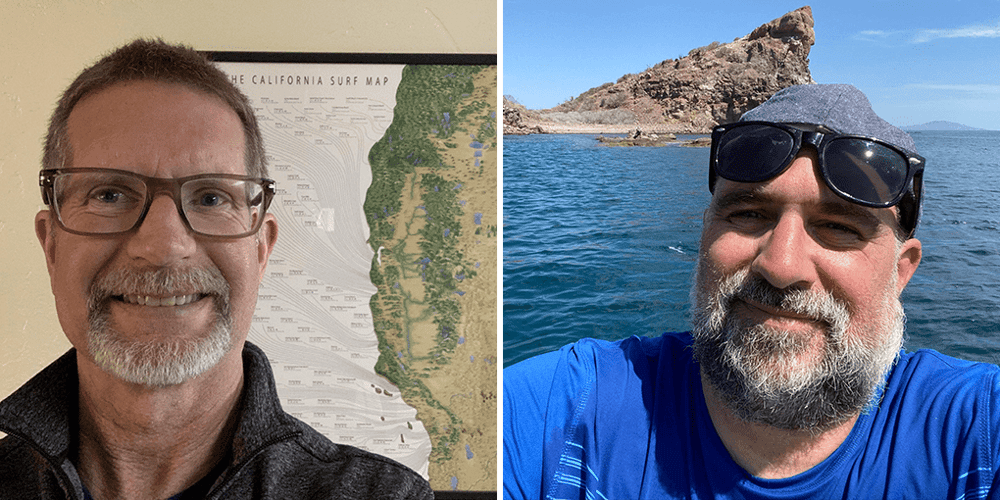 Mike (left) with California's surf spots, and Tico (right) on a day out at sea.