
Photo: Orange County Register (MediaNews Group) via Getty Images
Southern California’s beaches have already taken a beating from powerful Pacific swells, elevated sea levels, and a summer and fall of unprecedented coastal impacts. With a potentially historic El Niño upon us, the question is no longer whether our coastline is vulnerable. It’s whether we will protect a future of healthy coasts — or sacrifice our beaches in a rush to protect what’s behind them.
A Coastline Under Pressure
In 2026, Southern California is facing a convergence of ocean and climate conditions that has left our coastline increasingly vulnerable. A persistent marine heatwave has warmed the waters off California to extraordinary levels, while a strengthening El Niño in the tropical eastern Pacific is adding another layer of concern. These events are compounding to create historic sea levels, reaching up to 18 inches over predicted tides in some places. Together with November and December’s King Tides and potentially large surf in the coming months, the stage is set for a challenging winter in Southern California.
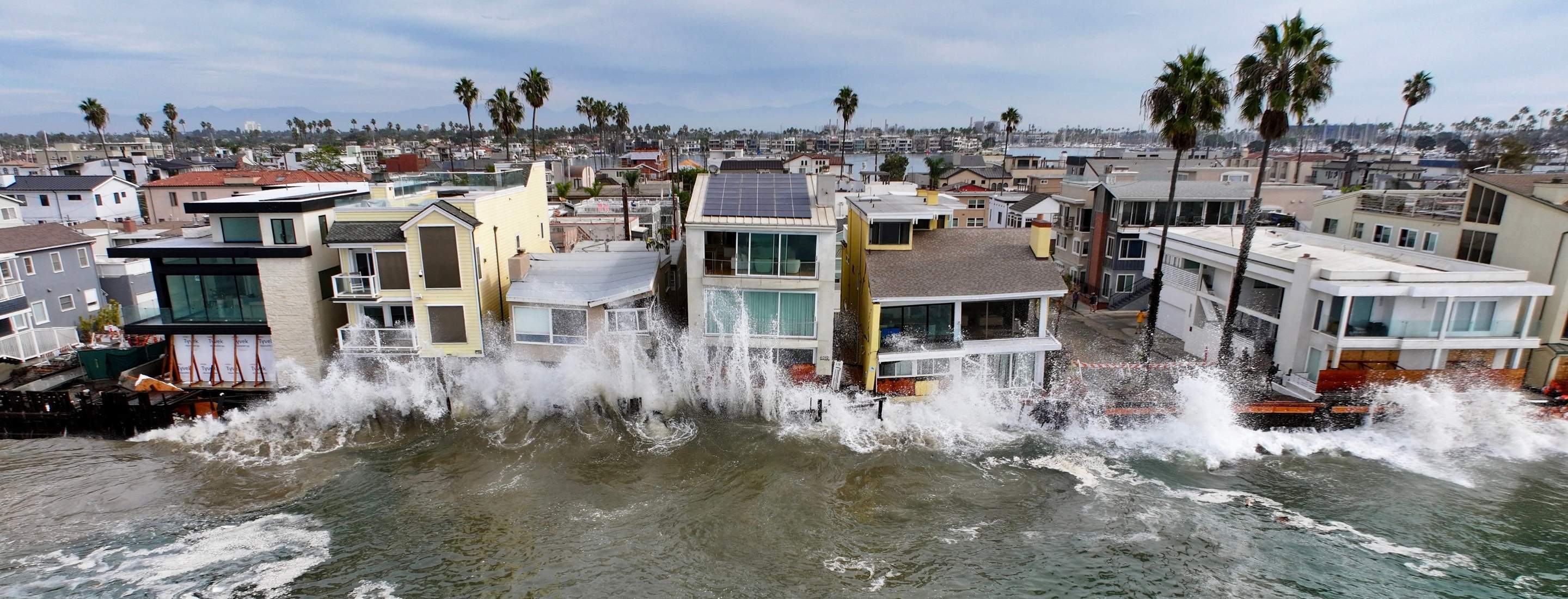
What began with a powerful Southern Hemisphere swell in June, Southern California’s historic run of large surf continued into September and October with Hurricanes Marie and Rachel. The powerful swells and unusually elevated water levels battered beaches and coastal infrastructure across Southern California. Waves overtopped seawalls, coastal access stairs were damaged, homes and streets flooded, and beaches lost significant amounts of sand.
Kelvin Waves and Rising Seas
One important part of the El Niño cycle is the development of Kelvin waves—large, slow-moving pulses of warm water that travel eastward along the equatorial Pacific. When these waves reach the coast, they can become trapped along the shoreline and move north and south. Kelvin waves are not visible breaking waves. They are changes in ocean conditions that can raise sea levels across enormous stretches of coastline.
In early October 2026, a coastaly trapped Kelvin wave reached Southern California. This built upon already elevated sea levels associated with the extreme marine heatwave. Warnings projected that coastal sea levels could rise by approximately 6 to 12 inches, potentially for months. By the end of October, some coastal areas were experiencing 18 inches of sea level rise.
Why does this matter? When elevated sea levels coincide with high tides, large swells, and storm surge, coastal defenses are overtopped, floods stretch further inland, more sand is eroded, and infrastructure and homes that may have weathered previous storms are threatened. On November 24 and again on December 24, the California coast will experience King Tides reaching 7.5 feet. The additional foot and a half of sea level rise puts those tides potentially at a staggering nine feet or beyond.
What Comes Next?
The forecast calls for preparation, but also long-term planning and adaptation, not business as usual. As of October 2026, the National Oceanic and Atmospheric Administration (NOAA) reports that El Niño is strengthening, with a strong-to-very-strong event likely through early 2027. NOAA’s October winter outlook favors wetter-than-average conditions across the southern tier of the United States, including California. These seasonal forecasts do not guarantee a particular number of storms or a specific amount of coastal damage, but they underscore the need to prepare for the possibility of heavy rain, flooding, and powerful surf.
We cannot guarantee that this winter will deliver all of the effects we expect with a historic “Super El Niño.” But we do know that the coastline is entering the season in an unprecedentedly vulnerable state.
A Predictable Storm Season Calls For a Proactive Plan
El Niño is a recurring climate pattern that typically returns every two to seven years. Although individual storms remain unpredictable, scientists can monitor developing conditions months in advance, giving communities time to prepare. During an El Niño, coastal erosion often threatens homes, roads, railways, and utilities. Responses include constructing sand berms, deploying sandbags in communities, and oftentimes issuing emergency permits for seawalls and revetments. Historical estimates indicate that hard structures protected 2.5% of California’s coastline in 1971, rising to approximately 14% by 2018. In Southern California, the figure is 38%. Significant jumps in emergency armoring typical occurs during or after an El Niño.
In September 2026, Governor Gavin Newsom declared a statewide emergency in response to coastal threats, enabling expedited action. This allows for swifter permitting for emergency armoring. Hard armoring may protect development in the short term, but as these emergency projects multiply the cost to our beaches becomes significant.
While emergency armoring will always be a part of the portfolio for hazards response, it should not be the go-to solution. When there is no other option, it needs to be accompanied by long-term planning that identifies vulnerable infrastructure, establishes relocation plans, evaluates nature-based alternatives, and develops funding pathways for retreat and restoration.
The coastal rail corridor at San Clemente illustrates why this planning is so important. Transportation agencies must contend with real safety and service challenges where rail lines run close to an eroding shoreline. Those challenges deserve serious, long-term solutions—not an endless cycle of emergency rock placement.
Protecting Our Beaches Means Planning for Their Future
Southern California’s beaches are more than a line of defense against the ocean. They are essential public spaces, wildlife habitat, and economic engines. As El Niño brings the potential for more powerful surf, elevated sea levels, and severe erosion, we have an opportunity to move beyond a cycle of emergency repairs and toward a more resilient coastline.
Surfrider has long emphasized that healthy beaches require room to move. The recently released 2026 State of the Beach Report provides a framework for understanding the threats facing our coast, including shoreline armoring and the cumulative impacts of development in dynamic coastal environments. This year’s report looked specifically at the issue of emergency armoring. It finds that California is reacting to imminent threats by responding to coastal hazards, not by planning proactively, resulting in more armoring and less forward thinking projects.
There are already promising examples of what this approach can look like in practice. In Ventura, the Surfers' Point Managed Retreat Project demonstrates that communities can protect public access, the beach, and infrastructure without permanently walling off the shoreline. By relocating vulnerable infrastructure inland and restoring dunes and natural coastal features, the project makes room for the beach to evolve while helping protect the community.
Meanwhile, the San Onofre Shoreline Resilience Project offers another important opportunity. Led by Surfrider in collaboration with public agencies and community partners, the project is developing nature-based solutions to address erosion, rising seas, and threats to public beach access. It is responding to the consequences of emergency shoreline armoring and seeks a more sustainable path forward—one that considers the long-term health of the beach alongside the infrastructure people depend on.
These projects embody the central message of Surfrider’s 2026 State of the Beach report: repeated emergencies must not become an excuse for permanent, piecemeal decisions that undermine the future of our coast.
The coming winter may test Southern California’s coastline, but the choices we make now will determine what remains long after the storms, swells, and extreme high tides pass. We need proactive coastal adaptation plans, sustained investment in nature-based solutions, thoughtful relocation of vulnerable infrastructure where necessary, and policies that prioritize healthy beaches and public access for future generations. Emergency measures may sometimes be necessary to protect infrastructure and property, but they must not substitute for a long-term vision.
The ocean is not the enemy. The state of our beaches does not have to be a state of emergency.
What can you do?
-
Learn: Explore the California Coastal Commission's El Niño and coastal preparedness resources to understand the risks of elevated sea levels, large waves, flooding, and erosion.
-
Stay informed: Follow NOAA's El Niño updates and local coastal advisories as conditions evolve.
-
Get involved: Visit Surfrider's Coasts and Climate Initiative page to find opportunities to participate in restoration events and to advocate for thoughtful, long-term shoreline management.
Our beaches are worth protecting — not just for the next storm season, but for generations to come.

By Zachary Plopper
As Senior Environmental Director, Zach leads Surfrider’s national environmental team. With more than a decade of work in the United States, Latin America, and other regions of the world, he is a leading expert in ecosystem-based and advocacy-driven coastal and marine conservation. He has an MA from the University of California, Los Angeles and a BA from the University of California, San Diego in Urban Planning.