
Surfrider’s Ocean Friendly Garden (OFG) in Kaka'ako was established by the O‘ahu chapter in 2019 to showcase how intentional landscape design can filter urban runoff and prevent ocean pollution. For years, the garden flourished as a food forest based on agroforestry principles, demonstrating how urban spaces could produce fruits, vegetables and herbs while protecting our waters.
But as climate conditions shift, the needs of our local ecosystem and community are evolving with them. The garden is now embarking on a deliberate, meaningful pivot: transitioning from an agroforestry-based food forest into a dedicated Native Hawaiian demonstration garden and community propagation hub.
The garden will still function as a community space for learning and connection, but with a renewed energy and focus on biodiverse, climate-resilient species.
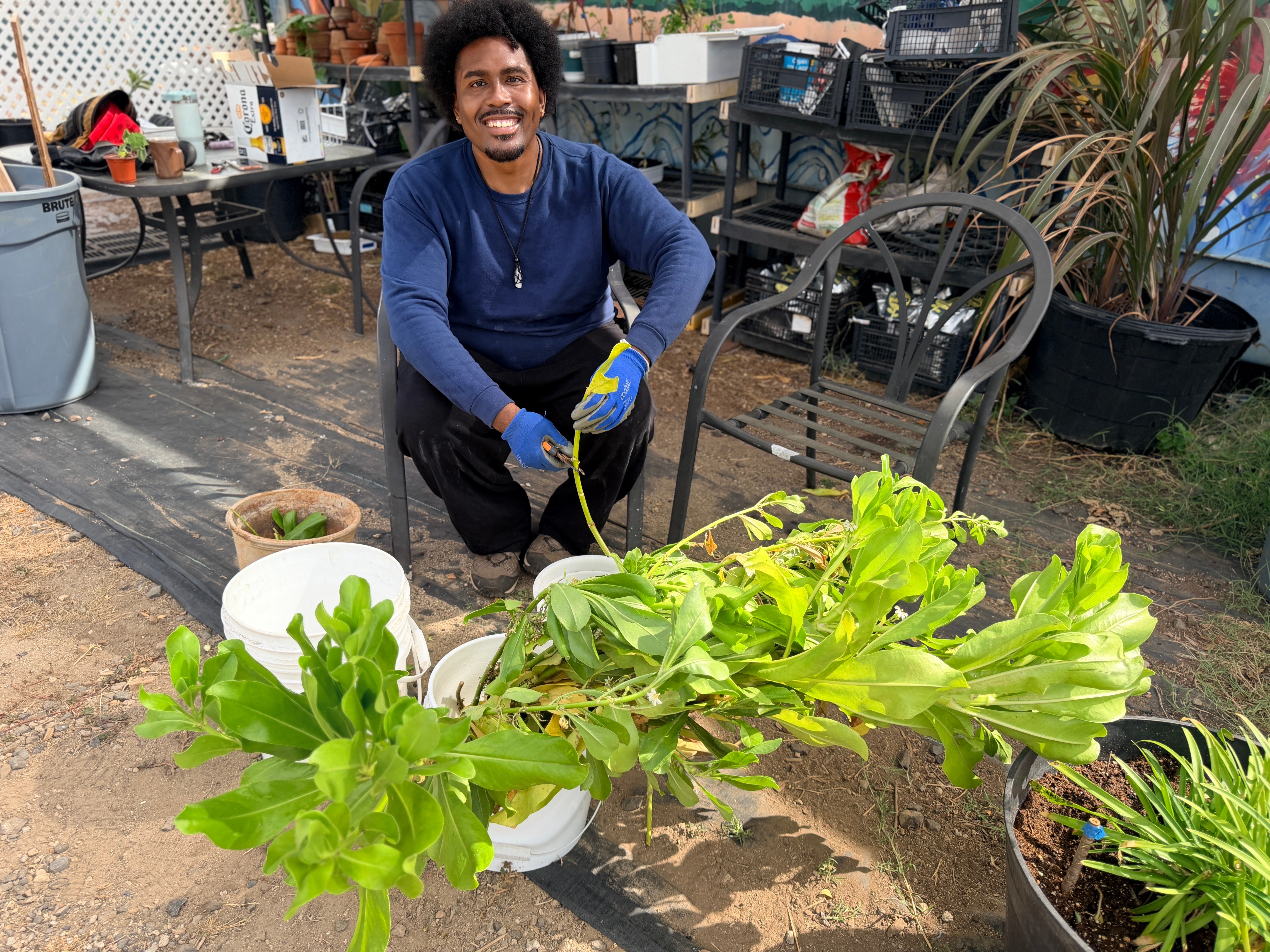
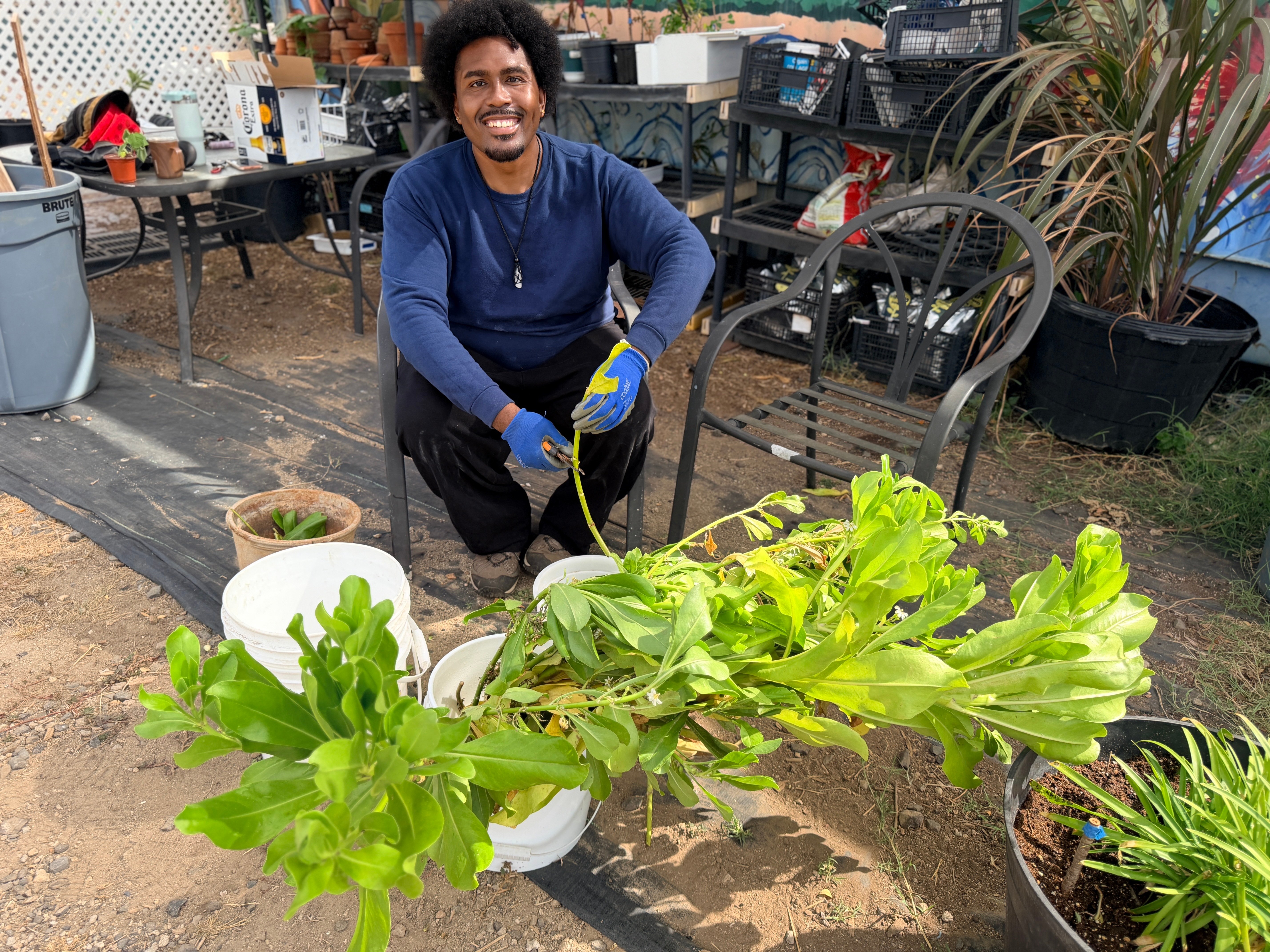 Volunteer Antonio Durham prepares cuttings of native plants in the Ocean Friendly Garden.
Why We're Pivoting to Native Plants
While tropical fruit trees and food forests offer valuable lessons in permaculture, native plants have multiple benefits for sustainable stewardship. Here is why this evolution matters for our watersheds, coastal waters, and community.
1. Unmatched Climate & Drought Resilience
Hawaii’s climate landscape is experiencing more frequent dry spells, rising temperatures, and intense, short-duration storm events. Fruit trees and agricultural crops require lots of water and fertilizer to stay productive during dry seasons. This puts stress on our limited fresh water supply, and creates nutrient runoff that impacts our reefs and marine ecosystems.
In contrast, native Hawaiian endemic and indigenous plants — such as pōhinahina and ʻilima — have spent millennia adapting to local microclimates. Once established, native groundcovers and drought-tolerant shrubs form deep, resilient root systems that hold soil intact during heavy downpours while thriving on minimal water during extended dry periods. They are also adapted to our soils, and do not need extra fertilizers and nutrients to thrive.
2. Honoring Pilina (Connection) & Indigenous Knowledge
Landscape design is never just about plants; it is about identity and relationship to place (pilina). Returning to native species re-establishes a direct connection to traditional Hawaiian ecological knowledge, and creates hands-on learning opportunities to share and sustain this wisdom.
Ridge to Reef (Ahupuaʻa): In traditional Hawaiian resource management, land stewardship from the mountain (uka) to the sea (kai) ensures that actions upstream directly safeguard the health of the ocean down below.
By centering native flora, the garden serves as an educational space where volunteers and visitors can learn the cultural uses, names, and ecological roles of plants that have sustained these islands for centuries.
3. Restoring Healthy Watersheds from the Ground Up
Native plants are the ultimate watershed defenders:
- Soil Retention: Complex native root structures anchor topsoil and naturally filter extra nutrients, drastically reducing coastal sedimentation and algal blooms that smother coral reefs.
- Habitat for Native Pollinators: Native Hawaiian yellow-faced bees and butterflies co-evolved alongside endemic flowers. Restoring native vegetation creates potential pockets of sanctuary in urban environments where pollinators can forage and nest.
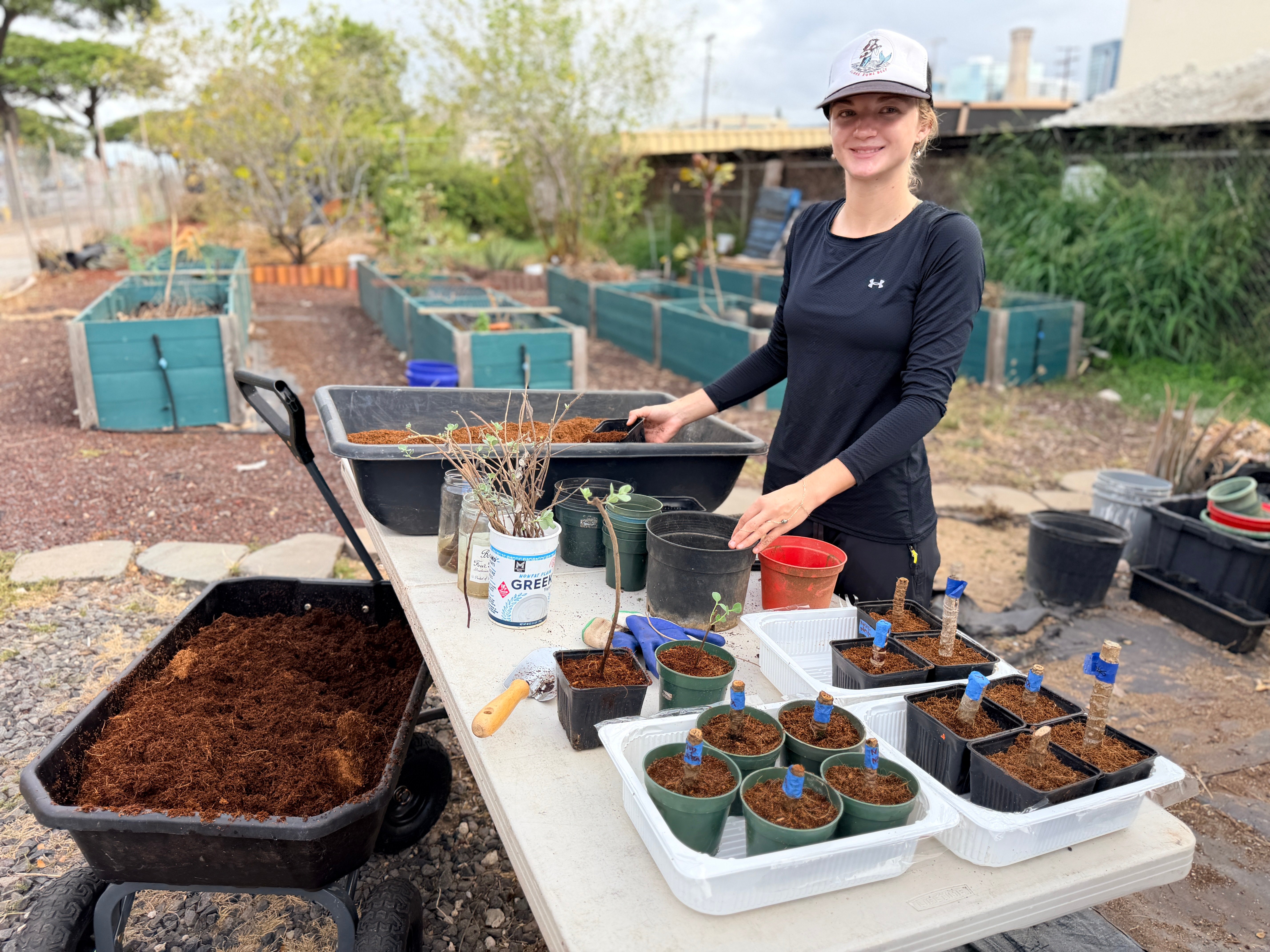 Volunteer Makena Weber propagates cuttings of native and canoe plants into pots.
A Community Propagation Hub
Our ultimate goal is to transform the garden into a resource for Native Hawaiian plant stock for the community. As a propagation hub, the space will produce cuttings and seeds of native species to be distributed to volunteers, community members, and community projects that scale up our ocean-friendly impact across O‘ahu. This new resource will support local access to native plants while creating long-term impacts for coastal resilience and biodiversity.
While we transition to adding more native plants, select mature fruit trees will be retained within the garden to provide shade and food, demonstrating how native understory plants and traditional agroforestry can coexist.
What’s Next for the Garden
- Phase 1: Selective Clearing & Soil Building — Transitioning existing agroforestry beds while enriching soil structure with organic mulch.
- Phase 2: Demo Zone Outplanting — Establishing distinct micro-zones (coastal strand, dry forest, and watershed species).
- Phase 3: Community Workdays & Plant Swaps — Hosting hands-on workshops where volunteers learn propagation techniques and take home native starts.
Want to get involved on O‘ahu? Join the next public OFG workday or email ofg@oahu.surfrider.org
Not on island? Learn more about Ocean Friendly Gardens and support our work by becoming a Surfrider member.
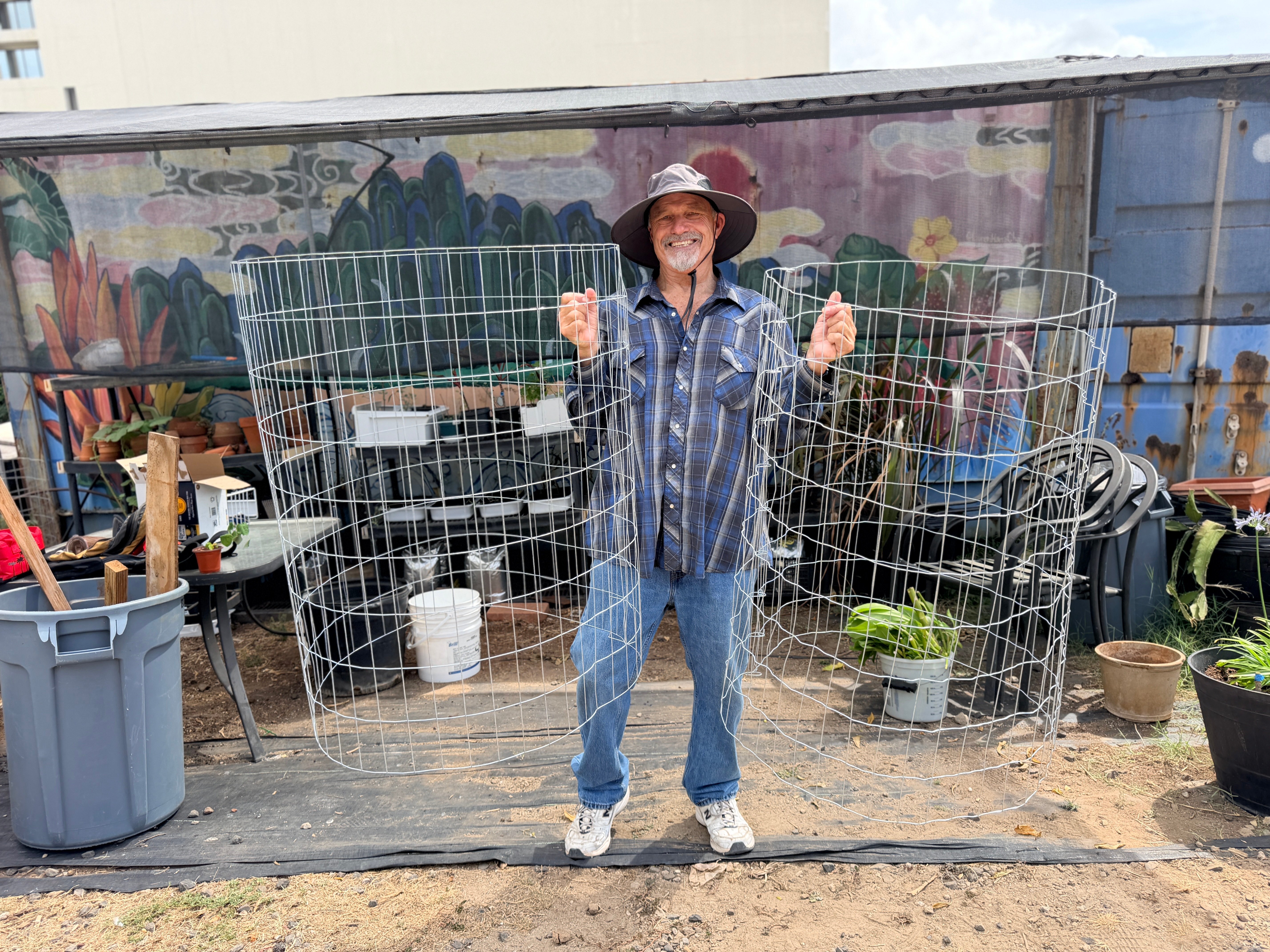 Volunteer Jeff Eckert proudly displays wire plant protectors to protect the newly planted native plants from the feral chickens in the garden.