
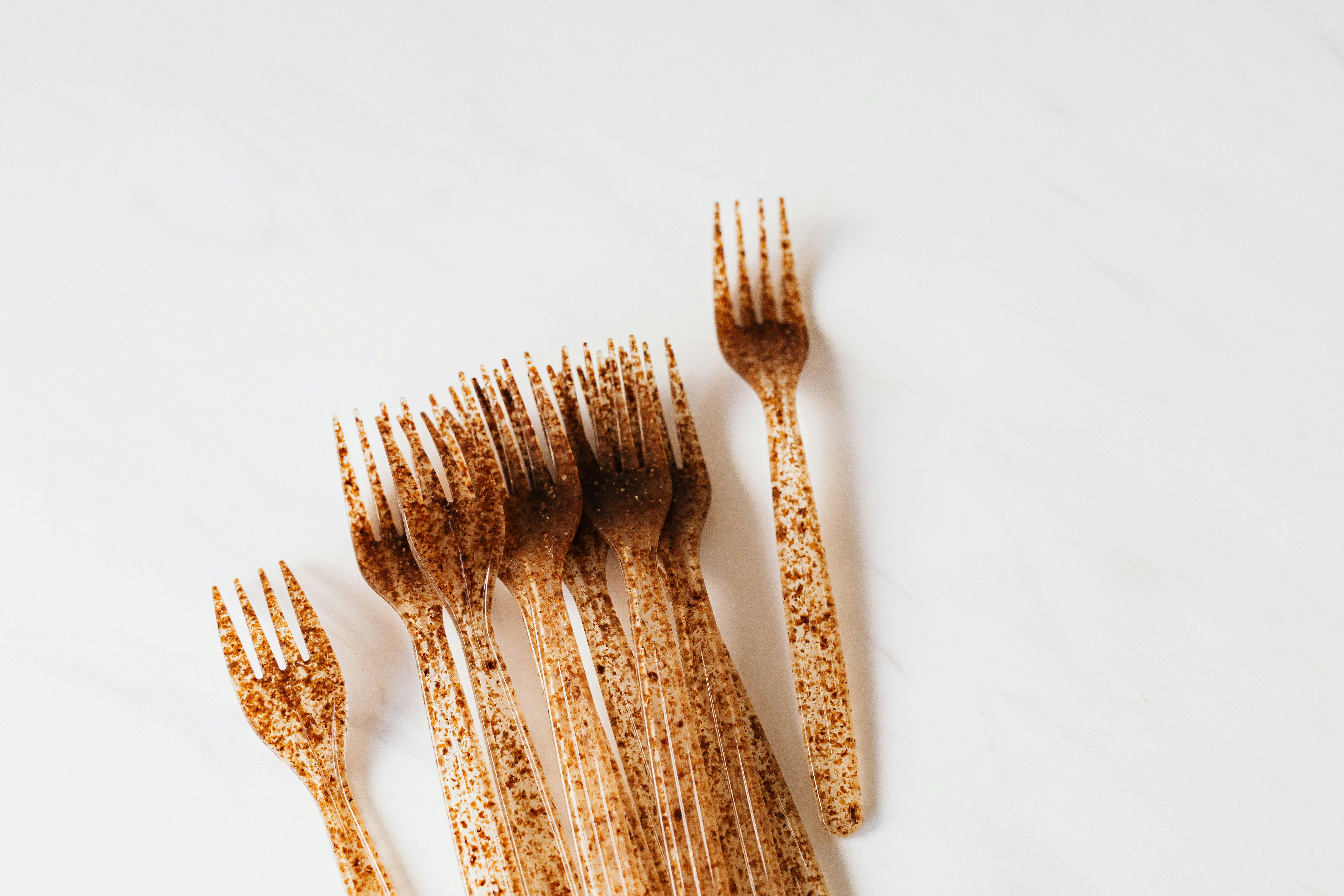
Most of us try our best to reduce single-use plastic and make sustainable swaps whenever we can. But what if some swaps aren’t what they seem? At first glance, bioplastics, or plastic products advertised as compostable or biodegradable, seem like a great alternative to regular plastics because they perform like plastic but are “eco-friendly.”
Unfortunately, there are currently no federal regulations on bioplastics, which leads to a lack of transparency and brands making bold sustainability claims without the science or certifications to back them up. This causes widespread confusion and greenwashing. Not to mention, some of these bioplastics can take hundreds of years to degrade and can be more toxic than conventional plastic. With bioplastic production expected to triple by 2028, it is important for businesses and consumers to be informed about bioplastic so they can make the most informed decision possible when choosing foodware.
What is Greenwashing?
Greenwashing is when companies label and market products as environmentally friendly without actually providing an environmental benefit. To make matters worse, these products are often more expensive than the ones they intend to replace.
What are Bioplastics?
There is no universal definition for ‘bioplastic,’ but Surfrider uses bioplastic as an umbrella term to describe plastics that are:
- Completely or partially made from plant material such as corn, agave, or sugar cane. There is often no indicator to state what percentage of the plastic is made from plants. The rest of the material could be made from or blended with conventional fossil fuel-based plastic.
- Marketed as biodegradable or compostable. They may or may not biodegrade or compost, depending on how a product is made and conditions in which the product is disposed of.
- Fossil fuel-based plastic that has been combined with additives to become biodegradable over various time frames.
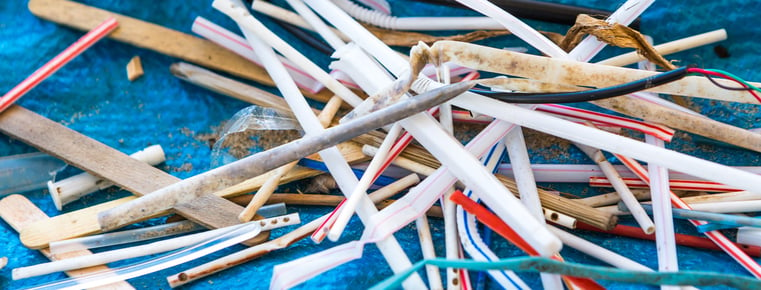
Common Types of Bioplastic
Here are a few types of bioplastics commonly found on the market today:
PLA: Polylactic Acid (PLA) is a type of bio-based plastic typically made through chemical processes using sugarcane or corn.
PHA & PHB: Polyhydroxyalkanoate (PHA) and Polyhydroxybutyrate (PHB) are produced by microbial fermentation using various feedstocks, such as vegetable oils, sugars, starches, or methane.
PLA vs. PHA: PLA is made through chemical processes, whereas PHA and PHB are made primarily through fermentation. PLA isn’t always compostable, but when it is, it requires a specialized compost facility to break down. Alternatively, some PHA and PHB products may be certified home compostable. PHA and PHB products on the market vary widely.
Bioplastic Disposal = Complicated
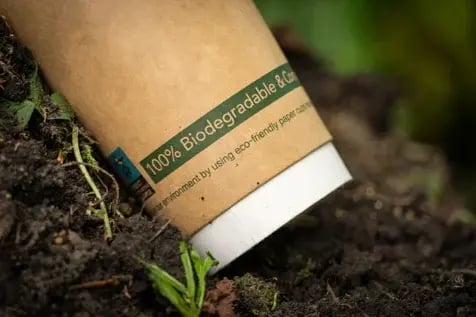
From plant leaf symbols to eco buzzwords printed on the packaging, we've been led to believe that bioplastics will magically degrade in the environment. However, that is not always the case.
Biodegradable: “Biodegradable” is not an appropriate claim for describing bioplastic or plastic products because it doesn’t include the timeframe or specific conditions for degradation to occur. Some states, like California, Maryland, and Washington, have even passed laws banning the term biodegradable on product labels.
Compostable: An important distinction to note is whether an item is “home compostable” or only compostable in a specialized industrial composting facility, which is something that most communities don’t have. Some industrial composters don’t accept bioplastics due to contamination concerns. While the term “compostable” is more highly regulated than the term “biodegradable,” there are still some factors to consider before purchasing compostable products, such as instructions for proper disposal and certifications obtained by the product (e.g. TUV Home Compost). Most states do not require products marketed as “compostable” to be compost certified.
Marine Degradable: Current methods used by manufacturers to certify “marine degradability” do not always accurately reflect nature, and many field experiments aren’t able to showcase whether or not the product fully degrades or breaks down into microplastics. More research and testing are needed for this term to be reliable and meaningful.
Can We Bioplastic Our Way out of the Plastic Pollution Crisis?
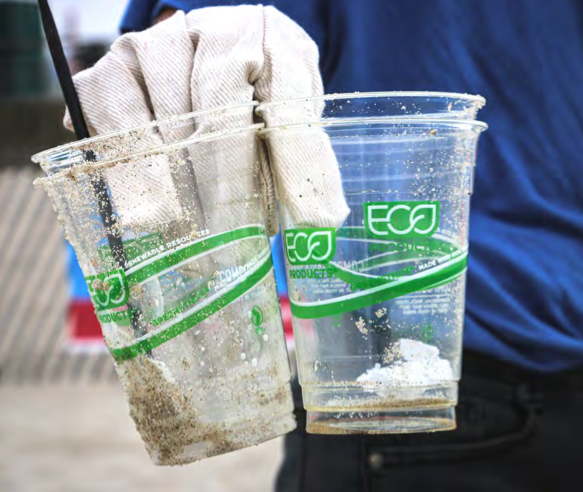
Ultimately, all types of single-use plastics, including bioplastics, are ending up on our beaches and in the ocean. Shifting from one single-use item to another isn’t the way to solve this crisis. We need to reduce plastic pollution at the source and switch to refill and reuse whenever possible. That’s why it's mandatory for Surfrider’s Ocean Friendly Restaurants to offer reusables for onsite dining and why we advocate for single-use plastic bans and reuse policies at the local, state, and federal levels.
If disposables truly are needed, products made from minimally altered, naturally occurring materials that are nontoxic, such as foodware made purely from plants like paper, hay, wheat, and bamboo, should be prioritized.
Surfrider continues to monitor the latest research and assess bioplastic products on a case-by-case basis as this industry is constantly changing. With the current science, end-of-life behavior, lack of waste infrastructure, and regulation, most bioplastics are simply not a better alternative to traditional single-use plastics at this time.
Bioplastic Resources
We know that bioplastics can be a confusing topic. Surfrider has plenty of resources listed on our Bioplastic Facts & Resources Webpage for you to explore.
Stay tuned! Surfrider will be releasing a new version of our Ocean Friendly Foodware Guide this summer, which will feature new tools to avoid greenwashing, restaurant case studies, and a purchasing guide with foodware products categorized as ‘best choice,' 'good alternative,' ‘what to avoid,’ and what is assessed on a ‘case by case basis.’
Mythbusting Bioplastic Blog Series
This blog is the first of our new “Mythbusting Bioplastic Blog Series" where we will help you navigate the complicated world of bioplastic. In this series, we’ll dive into straw research with a Chemical Engineering Professor, hear about some of the policies driving bioplastic’s growth, how to talk to restaurants about bioplastic, and more!
 As Ocean Friendly Programs Manager, CJ brings a wealth of experience reducing plastic not just in the environment, but also within the dining and hospitality industries. She has a master’s degree in Development Practice from Emory University with a focus on Monitoring and Evaluation (M&E) and Environmental Conservation.