
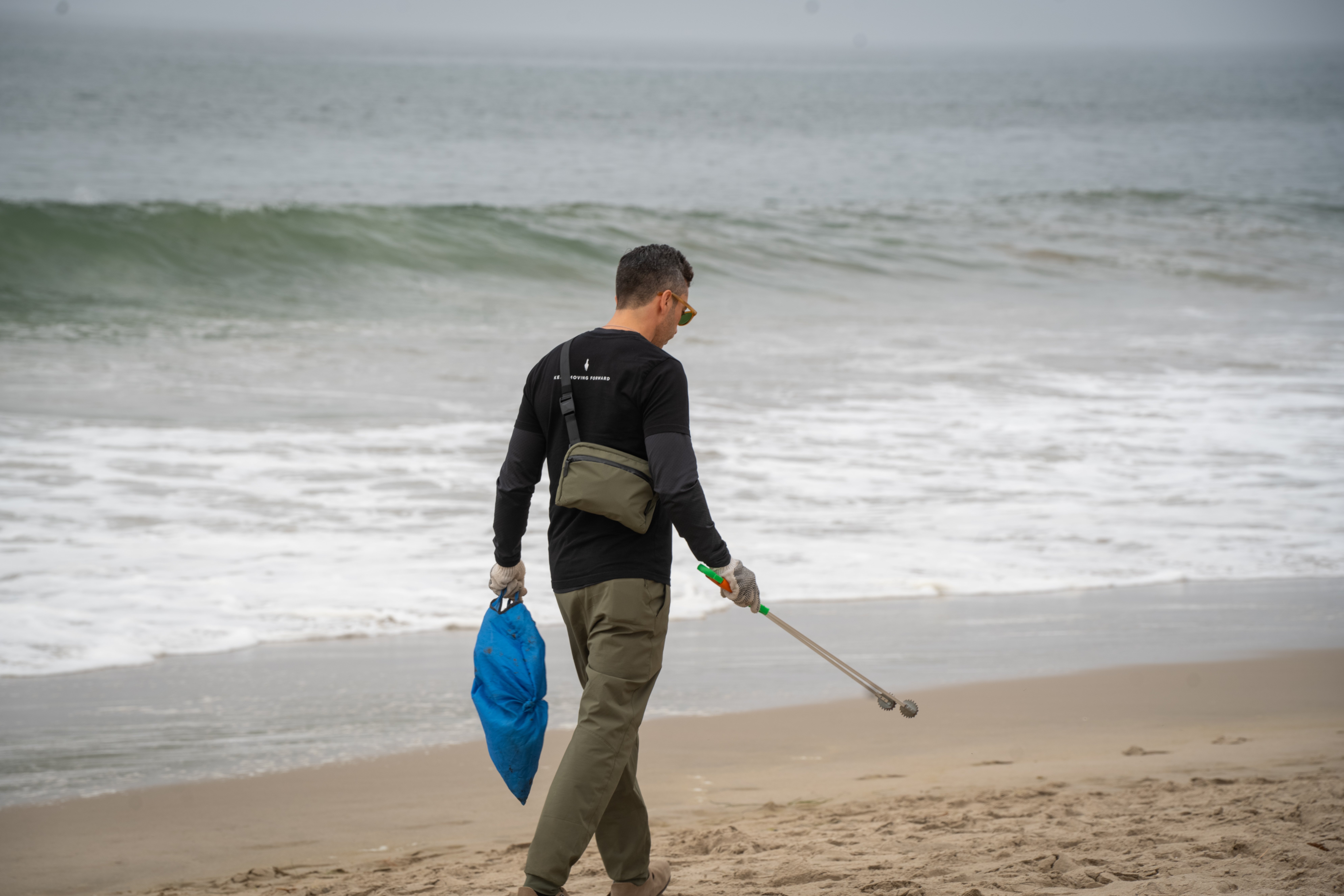
The Surfrider Foundation’s Partnership team is pleased to share another edition of our partner interview series, this time featuring ALPAKA co-founder and president, Ramiro Gomez.
ALPAKA and Surfrider have been partners now for three years, and our partnership has spanned beach cleanups across the West Coast, sponsorship of our One Ocean gala in both San Francisco and Montauk, and fireside conversations between our leaders. In my conversation with Ramiro, he offered a thoughtful look into the philosophy behind ALPAKA –from designing products in response to real customer feedback to creating durable gear built to last. That commitment to listening, thoughtful design, and longevity also shapes the brand’s approach to environmental responsibility, with circularity emerging as an important part of ALPAKA’s vision for the future.
I especially enjoyed hearing about the communities that have embraced ALPAKA’s products and the way the brand has invested in and grown alongside those communities. Ramiro’s perspective offers a meaningful look at how design, customer connection, and a long-term approach to business can intersect with a commitment to a more sustainable future. has helped foster such a dedicated following.
Read on to hear more from Ramiro about ALPAKA’s journey, values, and vision for the future.
Janie: To start, can you introduce yourself, your background, and your role with ALPAKA?
Ramiro: I'm Ramiro Gomez, co-founder and president of ALPAKA. I started the brand in Melbourne back in 2016 with my co-founder Jin Li, and I've been based in Los Angeles for the last several years. I lead the brand side of the business – including marketing, growth, and partnerships like this one – and I've spent the past decade building ALPAKA from a single Kickstarter campaign into what is now a global company with team members in the US, Australia, Malaysia, and China. What hasn't changed in ten years is that I still spend most of my time thinking about the people carrying our gear and how to serve them better.
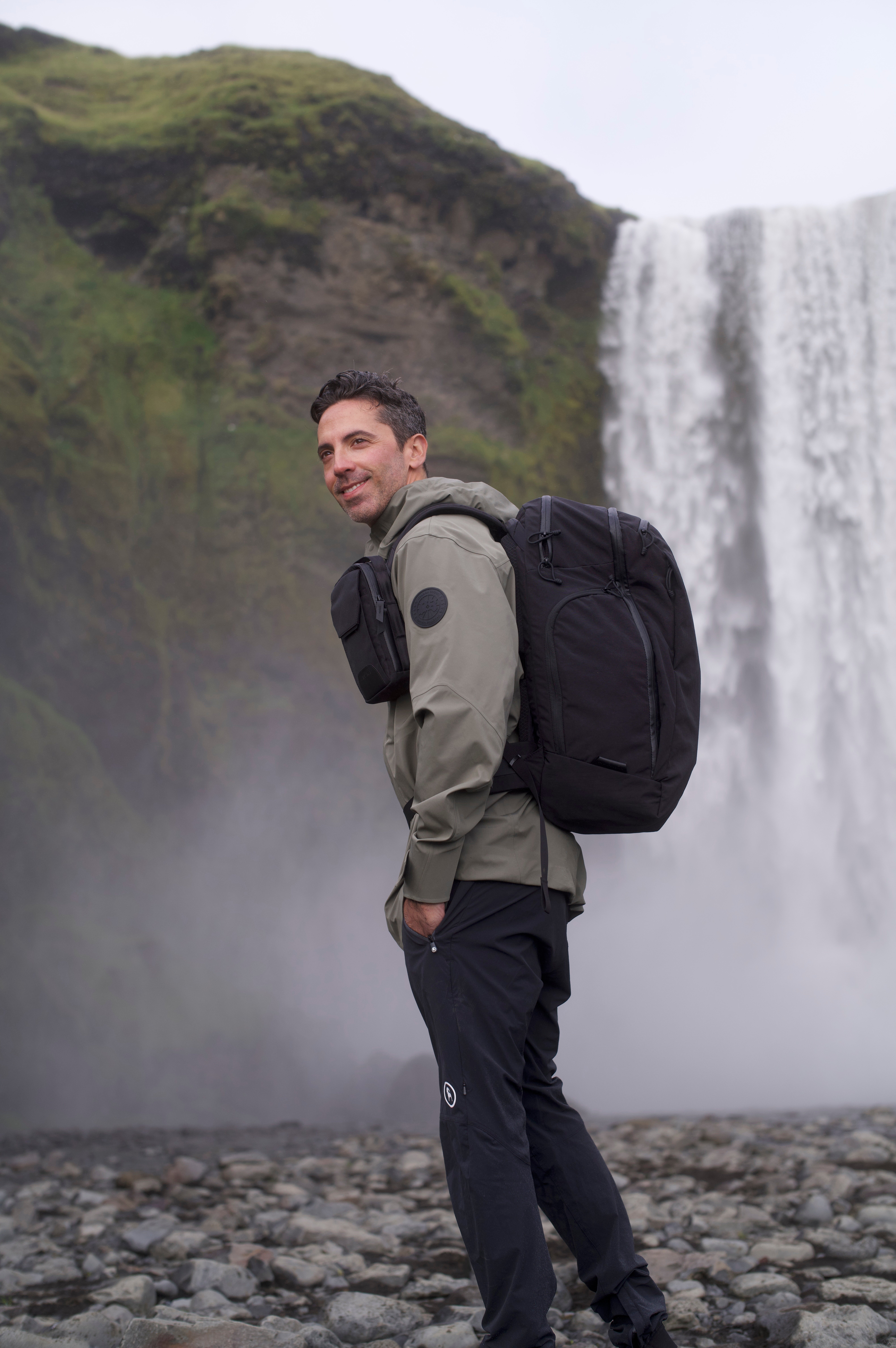 Ramiro Gomez, Co-Founder and President of ALPAKA
Janie: What inspired you to start ALPAKA? Was there a need you saw in the market or something you felt was missing in the world of bags and gear available at the time?
Ramiro: Honestly, it came from our frustration as customers. Back in 2016, when we founded the company, you had two options: technical outdoor bags with incredible materials that looked like you were about to summit something, or fashion bags that looked great, had zero organization, and fell apart in a year. Nothing sat in the middle: gear built to a technical standard that you'd actually want to carry through a city, with enough versatility to adapt to anywhere you take it.
So we designed the 7ven Messenger and put it on Kickstarter. We had no idea if anyone else felt the same gap. Turns out they did. The campaign raised about $93K, and that community helped fund the company into existence. We've run more than fifteen Kickstarter campaigns since, and that feedback loop with backers and customers still shapes how we design.
Janie: We love how many different communities ALPAKA serves - from rugged outdoor adventurers to photographers looking for reliable gear to carry their equipment, and the “Every Day Carry” (EDC) community. Did you create ALPAKA with these groups in mind from the beginning, or have these communities naturally gravitated toward the brand as it has grown?
Ramiro: Mostly the latter. We started by designing for commuters and urban creatives, people moving through cities with laptops, cameras, and chargers. The EDC community found us early because they're the most detail-oriented buyers on the planet, and they noticed we sweat the same details they do. Although we haven't done dedicated camera bags, photographers came next because a bag that protects a laptop in the rain also protects a camera body. We've never tried to design for a community in a calculated way. We design for how people actually move through a day, and different communities recognize themselves in that.
Janie: For those who may be new to it, can you tell us a little more about the “Every Day Carry,” or EDC, community? What do you think attracts this community to ALPAKA?
Ramiro: EDC is essentially the philosophy that the things you carry every day – wallet, keys, pocket knife, flashlight, bag – deserve real thought. It's an optimization mindset. The community reviews gear with a rigor that puts most professional testers to shame, and they have zero patience for marketing fluff.
I think what draws them to us is that we iterate in public. When the community tells us a pocket is 15% too small or a strap sits wrong, the next version fixes it. They can trace design changes back to their own feedback, and that kind of accountability builds trust you can't buy.
Janie: ALPAKA products are designed to be functional, durable, and stylish. How do you approach designing products that can keep up with the different ways people use them?
Ramiro: We field-test everything, and we listen more than most brands are comfortable with. Our process is built around fast iteration rather than long development cycles, so we get working prototypes into real hands quickly, and Kickstarter backers essentially serve as our final quality assurance team: thousands of people using a product in ways we never anticipated, telling us exactly what breaks or annoys them. Then the next version fixes it. Over fifteen campaigns, that loop has become our biggest design advantage.
The other piece is materials. We've developed our own fabrics and hardware over the years, alongside proven materials like X-Pac® and recycled ECOPAK™. The design philosophy is what we call “composed minimalism”: less, but better.
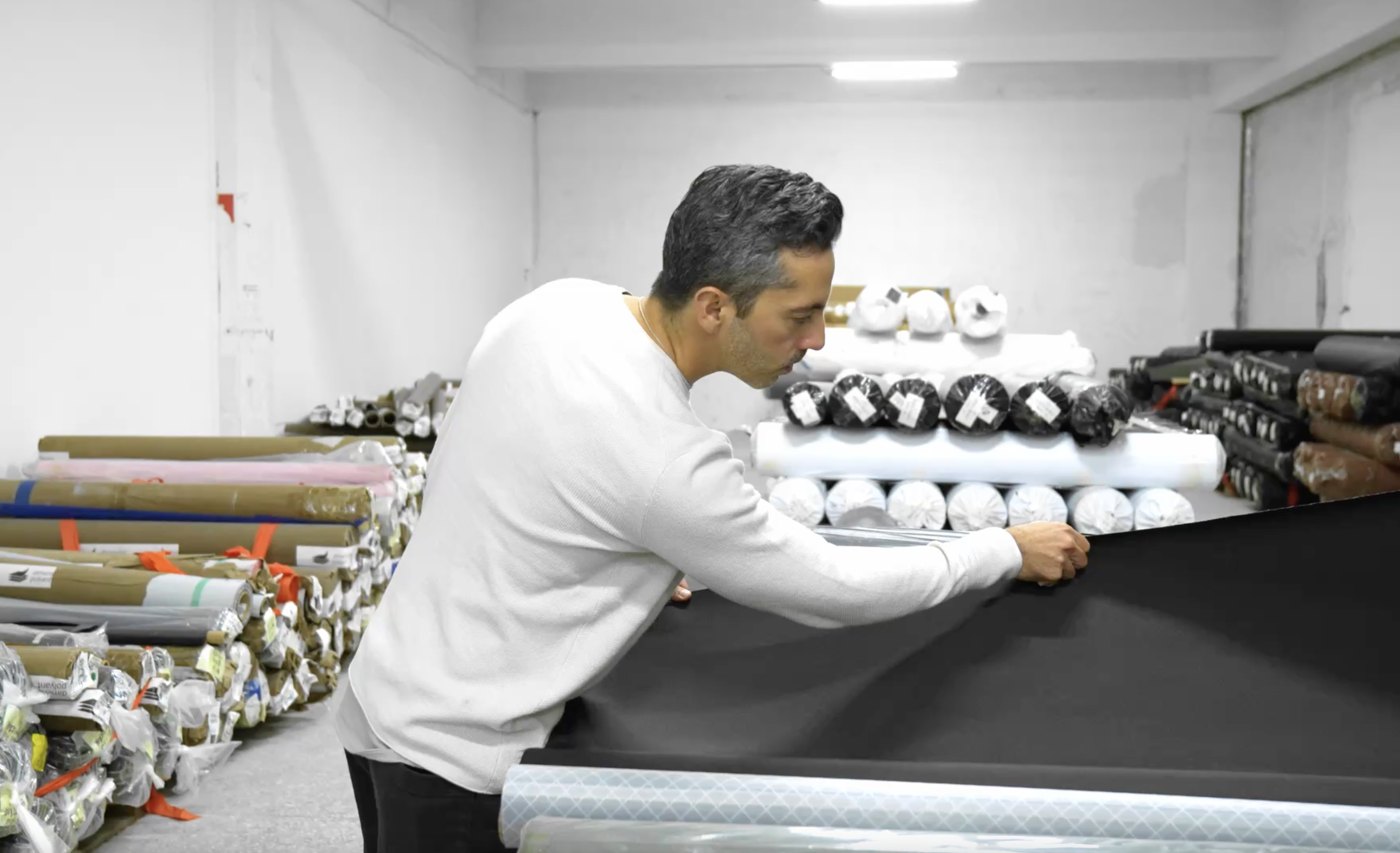 Ramiro at the factory inspecting ALPAKA's unique fabrics
Janie: How did you first discover Surfrider, and what made you want to partner with an organization focused on protecting our ocean and coastal communities?
Ramiro: Surfrider was on my radar long before ALPAKA existed. I grew up in Tijuana, surfing on both sides of the border (in Baja and San Diego), and if you spent any time in that lineup, you knew who Surfrider was. So this partnership wasn't a discovery; it was more like finally getting to work with an organization I'd respected since I was a kid.
What made the timing right was how aligned the work is. Surfrider isn't abstract advocacy; it's beach cleanups, water testing, and policy wins you can measure. That maps to how we build our product: do the real thing. This past summer, we ran a pop-up on Abbott Kinney in Venice and hosted a fireside chat with [Surfrider CEO] Chad Nelsen, and it felt like a full-circle moment.


Janie: What does ocean conservation mean to you personally? And has spending time near the coast or in the outdoors influenced the way you think about your work?
Ramiro: For me, it's bigger than the ocean; it's about protecting the natural world, full stop. I've never thought of nature as something separate from us. It's a part of us, and I've carried a deep respect for the planet for as long as I can remember. Some of my earliest memories are watching nature documentaries with my dad as a kid, and I always felt this real empathy toward what was on the screen. I don't just mean wonder, but a sense that these places and creatures mattered and deserved protection.
That never left. And it absolutely shapes how I think about the work. When you genuinely believe nature is part of us, making disposable products becomes hard to justify. Every bag we build to outlast the trend cycle is a bag that stays out of a landfill and out of the ocean. That's the most direct environmental impact a gear company can have, and honestly, it's the version of respect for the planet I can act on every day.
Janie: Environmental responsibility is woven into ALPAKA’s products and operations, from eco-conscious materials and manufacturing to global giving partnerships and circular product lifecycles. Can you tell us more about this approach and what aspects you’re especially proud of?
Ramiro: It starts with the materials. We use recycled fabrics across the range, and we work directly with our mill to develop our own custom fabrics. That partnership means we're not just picking from a catalog; we're deciding what goes into the material itself. When you develop a fabric from the ground up, environmental choices get made at the source instead of bolted on afterward.
The bigger structural piece is that we own the whole vertical, from fabric development through manufacturing. Most brands outsource production and hope their supply chain behaves. We don't have to hope, since we control how our products are made at every step, and that's rare for a company of our size and in our industry.
And then there's what happens after the sale, which is the part I'm most excited about right now: circularity. We run our own resale store where customers can sell their pre-loved ALPAKA gear directly to the next owner. Ten years in, there are a lot of our bags in the world, and keeping them in circulation matters more than any single material choice.
We're also members of 1% for the Planet, which means we donate 1% of our revenue (not profit –revenue) to environmental causes. That distinction matters to me, because it means the commitment doesn't shrink in a tough year.
Janie: What has been one of your favorite products to design and bring to life, and what makes it special to you?
Ramiro: It has to be the 7ven Messenger. It was our first product, the one that started everything on Kickstarter in 2016, and this year it turns ten. We're marking the anniversary this September, which has meant going back through a decade of iterations, and it's a little emotional, honestly. Every product we've made since traces back to what we learned making that one. It's the bag that taught us who we are.
Janie: If you could only have one ALPAKA product, which one would you recommend and why?
Ramiro: The Elements Backpack Pro. It's my favorite backpack and the one bag that genuinely does everything for everyday use. It's the perfect size with the right organization. It’s a great daily driver. If someone's only going to own one piece of our gear, that's the one that'll follow them everywhere.
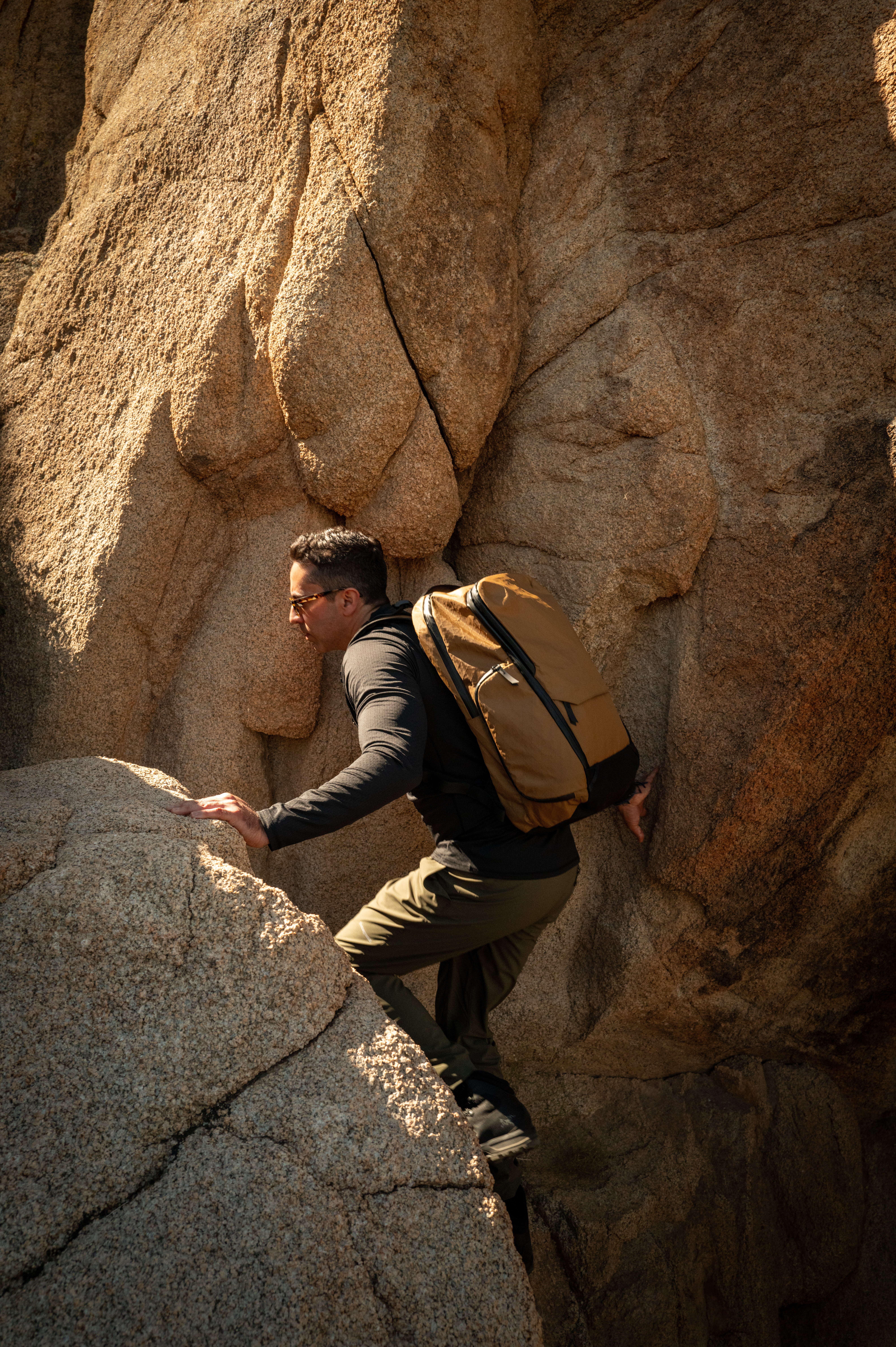
Ramiro enjoying the outdoors with his activity-tested favorite, the Elements Pro Backpack
Janie: To wrap up, we’d love to leave our readers with a sense of what’s next for ALPAKA. Looking ahead, what are you most excited about for the brand? And how would you like to see ALPAKA continue to make a positive impact beyond the products you make?
Ramiro: This is our tenth year, so there's a lot happening: anniversary releases, some collaborations we're excited about this fall, and a broader evolution of the brand from pure everyday carry into travel and the way people live and move more generally. Looking ahead, I'm most excited about travel products and expanding into other categories like outdoor gear.
On impact, I want circularity to become core to how we operate, not a side program. Resale, repair, and keeping products in use longer. That's where a brand like ours can actually move the needle.
Partnerships like this one with Surfrider keep us honest. Our tagline is Keep Moving Forward, and I take that to mean the brand has to keep evolving its responsibility too, not just its products. The gear is the entry point. What we do with the community around it is the real work.
Thank you, ALPAKA, for your partnership with Surfrider, and to Ramiro for taking the time to share his story and perspective with our community. We’re excited to see our partnership continue to grow and create meaningful impact in the years to come.
Learn more about ALPAKA on their website and follow them on Instagram.
 In her role as Partnerships Activation Coordinator, Janie supports the national corporate partnerships team through administrative and operational responsibilities. She spent her college years in Portland, Oregon, at Lewis & Clark College where she graduated with a degree in Environmental Studies and a minor in Political Science.