
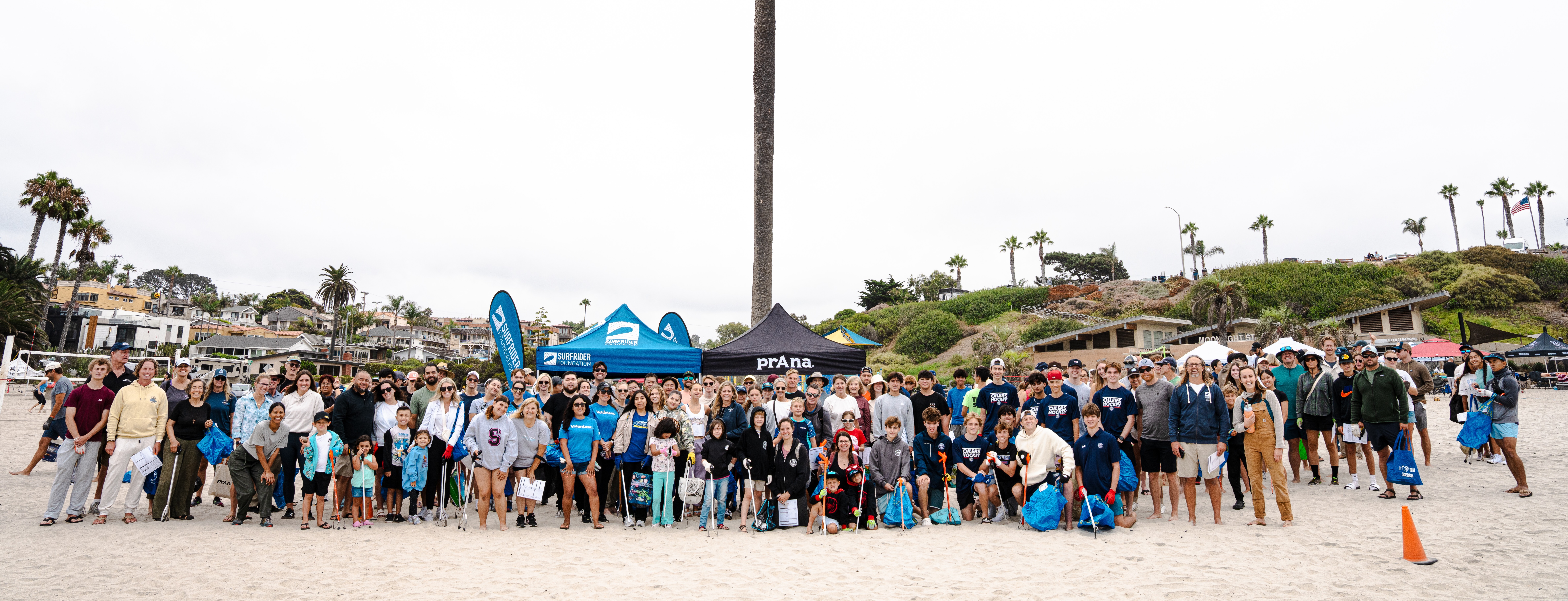
In 2025, prAna and Surfrider launched a partnership together that simply made sense. Both organizations were founded on a shared commitment to protecting the natural environments that inspire us to get outside – whether through surfing, hiking, climbing, or simply connecting with nature. Since the partnership began, this shared purpose has fueled meaningful impact, and together, we’ve already accomplished so much.
Wanting to learn more about what makes prAna prAna, I joined their team on Earth Day at a beach we had cleaned together last fall – a cleanup where volunteers removed more trash than had ever been recorded there. The prAna crew brought great energy and a genuine motivation to make a difference, and together we removed another 20 pounds of trash from the coastline.
After a morning spent with our toes in the sand, I headed to a nearby coffee shop to sit down with Ellen Johnson, one of the amazing team members helping lead sustainability efforts at prAna.
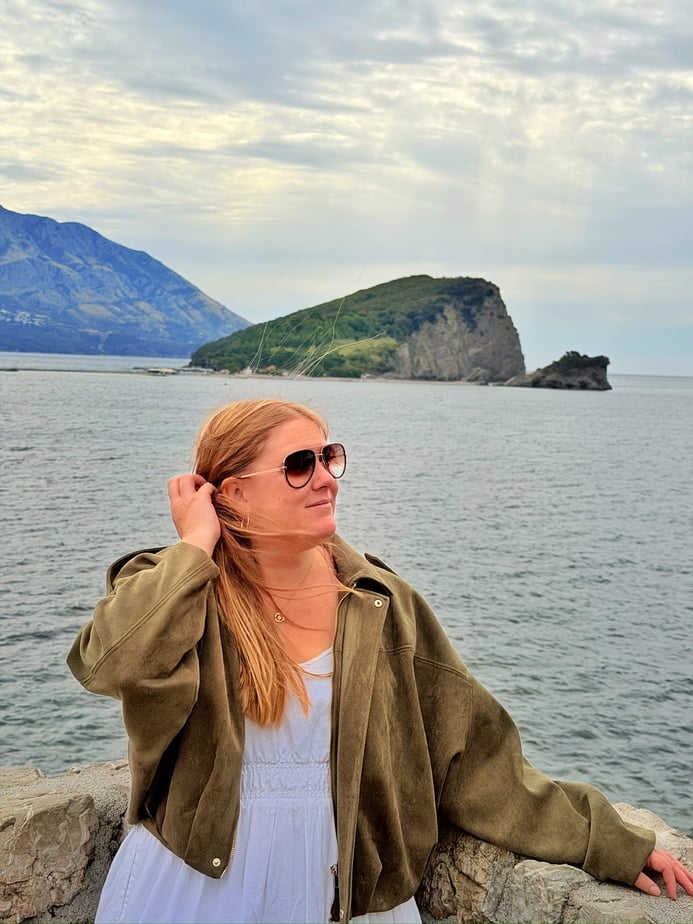
Ellen Johnson, Sustainability & Innovation Manager for prAna
Janie: Thank you so much for taking the time to chat with us! To start, can you share a little about the relationship between Columbia Sportswear and prAna?
Ellen: Columbia Sportswear Company is the parent company of four brands: Columbia, prAna, Mountain Hardwear, and SOREL. My team sits within the company’s shared services division, where we support all four brands across sustainability and corporate responsibility initiatives.
Janie: Did you originally start on the Columbia side or with prAna specifically?
Ellen: I was with prAna specifically for eight years. I actually started as a temp employee in technical design before being hired full-time as a product developer. While I was in product development, my passion for sustainability really began to grow, so I started taking on a lot of stretch projects. We had a Green Team, and I became involved with that. Eventually, a role opened up [on the sustainability side] and I raised my hand for the opportunity. My first position primarily focused on social responsibility and certifications – a lot of the details, reporting, and compliance side of things.
Because I came from a product background, the role evolved over time and I began taking on more responsibility around the materials program, helping create the strategy targets. I also co-founded The Responsible Packaging Movement with a partner on the marketing team.
Janie: What is your current role, and how would you describe the work you do?
Ellen: I'm the Sustainability and Innovation Manager, so I lead our product sustainability efforts and what I like to call “programmatic innovation” – developing new programs and helping existing programs evolve and grow.
Right now, a major focus for me is expanding our use of certified materials that are supported by third party standards. I’m also working on [initiatives related to] circularity and helping prepare for legislation like digital product passports.
Another big part of my role is supporting our brands on building their sustainability strategies. One of the major projects I worked on, beginning in 2024, was partnering with Tricia, prAna’s Brand President, to create a new sustainability strategy for the prAna brand.
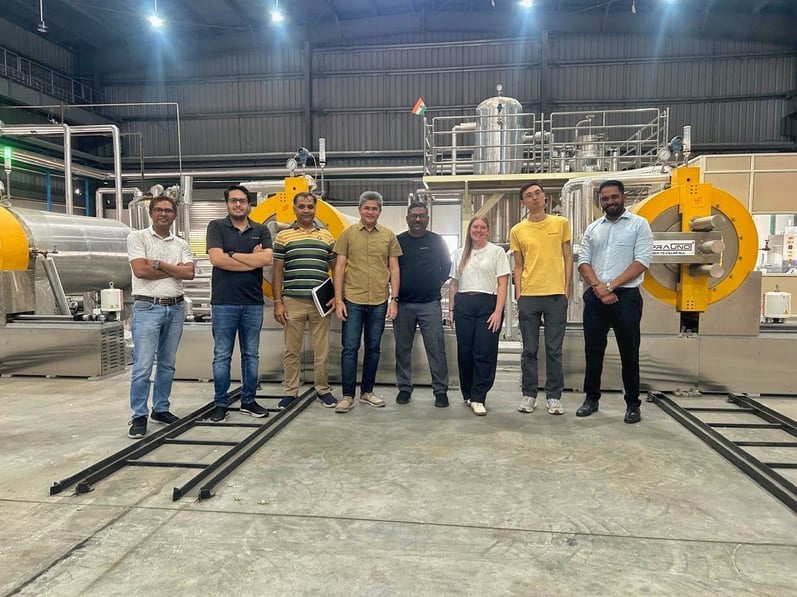
Ellen and team at a fabric mill in front of a waterless dying machine
Janie: Sustainability can mean a lot of different things, and many companies use it as anything from a greenwashing marketing buzzword to a genuine commitment to protecting our natural environmental for the future. How does prAna define sustainability, and what does it mean to the company?
Ellen: I think there are really two sides here: the science and the art. On the science side, having standards is incredibly important, and we never want to greenwash. In fact, we try not to use the word “sustainability.” Instead, we get very specific about the claims we're making to ensure we're being transparent about what we actually mean.
On the other side, the art side, prAna was founded on an ethos rooted in sustainability. The company was almost started as a nonprofit, and [founders] Pam and Beaver ultimately decided they wanted to use their business as a platform for positive change. That mission has been part of the brand since day one. Long before sustainability became a marketing buzzword we were doing the work simply because we cared about it.
It was very much a grassroots effort, but then as the marketing side of sustainability came into play we were like “whoa what's happening!” That's when we really had to get into the science side of things and become even more intentional in how we talked about our work. We wanted to make sure that we weren't just talking about sustainability in general and show that it's woven throughout our entire business. It's not just a single collection or recycled material initiative –it's an ethos that shapes how we operate.
There’s no universal playbook for sustainability, which is why it's so important to understand your impacts and identify where you can improve. This thinking ultimately built prAna's new sustainability strategy – understanding what we do, what our impacts are, and where we can actually create meaningful positive change through the way we operate our business.
Janie: How does prAna choose which sustainability initiatives to prioritize?
Ellen: We just recently launched our new sustainability strategy, and the process started with breaking down everything we were doing and identifying where we could make a meaningful impact while still creating great products and staying true to our sustainability ethos. Through that process, we identified three core pillars.
We have our “Conserve” pillar, which is focused on circularity. That's where our recycled content fits in a lot of our projects around textile-to-textile recycling, and where we're expanding efforts to keep our products in use longer through repair and the secondhand market. At the end of the day, we make products, so we’re always asking: how can we take our product at the end of its life – or even waste generated within our industry, like cutting scraps and excess material – and turn them back into products we know and love?
Next we have our “Protect” pillar, which centers around thriving ecosystems and nature-based solutions. That's where a lot of our preferred materials work fits in, including regenerative organic materials, deforestation commitments, and plastic-free commitments. It encompasses all of the actions we take to support thriving ecosystems and protect biodiversity.
And then we have our “Empower” pillar, which focuses on empowering women, communities, and the people throughout our supply chains. Two main programs within that work are RISE and Planet Water, which we support alongside our factories and the surrounding communities where we manufacture.
That’s also where organizations like Surfrider come in. We wanted to find a way to take threads through these pillars of our business and connect to experiences our customers can engage with. This is where our community partners come in – through hyper-local activations, like beach cleanups, and funding work that Surfrider is doing to help protect the areas we love, like San Onofre. We also partner with Access Fund to protect access to climbing areas. Ultimately, these partnerships help tie our pillars together — allowing us to support our communities, strengthen our supply chain initiatives, and tell more meaningful stories about the impact we’re trying to make.
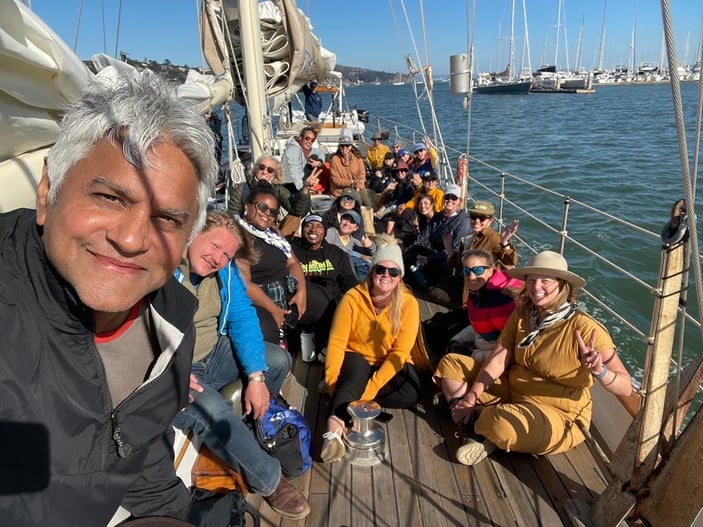
Ellen and crew at a 5Gyres event, conducting research on microplastics
Janie: Speaking of the nonprofit partners – and Surfrider is very honored to be alongside organizations like Access Fund, RISE, and Planet Water Foundation – what was the strategy behind choosing your nonprofit partners, and why Surfrider specifically?
Ellen: We really dove into what our three pillars are and who prAna is as a brand. Our Columbia and prAna teams did a lot of research, and we also worked with our PR agency to better understand which organizations our consumers would connect with the most.
We considered many different partners, but with organizations like Surfrider, Access Fund, and Un Mar de Colores, the alignment and storytelling felt natural. Surfrider was founded in Southern California, and prAna is a Southern California brand, so there's a strong shared connection and community there.
There were many amazing nonprofits, but we wanted partnerships that felt deeply connected to our sustainability strategy and the conversations we want to have with our community. The work Surfrider does is really true to what we're trying to do in our three pillars, so the partnership really feels like an extension of the prAna team and the impact we’re collectively trying to make.
Janie: I completely agree, and we love working with prAna because every interaction feels aligned in purpose. We’re both approaching this work with the same goal: to create positive impact. Events like the beach cleanup we hosted in August – where we removed more trash from Moonlight Beach in Encinitas than ever before – feel like a huge win and a reflection of what’s possible through this partnership. When the collaboration flows naturally, the impact follows.
Our partnership is in its second year, and we've already accomplished so much. On a personal note, what aspect of the partnership motivates you most, and what are you most excited about in the year ahead?
Ellen: That's a great question. I think there's so much opportunity for deeper connection, especially around the thriving ecosystem side of our work and how we can learn from each other on a scientific level.
A lot of times, brand and nonprofit partnerships can feel transactional – like, “here's some funding,” and that's it. But we really want this relationship to be meaningful. Surfrider is doing such incredible work in conservation, and there’s so much we can learn from you. Even if the work isn’t happening directly within our own communities, understanding the environmental challenges ecosystems are facing can help inform our work on preferred materials or how we shape our broader [sustainability] strategy.
I’m really fascinated and inspired by Surfrider’s coastal restoration work. Living here myself, protecting these spaces feels really important to me. Beyond the work itself, I think there’s a huge opportunity for us to use both of our platforms and communities to help grow awareness around why protecting nature, our ecosystems, and biodiversity matters so much. It's easy for people to forget that, but Surfrider communicates these issues in such an approachable way that people feel empowered rather than threatened or overwhelmed. I think there's a lot of opportunity for us to continue building that messaging together.


Janie: Is there anything else you would like to share?
Ellen: The title for prAna’s new sustainability strategy is called “Intentionally Built.” At its core, it’s about making high-quality, durable products, continuing to hone in on that, while also helping people build a deeper connection to the clothing they wear.
I joke about this shirt I’m wearing - it’s our Everyday Tee made with regenerative organic cotton. On the surface, it’s a white t-shirt, but I'm obsessed with it because when someone's like, “Oh, that's a cute fit,” I get to share the bigger story behind it, by saying, “Yeah, it's also regenerative organic cotton, and we're helping protect the soil and regenerate the soil and bring biodiversity back to this area in India and birds and cool bugs are coming back!”
Janie: It's so much more than just a shirt!
Ellen: Yes! It's the sustainability version of “it has pockets!”
At the end of the day, sustainability really comes down to systems. For us to actually succeed at this collective challenge, we have to change the system itself. It's not something we can solve just through individual actions at home. The moment we go out into the world, we're handed plastic cups, packaging, and systems that aren’t designed with sustainability in mind.
This is one of the things I really love about Surfrider –the ability to connect beach cleanups to science and data collection. This kind of work allows us to better understand the issues we’re facing. Once you have that foundation and a clear baseline of where things stand, then we can start building solution systems to address the issues.
That’s what our intention was with prAna's new strategy. We wanted to establish a clear foundation: where are we today, and what does our impact look like? The great thing about prAna is we’re doing pretty well so far. The majority of our product already uses preferred fibers, but there’s no finish line here. It’s about continuing to set new targets, keep improving, and asking how we can make a greater impact. And it’s about sharing what we're learning. This work isn’t competitive – it’s collective.
From the bottom of our hearts, we thank Ellen and the team at prAna for their support of Surfrider. To explore the brand visit prana.com
 In her role as Partnerships Activation Coordinator, Janie supports the national corporate partnerships team through administrative and operational responsibilities. She spent her college years in Portland, Oregon, at Lewis & Clark College where she graduated with a degree in Environmental Studies and a minor in Political Science.