
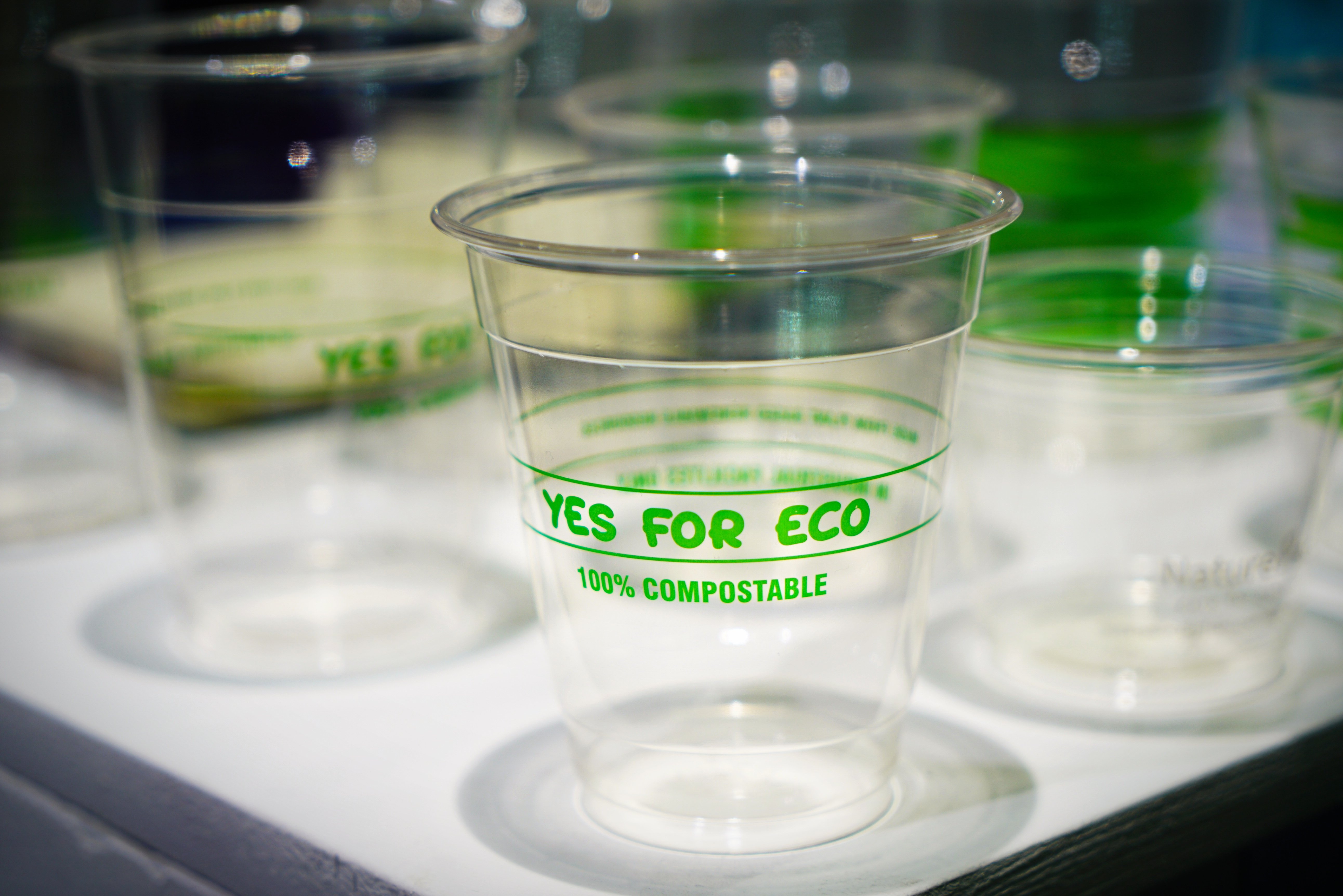
Picture this: You’re eating lunch at one of your favorite local restaurants, and you notice that they recently switched to bioplastic straws. That same evening, you attend a backyard barbeque at your friend’s house where you notice them using bioplastic cups for drinks. Knowing you’re passionate about protecting the planet, they say, “look at these new eco-friendly cups I got! I figured these are more sustainable than typical plastic ones.”
Your heart starts racing. You know deep down that bioplastics aren’t the answer to the plastic pollution crisis, but you don’t know how to tell them. Surfrider is here to help!
In this blog, we’ll provide you with tips and tricks for talking to people about the issue of bioplastics.
What are Bioplastics?
“Bioplastic” is an umbrella term for plastics completely or partially made from plants (bio-based plastic) and plastic that is marketed as biodegradable or compostable. These bioplastic products are typically made using the same processes and toxic additives as traditional plastic. Check out this blog for a deeper dive.
Tips for Talking About Bioplastics With Your Friends & Fav Restaurants
1. Lead with compassion, appreciation, and understanding.
First and foremost, that restaurant and your friend are trying to do the right thing. They made a conscious effort to choose a product that was marketed as being more sustainable. That’s a great first start! Capitalize on that and lead with understanding and positivity, rather than shaming them for their decision.

What to say: something along the lines of, “I’m so happy that you’ve taken the extra step with the environment in mind. I appreciate that you’re purchasing products that are marketed as being better for the environment. Sadly, a lot of these products are false advertising, which is frustrating because we are all just trying to do the right thing!”
2. Explain the environmental and financial cost.
Bioplastic products can be confusing by design. Since there aren’t federal regulations on bioplastics, brands can use deceptive marketing tactics, buzzwords, and fake environmental claims without science or certifications to back them up. To make matters worse, most bioplastic products are more expensive than the products they intend to replace.
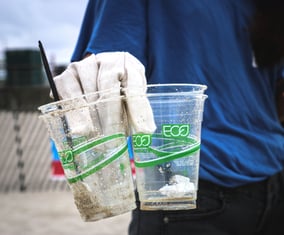
You could say, “Many of these bioplastic products on the market, like the straw or cup you’re using, mimic regular plastic and require specialized facilities to properly break down or compost. Those specialized facilities barely exist in the United States. If those products end up on the beach or in the ocean, they will take hundreds of years to break down and will turn into microplastic just like regular plastic. Unfortunately, the brands don’t disclose this information to customers. What’s worse is that you’re paying more for a product that isn’t living up to its sustainability claim.”
3. Be solution-oriented.
Learning about bioplastics can feel frustrating, especially when paying for a product that wasn’t actually better for the environment. For this reason, it is helpful to provide people with tangible alternatives and solutions. Remember, we want to capitalize on the fact that they intended to make a sustainable choice in the first place! Providing them with easy swaps will end the conversation on a positive note.
Thankfully, Surfrider’s Ocean Friendly Foodware Guide equips businesses and the public with the tools to choose the best “ocean-friendly” products for their businesses. Check it out for a list of vetted products and tools.
Try saying, “I know you made that choice because you thought it was the more sustainable one. If you’re interested in switching, I can help you find better products that are similar in cost.”
For that restaurant? There are paper, hay, reed, bamboo, and other straws available on the market. Plus, if they provide them only upon request, they will save money.
Your friend? They can urge everyone to bring their own cup and refill it, or aluminum cups can easily be recycled. Of course, the most sustainable thing is to use what they have before switching to a new product.
Check out some of our other solution-oriented blogs to reduce waste at events, holidays, and more:
- Small Swaps, Big Waves: Your Ocean Friendly Picnic Checklist
- Less Waste More Love: Better Alternatives for Valentine’s Day at School
- Ocean Friendly Tips to Create Less Waste and More Cheer
- Don’t Let Plastic Haunt You This Halloween
4. Provide tips to avoid bioplastic in the future.
With so many products on the market today, it can be overwhelming to determine product sustainability claims as fact versus fiction. Surfrider has a decision matrix and a foodware quiz to help you determine, “Is this product Ocean-Friendly or not?”
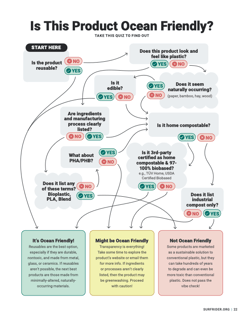
Say, “There are a few ways you can avoid bioplastics in the future. First, transparency is everything. The more info on the product website, the better. Be on the lookout for buzzwords used without certifications. Another way to tell if something is bioplastic is by the look and feel. If it looks and feels just like plastic, it could be one, and I recommend looking at the product ingredients in more detail.”
Mythbusting Bioplastics Blog Series
We hope you feel more comfortable talking with friends, family, businesses, and peers about bioplastic. This is the fourth blog of our new “Mythbusting Bioplastic Blog Series" to help you navigate the complicated world of bioplastic. In this series, we dive into misleading eco labels, hear about some of the policies driving bioplastic’s growth, new bioplastic straw research, and more! Check out our Bioplastics Facts & Resources Webpage for more.
 As Ocean Friendly Programs Manager, CJ brings a wealth of experience reducing plastic not just in the environment, but also within the dining and hospitality industries. She has a master’s degree in Development Practice from Emory University with a focus on Monitoring and Evaluation (M&E) and Environmental Conservation.