
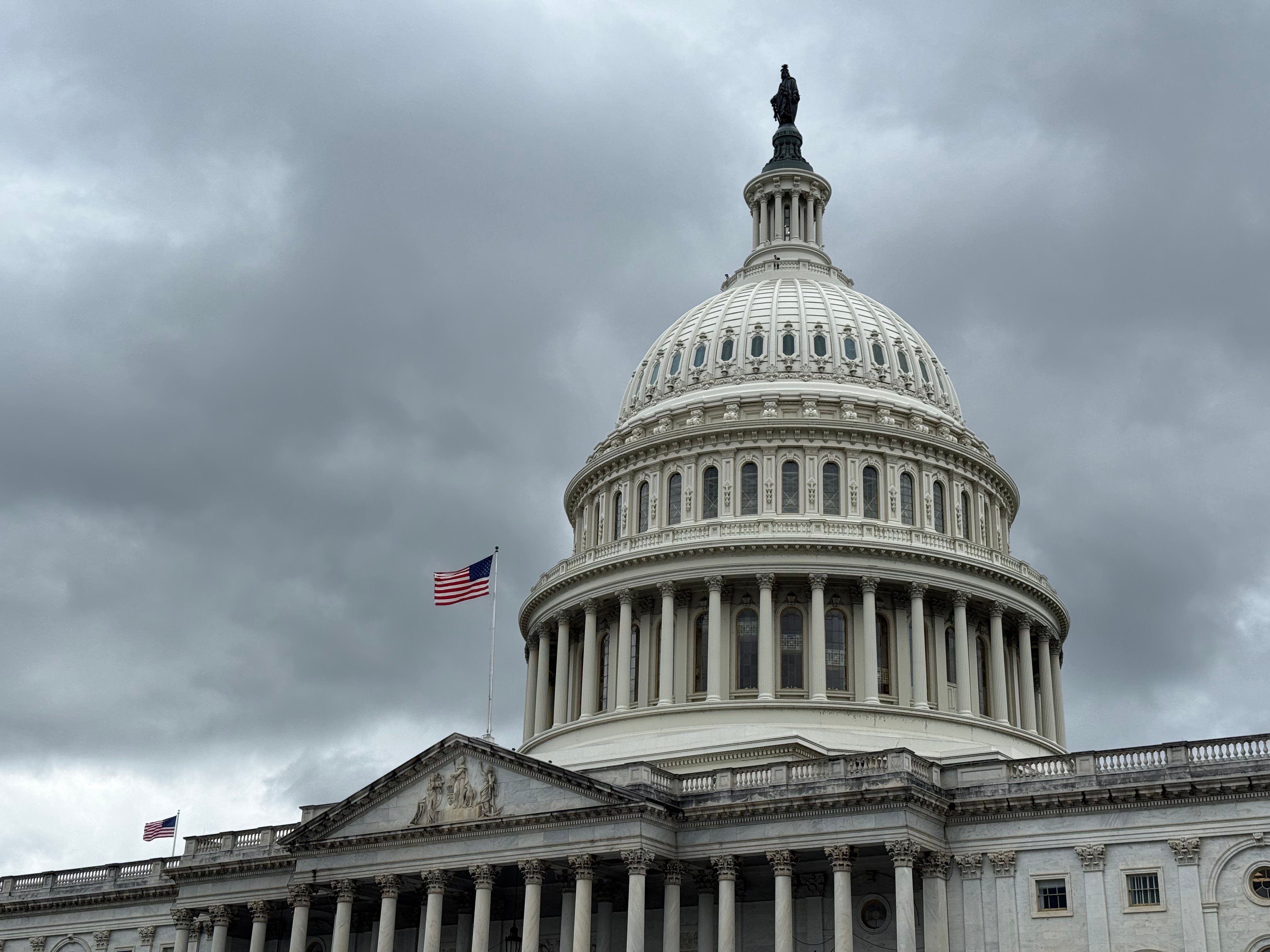
Surfrider’s Senior Coordinator for the Plastic Pollution Initiative, Jenna Schwerzmann, had the opportunity to visit Washington D.C. last month to lobby for plastic pollution reduction policies. Learn more about how this relates to bioplastics by reading below!
With a vial of plastic pellets in hand, I boarded an Amtrak train from Penn Station in New York to travel to the nation’s capital. The reason for this prop: I was headed to D.C. with the Break Free From Plastic movement. If you’re not familiar with this group, they are the organization behind the Break Free From Plastic Pollution Act, and they bring together organizations from all over the world to reduce plastic pollution by advocating for systemic solutions, corporate accountability, and a transition away from single-use plastics.
Every year, Break Free From Plastic (BFFP) hosts a fly-in, or in other words, an organized advocacy event where people travel to Washington, D.C. to meet with elected officials, policymakers, or government agencies. Sometimes these events are held for one single day of meetings, but because we met with offices for several days, we call it Hill Week. The goal was to meet with as many legislative offices as possible to talk about important bills that would influence plastic pollution, in both good and bad ways. I brought my pellets as a prop – since they came from my local beach during the International Plastic Pellet Count — hoping they would help with my talking points that week.


The Misleading PACK Act (HR 6832)
One bill we are strongly opposing is the “Packaging and Claims Knowledge Act”, also known as the PACK Act (HR 6832). At first, the bill actually sounds like a good thing. It claims that the bill aims “to amend the Federal Trade Commission Act to include requirements for recyclable, compostable, and reusable claims for packaging.” It would require third-party certification for packaging companies to use those labels on their plastic or bioplastic products. If you’ve been following along with part one and part two of our bioplastics series, you already know that these labels are unregulated and confusing.
A national standard for these labels sounds pretty good, right? That’s what they want you to think, but it’s a myth! In reality, this bill would create weak definitions for a voluntary federal framework and would lack meaningful enforcement. This would also undermine all the great work that some states have done to pass strong bills with enforceable standards for these labels, aka “truth in labeling laws” like in California, Colorado, and Washington, to name a few.


The other problem with this bill is how it relies on privately developed third-party certification standards. Some of these standards have significant industry involvement, creating opportunities for weak definitions and loopholes that allow products to be labeled "compostable" even when they don't reliably break down in real-world composting conditions. As a result, consumers could be misled into believing these products are better for the environment than they actually are.
During Hill Week 2026, we met with 85 legislative offices across 25 states to discuss our federal priorities and concerns over this bill. But the work doesn’t stop there! A subcommittee of the House Committee on Energy and Commerce just held a hearing on the PACK Act, among other bad bills, at which the industry came out in full force to show support.
.jpg?width=1200&length=1200&name=Group%20Photo%202%20Credit%20Oceana%20(1).jpg)

Take Action Today!
Now is the time when we can all tell our representatives that we do NOT want this bill to pass! Help the Surfrider Foundation take action and sign our petition here. You can also learn more about other bad bills that the Surfrider Foundation is currently fighting.
Advocating for Real Solutions
As the world continues to realize the harmful effects of plastic and microplastics, we naturally look for solutions. Bioplastics are a false solution that, without preventative action, could expand out of control, especially if bills like the PACK Act are passed. Instead, we need to look for real solutions to plastic pollution – mainly reusables and refill systems – and minimally-processed, naturally occurring materials when reusables are not an option.
I may have left Washington with the plastic pellets I arrived with, but I also came home with something even more important: the reminder that determined people working together can help turn the tide on plastic pollution. Hill Week showed me that meaningful change doesn't happen overnight, but it does happen when people show up, speak out, and keep pushing for policies that put our health, communities, and environment ahead of industry interests.

Bioplastic Resources
We know that bioplastics can be a confusing topic. Surfrider has plenty of resources listed on our Bioplastic Facts & Resources Webpage for you to explore.
Stay tuned! Surfrider will be releasing a new version of our Ocean Friendly Foodware Guide this summer, which will feature new tools to avoid greenwashing, restaurant case studies, and a purchasing guide with foodware products categorized as ‘best choice,' 'good alternative,' ‘what to avoid,’ and what is assessed ‘case-by-case.’
Mythbusting Bioplastic Blog Series
This blog is the third of our new “Mythbusting Bioplastic Blog Series" where we will help you navigate the complicated world of bioplastic. In this series, we dive into misleading eco labels, hear about some of the policies driving bioplastic’s growth, and provide tips on how to talk to restaurants about bioplastic, and more!
 As Senior Plastic Pollution Initiative Coordinator, Jenna supports the Beach Cleanup and Ocean Friendly programs. She graduated from Stony Brook University with a B.S. in Marine Vertebrate Biology and an M.A. in Marine Conservation and Policy.